Imago
Credits: IMAGO
Imago
Credits: IMAGO
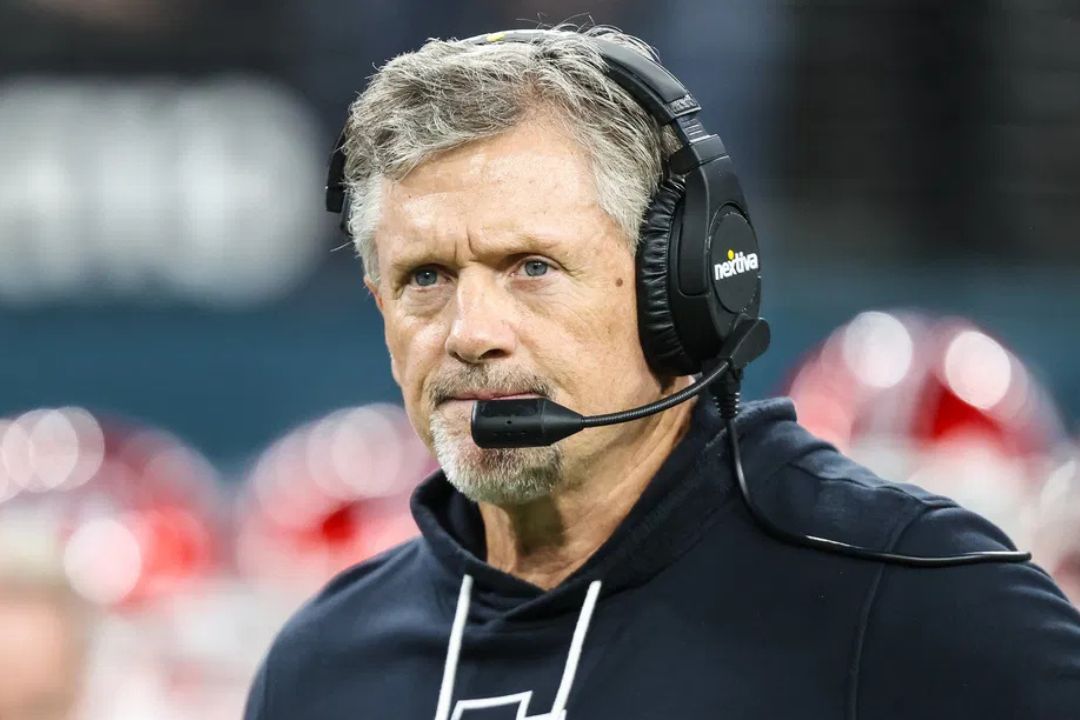
Jay Hill spent three seasons turning BYU into one of the most disruptive defensive units in college football. Now he’s in Ann Arbor, and the early signs suggest he is a man on a mission. During a press conference this week, the new Michigan defensive coordinator made a bold comparison: the 2026 Wolverines, he said, are built to look a lot like the 2023 national championship defense that held opponents to just 10.4 points per game.


“I had a press conference-type thing we did a couple weeks ago, and I compared it a lot to the 2023 defense that was here at Michigan,” said Hill during his Thursday presser.
Watch What’s Trending Now!
“The reason I was familiar with that one is we had a common opponent in 2024 that Michigan had played. And so I was studying film on this offensive coordinator. Well, sure enough, they had played Michigan in ’23. And I’m watching them. I’m like, ‘Oh my gosh, that defense looks just like us.’ So I spent the next couple weeks studying the Michigan film. I think that that’s a really good idea of what it looks like,” added Hill.
What Hill is reaching back to was historically elite. Anchored by Will Johnson, Junior Colson, Mason Graham, Kenneth Grant, and Mike Sainristill, Michigan’s 2023 defense ranked No. 1 in college football. It surrendered just 10.4 points and 247 yards per game.

That unit powered the Wolverines to a 34-13 national championship win over the Washington Huskies, their first title since 1997. Jim Harbaugh built the program, but it was Jesse Minter who drew up that defense. The same playbook Jay Hill is now deliberately borrowing from. For Hill to voluntarily adopt that system as his reference point is a statement of intent.
Where it gets especially interesting is that Hill isn’t planning a carbon copy. His vision for the 2026 Michigan defense may actually be more complex than what Minter ran three years ago.
“We want to be multiple in the front, three down, and four down,” stated the Michigan assistant. “We want to be multiple with our coverages, and we want to be multiple with our blitz packages. Man pressures, zone pressures, two-high pressures, and three-high pressures.
“And like I say, the better we own it, the more we can do. It’s not a grab bag. We’re not just grabbing stuff out of a bag, but it’s intentional, and we’re calling things for a specific purpose and done correctly. I think we can have a ton of success here with the caliber of players we have.”
Kyle Whittingham further fleshed out the identity of this defense when he revealed Michigan will base out of a 4-2-5 alignment. Four down linemen, two linebackers, and five defensive backs, built for a pass-heavy Big Ten landscape.
“We’ll apply considerable pressure, utilize a lot of man coverage, and mix in some zone pressures,” Whittingham said.
That structural blueprint, combined with the complexity of Hill’s scheme, is why offensive coordinators across all 134 FBS programs should take note.
Now, Michigan is set to see his fireworks, and he’s already beginning to spread his magic within the Wolverines. If Hill pulls this off correctly, there is no doubt that Michigan can challenge for a playoff spot.
How the new Michigan DC is building a title-caliber defense
This season, Michigan’s defensive roster includes Troy Bowles, Nathaniel Owusu-Boateng, Zeke Berry, Trey Pierce, Enow Etta, Nathaniel Staehling, John Henry Daley, Jyaire Hill, and more. This is a group loaded enough to run Hill’s multi-front, multi-coverage system at full speed. Hill has been candid about what he wants from this group, and he’s equally candid about what he won’t tolerate from opposing quarterbacks.
“I don’t want to be so simple that the quarterbacks, you know, they’re getting ready to take the snap and they know exactly what we’re in,” he said.
. The new defensive coordinator also believes deeply in the relationship between coach and player as the foundation of everything else.
“Coaching is about relationships and getting players to trust you,” stated Hill. “Then I’ve got to be able to trust them. Trust goes both ways.”
On the field, that culture should translate directly into the depth and discipline that a brutal Big Ten schedule demands. Hill’s target is a genuine three-deep rotation at every defensive position.
“Ideally, a really good three-deep, but you have to be great in your two-deep in the Big Ten,” he said. “There’s going to be injuries that occur. There’s going to be guys who have to go in the game. You have to rely on backups the way college football is, so that’s the first and foremost.”
Jim Harbaugh set the standard. Jesse Minter brought it to life. Now Jay Hill is walking into Ann Arbor with the blueprint in hand, the personnel on the roster, and a head coach who has known him since his playing days. If spring practice is any indication, the rest of college football has every reason to be watching.
Written by

Edited by

Yogesh Thanwani