Imago
Credits: Joey Aguilar Instagram
Imago
Credits: Joey Aguilar Instagram
Imago
Credits: Joey Aguilar Instagram
Imago
Credits: Joey Aguilar Instagram
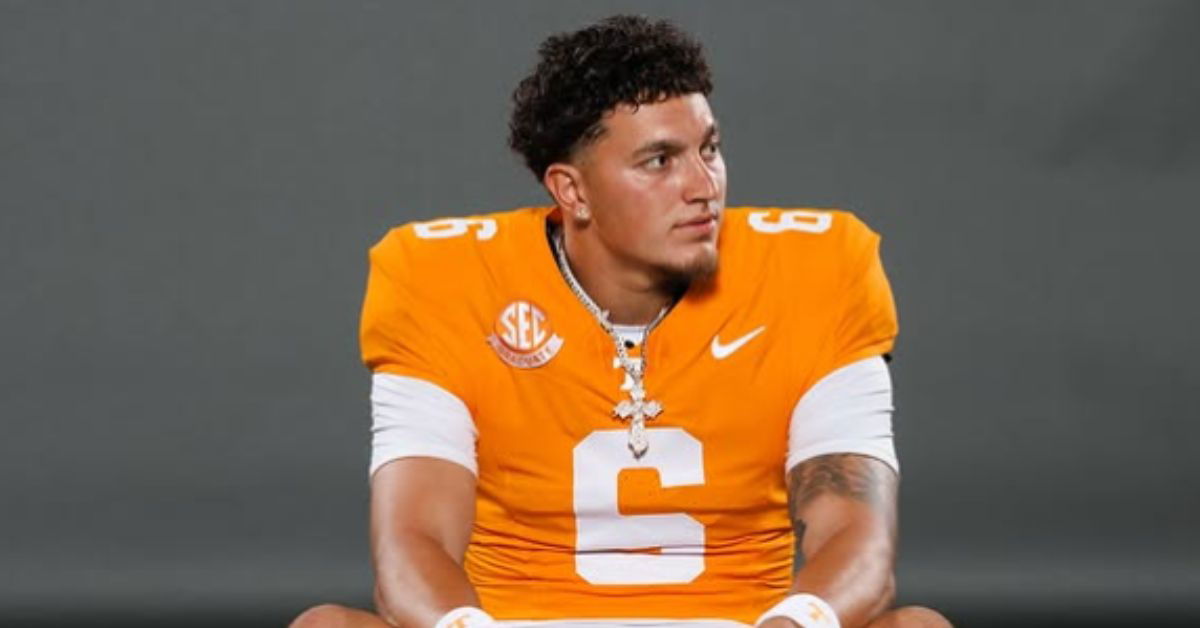
After leading the Vols to an 8-5 season in 2025, Joey Aguilar is now circling courthouses. Chancellor Christopher Heagerty declined to grant him his extra year of eligibility after the preliminary injunction hearing on Friday, February 13. So while Aguilar waits patiently for his probable return to CFB, SEC spokesperson Paul Finebaum provides a bit of hope to the 24-year-old.
Watch What’s Trending Now!
“My gut feeling is he’s going to play,” Finebaum said on the February 16 episode of the McElroy & Cubelic In The Morning show. “I think he took the weekend to write his decision, knowing that it was going to be skewed, but I just sense they’re all different. But my feeling is he is going to get the additional year.”
The NCAA fundamentally links Joey Aguilar’s situation to Diego Pavia’s regarding junior college (JUCO) seasons and an athlete’s eligibility clock. Aguilar originally joined Pavia’s federal lawsuit as a co-plaintiff in late 2024. Subsequently, he chose to file his separate state-level suit in early 2025 to seek a faster ruling.
After that, a panel dismissed the NCAA’s attempt to overturn the ruling. That ultimately allowed Pavia to play the 2025 season. Now that Pavia has set a precedent, why are officials taking so long to grant Aguilar his decision? By separating from Pavia’s federal case (which involves over 20 other plaintiffs), Aguilar’s new attorney, Cam Norris, aims for a faster, individualized decision.
.png)
.png)
.png)
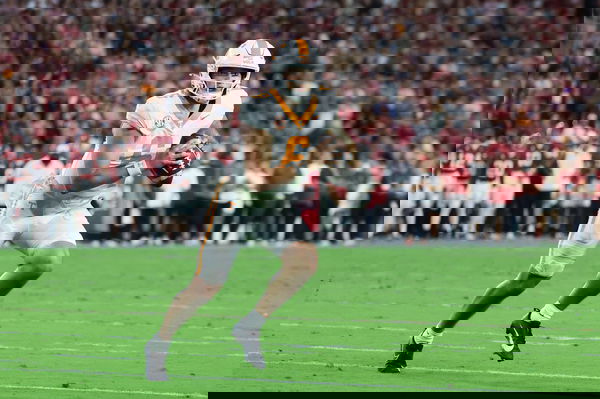


The Vols begin spring practice on March 16. So Aguilar needs to know as soon as possible whether to report to spring ball as the Vols’ likely starter or shift his focus to preparing for the 2026 NFL Draft. On top of that, Aguilar could earn an estimated $2–4 million in NIL compensation if he plays in 2026. If officials delay the decision, they could significantly harm those lucrative contracts.
And so, just to get an immediate ruling, Norris moved the case to the Knox County Chancery Court to leverage Tennessee-specific laws. The NCAA has accused Norris of ‘forum shopping’ by choosing a venue in Knoxville, just miles from UT’s campus, presumably hoping the local court would be more sympathetic to the hometown quarterback.
Last Friday, Christopher Heagerty did not issue a judgment. He said he would review over 1,200 pages of filings and issue a written opinion “very shortly.” Since today is Presidents’ Day, officials expect to make a decision as early as Tuesday, February 17.
‘Aguilar’s case isn’t happening in a vacuum, as a similar legal battle involving Ole Miss QB Trinidad Chambliss recently set a dramatic precedent in Mississippi.
The Trinidad Chambliss drama
Just like Joey Aguilar, Trinidad Chambliss sought an extra year of eligibility. However, for him, the basis was a medical redshirt that he took in 2022 at Division II Ferris State. He missed playing time due to significant respiratory issues and tonsillitis.
The NCAA rejected his appeal. It argued that he failed to prove he was truly “incapacitated” during the 2022 season at Ferris State. Since there wasn’t any prescription that could back up his medical issue, the NCAA contended that Chambliss opted for medication management over surgery in 2022. Officials granted the exception so he could take part in football-related practices.
It suggested that he was perfectly fine to play during scout team practices in 2022. However, on February 12, Judge Robert Whitwell of Mississippi ruled that the NCAA “acted in bad faith” by ignoring medical evidence. Because of that, officials are allowing Chambliss to play while the case is still ongoing.
These individual victories for players like Chambliss and, potentially, Aguilar are creating the NCAA’s worst nightmare: a ‘patchwork’ of state laws that systematically undermine its authority over national eligibility rules.
Related Newsletters