
Essentials Inside The Story
- Questions are once again being raised about Nick Saban.
- These questions re-emerged after Saban testified before Congress on Wednesday.
- Currently, both sides are debating NIL.
Even before Nick Saban trotted into esteemed Bama halls, taking the program to the pinnacle of success, there were still accusations that players were being paid, even though it wasn’t allowed. In 1999 and 2000, Bama was embroiled in a massive controversy when a wealthy booster gave $150,000 to five-star defensive lineman Albert Means in an attempt to sway his commitment. The aftermath, though, wasn’t so pretty.
Watch What’s Trending Now!
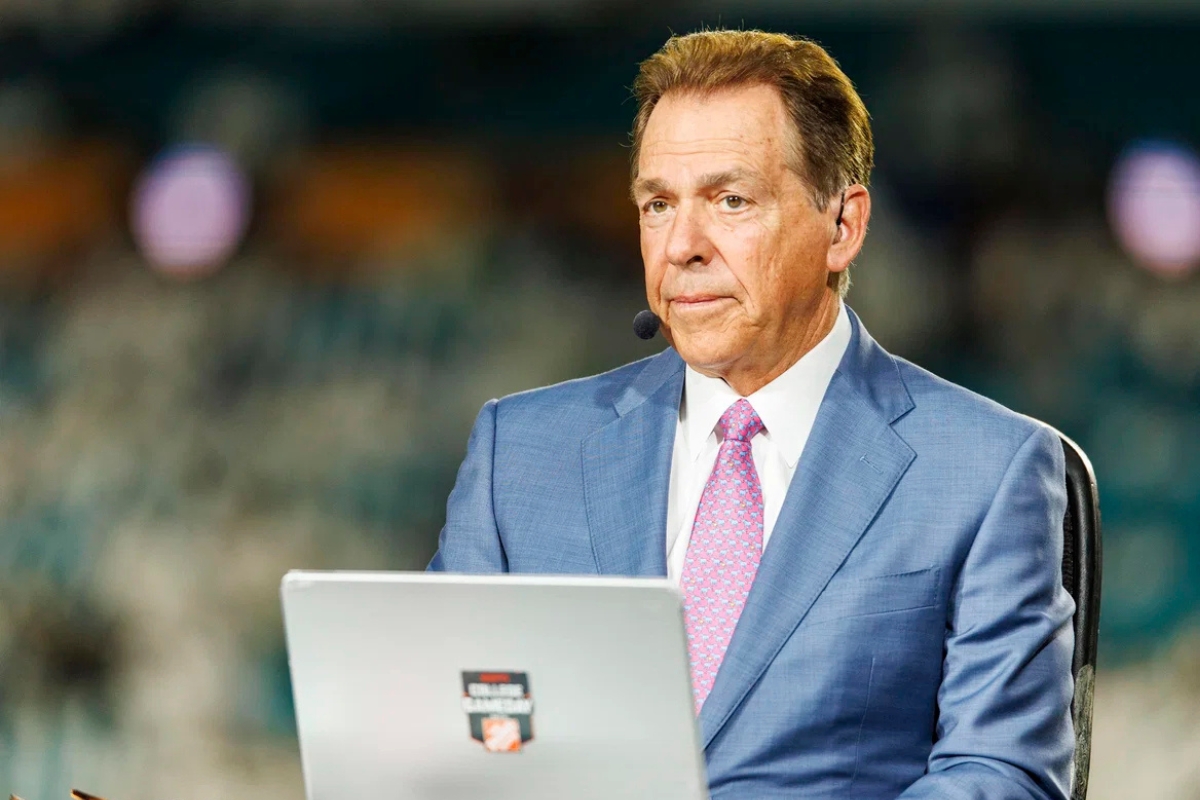
The scandal came to light when one of Bama’s assistant coaches confessed and cooperated with the NCAA and the FBI. Because of those infractions, the Tuscaloosa program received a 2-year Bowl ban, along with 5 years of probation. Saban arrived in 2007 and won six titles, but questions about his recruiting methods never fully disappeared. They re-emerged after Nick Saban testified before Congress on Wednesday, urging sweeping structural changes to college football and how NIL would harm the sport. But a radio show host has his doubts.
“The Clown Prince Nick Saban was at it again. Talking about how NIL’s the death of college sports,” prominent radio show host Craig Carton, who was inducted into the New York State Broadcasters Association’s Hall of Fame in 2024, said on his podcast. “Because he’s claiming that if you don’t spend up to $20 million a year in your football program, you can’t compete.
“It’s always funny to me when the guys who are against the legal spending on talent did it illegally for so many years, are now bemoaning the fact that every team has the ability. Nick Saban is still of that era of successful, well-known coaches, whether it be football or basketball, who got away with bloody murder by paying guys under the table when it was not legal to do it.”
Here’s the thing: Money has always been part of recruiting. NIL did not create the issue. It simply brought it into the open. The new bill (The Protect College Sports Act, which was the outcome of a long negotiation between between Sen. Ted Cruz (Texas) and Sen. Maria Cantwell (Washington), would create nationwide rules for NIL deals, transfers, recruiting, and athlete eligibility. And during his testimony, Saban shared a number that caught people’s attention.

NICK SABAN IS A HYPOCRITE FOR COMPLAINING ABOUT COLLEGE FOOTBALL! "The clown prince Nick Saban is at it again...talking about how NIL is the death of college sports...every major school in this country has the financial ability to write that check!" — Craig Carton Show more
The former Alabama head coach told the Senate that the Tide’s NIL spending grew from about $2.7 million to roughly $7 million, then to around $10 million, and eventually climbed to nearly $24 million. He also argued that college sports need guardrails because such growth cannot continue forever.
“Now you have schools that have close to $40 million rosters,” Saban said.
“A young person should not be trapped in a bad situation. But unlimited transfer freedom, combined with pay-for-play incentives, has created something very close to unlimited free agency without contracts, without rules, and without stability. That makes it harder to build teams and harder to develop young people.”
As for Saban’s own recruiting controversies, there aren’t many, but coaches like Jimbo Fisher have surely hit back against Saban on occasions.
In May 2022, Saban accused Fisher of buying every player on his Texas A&M roster through NIL to secure the No. 1 recruiting class. In response, Jimbo Fisher called Saban a “narcissist.”
“The narcissist in him doesn’t allow those things to happen — it’s ridiculous — when he’s not on top. And the parity in college football he’s been talking about?” Fisher said in 2022. “Go talk to coaches who have coached for him. You’ll find out all the parity. Go dig into wherever he’s been.”
That ‘dig into’ part was something everyone construed out of context. Was Fisher pointing to Saban’s own covert acts behind Bama curtains?
Why are many perceiving Saban’s acts as hypocritical?
That 2022 feud is important today because it sits at the center of the current debate. People who support Saban’s view would argue that he was warning people about a problem that has only grown larger since then. Critics, though, see something different.
For them, college football’s richest programs benefited from financial advantages long before NIL became legal, and now some of those same programs want stricter rules. Carton’s criticism follows that line of thinking.
“You’re telling me that you can’t take 20 million dollars out of a $6 billion slush fund and use it on a net positive revenue-producing sport,” Carton added. “And it’s every school in the SEC that has, on average, about six billion dollars. Endowment has the ability, if they so choose, to compete tomorrow for a national championship. This is not about whether or not you have the ability to do it. These schools are making the decision not to do it.”
For now, Saban is endorsing the Protect College Sports Act and has made it clear his reasons to do so. Currently, both the Big 10 and the SEC are vehemently opposing the bill, as many of its provisions could pose governance challenges. One key issue is the ‘Lane Kiffin rule,’ which prohibits coaches from switching teams midseason. But without a working college football calendar, the whole thing just looks unrealistic.