Imago
Credits: IMAGO
Imago
Credits: IMAGO
The two months following James Franklin’s departure plunged the Penn State football program into chaos. It forced a new regime to navigate a storm of roster defections and recruiting battles.
Watch What’s Trending Now!
“It’s been really chaotic,” Penn State GM Derek Hoodjer said. “Priority No. 1 was to build the team for the 2026 season and then try to get ourselves caught up for the 2027 recruiting class and beyond that get the football program started in the sense of the team arriving on campus, enrolled in classes, and beginning workouts.
It’s been a lot in a short amount of time, but it’s certainly no different from what others are doing as well. It has involved a lot of people’s help and involvement. Chaotic for sure, but we got through the craziness of most of it.”
The scale of the exodus was staggering. It illustrated the instability following Franklin’s firing. The program hemorrhaged nearly 45 players to the portal and lost over 20 recruits, causing its 2026 class to plummet to 62nd nationally. While Hoodjer’s staff managed to claw back 38 transfers, the net loss was the highest in the Big Ten. It left a new regime with a depleted roster and a monumental rebuilding task.
Which Prospects should OSU target next?
Let Tony do the scouting, you just make the pick.
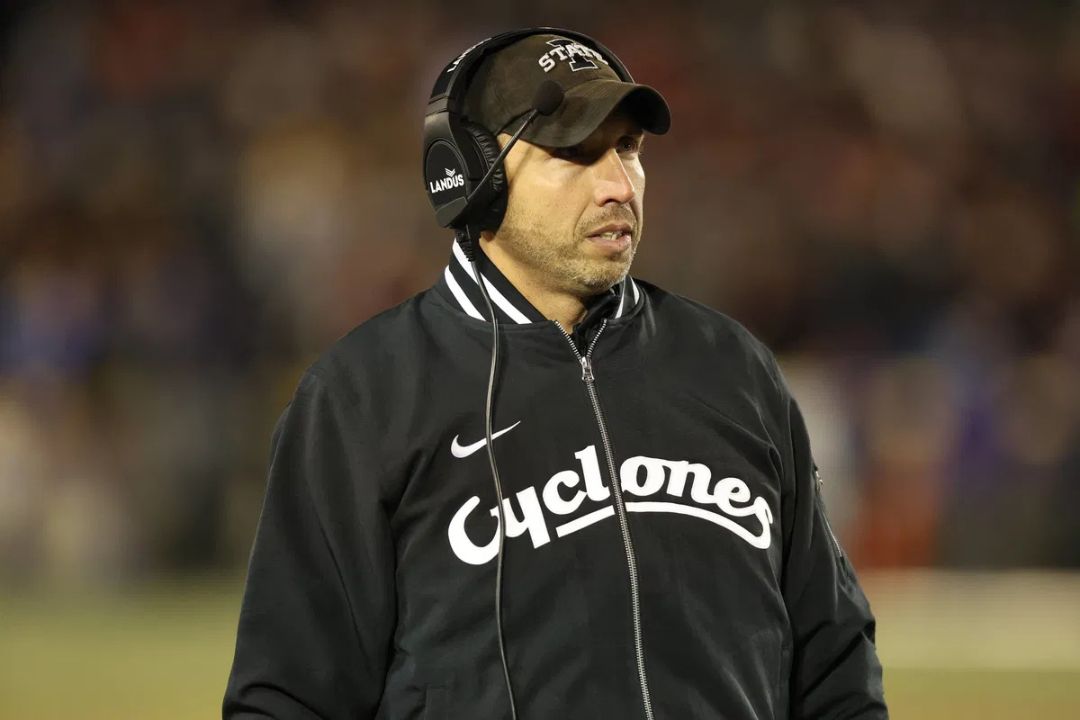
The chaos of December only began to subside with Matt Campbell’s arrival, who brought stability by assembling his trusted staff from Iowa State. It also included offensive coordinator Taylor Mouser, offensive line coach Ryan Clanton, and defensive back coach Deon Broomfield.
NEW: Penn State GM Derek Hoodjer details how the Nittany Lions navigated a ‘chaotic’ December and January, via @adamgorney🦁
“Our philosophy has always been that it really starts in your home state which will be no different here and then the footprint of drivable areas.”
Read:… pic.twitter.com/pDUsldMvhP
— Rivals (@Rivals) February 16, 2026
Campbell also retained Terry Smith, who also served as interim coach. To fill up the roster, he also got quarterback Rocco Becht and tight end Benjamin Brahmer. So, he built an Iowa-dominated roster and staff to bring some stability to the program. It’s similar to the University of Washington’s chaotic coaching transition in January 2024.
Kalen DeBoer departed for Alabama just days after leading the Huskies to the national championship game. After that, Washington lost nearly 40 players to the transfer portal, creating full-blown chaos. With those recruiting problems at Penn State, finances aren’t pretty either. Penn State generated a program total revenue of $254.9 million and spent almost the same amount. Upon his arrival, Campbell was briefed on the program’s financial situation, which showed a mere six-figure profit of $223,679.
One of the main expenses was paying $1.1 million to former football coach James Franklin as part of his $9 million separation deal. Then, in terms of generating revenue, only football, men’s basketball, and men’s hockey made money, while men’s wrestling lost $2.5 million.
Football was the athletic department’s primary revenue driver, the chief moneymaker. It brought in $146.8 million, more than half of all athletic revenue. Despite expenses of $89.2 million, the football program still generated a $57.6 million profit, which was crucial for subsidizing other sports.
Apart from that, Penn State distributes $18.4 million in NIL revenue sharing: football receives $13.3 million, men’s basketball $3 million, wrestling $1.45 million, and women’s basketball $110k. Now, with all those expenses, the renovation of Beaver Stadium hits them the most with $534.7 million in total debt. These financial pressures created a difficult environment for Campbell’s new administration.
Penn State’s GM reveals ultimate plan of success for Matt Campbell’s 2027 class
Now, with all those additions, Matt Campbell and Hoodjer are also focusing on their 2027 class. As they are yet to get a single commit into the class, though they have already extended offers to QBs Elijah Haven and Greydon Howell, the momentum is still lacking.
For Hoodjer, the high school recruiting momentum anchors the long-term plan. He wants to add significant depth to the 2027 class and is already eyeing bonding with players and their families during spring game visits. He is also concentrating on doing more groundwork with the staff before getting them back on campus in March.
“We had ultimately about two weeks where our coaches could get on the road recruiting,” Hoodjer said. “For us it was about laying a foundation and starting to build relationships with a lot of guys who were being recruited by a lot of schools for multiple years, and we were just getting the process started.
With this mindset, the team must recruit a significant number of players within two months. But Matt Campbell and the team need to address the situation fast. They have already lost five-star running back Kemon Spell, five-star offensive lineman Maxwell Hiller, and even four-star wide receiver Javien Robinson. So, now they need players who not only show interest in their program but also demonstrate trust in it.

