Imago
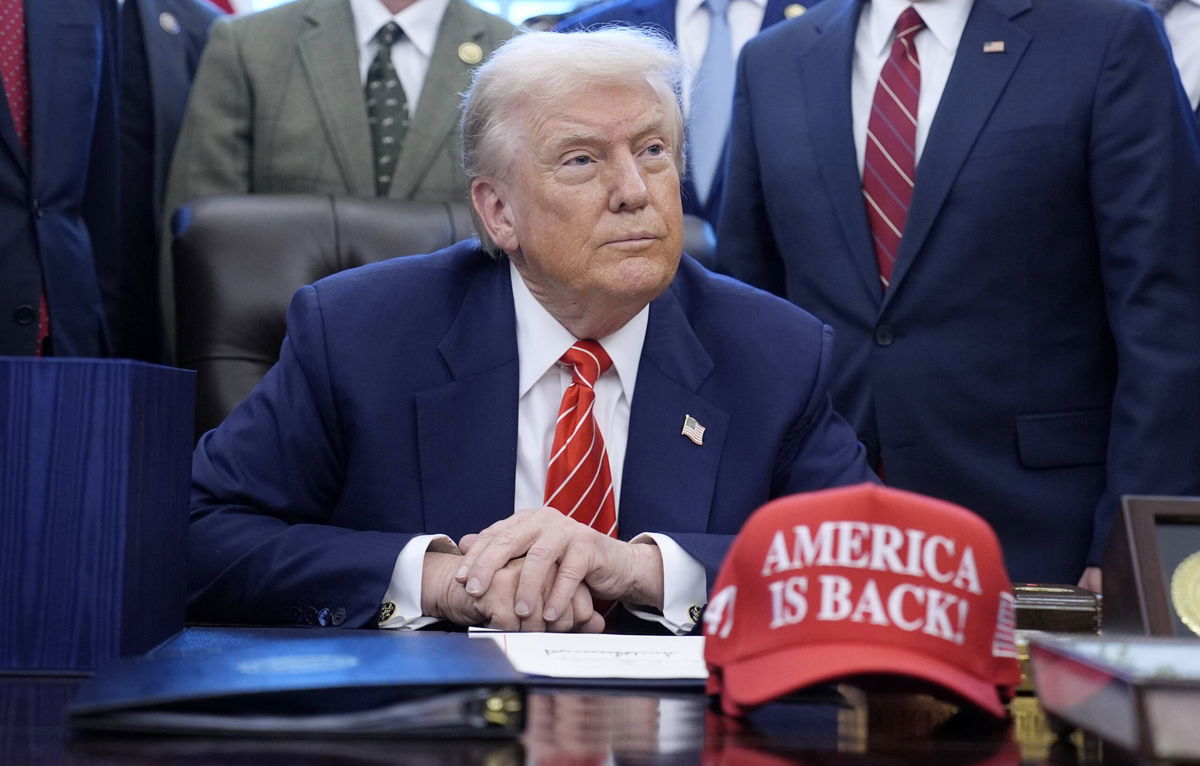
February 3, 2026, Washington, District Of Columbia, USA: United States President Donald J Trump answers questions after signing the bill ending the four-day partial government shutdown in the Oval Office of the White House in Washington, DC, USA, on February 3, 2026. A number of Republican lawmakers from both the US Senate and US House were present Washington USA – ZUMAs152 20260203_faa_s152_017 Copyright: xYurixGripasx-xPoolxviaxCNPx
Imago
February 3, 2026, Washington, District Of Columbia, USA: United States President Donald J Trump answers questions after signing the bill ending the four-day partial government shutdown in the Oval Office of the White House in Washington, DC, USA, on February 3, 2026. A number of Republican lawmakers from both the US Senate and US House were present Washington USA – ZUMAs152 20260203_faa_s152_017 Copyright: xYurixGripasx-xPoolxviaxCNPx
Donald Trump is adamant that a certain college football tradition remains untouched. Standing in the White House, flanked by Navy players and tradition itself, the US President signed an executive order titled “Preserving America’s Game” on Friday. As the title suggests, this move is to protect the Army-Navy game’s standalone stage.


“Nobody’s going to play football for four hours during that very special time of the year, in December,” Donald Trump said before signing. “It’s preserved forever for the Army-Navy game.”
Watch What’s Trending Now!
It’s not hard to see why things have come to this. For decades since 1890, the Army-Navy Game has owned its window on the second Saturday in December. There was no competition, no clash of schedules, just patriotism and a burning rivalry between the two service forces. Since 1996, CBS Sports has cashed in on that exclusivity, riding consistent ratings that recently peaked at 9.4 million viewers. So, imagine dropping a CFP game right on top of that.
The CFP has already expanded to 12 teams but there’s still serious discussions underway for 16 or even 24. If an expansion happens, it could push first-round games to Army-Navy weekend which will create competition. Donald Trump is trying to prevent that with this legally sensitive order.
Imago
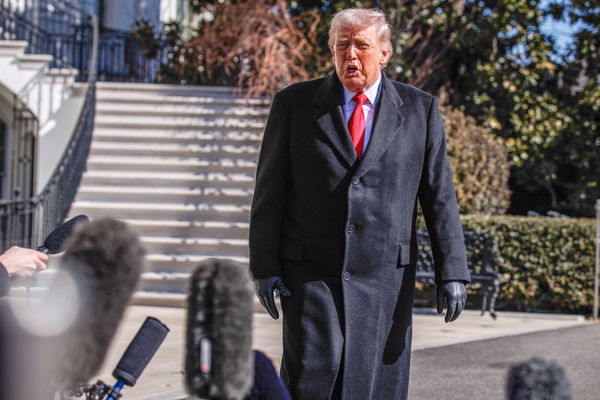
DC: President Donald Trump and First Lady Melania Trump Depart White House U.S. President Donald Trump speaks to reporters before departing from the South Lawn of the White House in Marine One on February 13, 2026 in Washington, D.C. The President and First Lady are heading to Fort Bragg in North Carolina to meet with U.S. military families before heading to the Presidents private club, Mar-a-Lago in Palm Beach, Florida for the weekend. Credit: CNP/ AdMedia Washington District of Columbia United States of America EDITORIAL USE ONLY PUBLICATIONxNOTxINxUKxAUS Copyright: xx CNP/xAdMediax admphotostwo968825
Donald Trump is aware of the legal concerns that might follow including First Amendment concerns, federal overreach, and broadcast rights complications. He himself acknowledged the likelihood of lawsuits, saying, “Of course, we’ll probably get sued at some point.” He even hinted he’d have “much more power” in a second term to push this further. But inside the White House on Friday, none of that seemed to matter as Navy head coach Brian Newberry gave his stance.
“Thank you for signing that executive order protecting the sanctity of the Army-Navy game,” he told Donald Trump. “It’s a game with a soul, and it deserves to be protected.”
Around them, the Midshipmen clapped and smiled because for them, this is more about preserving their identity than TV contracts.
Donald Trump’s order is a boon for Army-Navy
Army and Navy officials haven’t been waiting around for executive orders to settle this. Back in December when the expansion talks were in thick, they’ve already started mapping out what an expanded playoff could mean. Navy Superintendent Lt. Gen. Michael Borschulte didn’t mince words.
“It is critical for our country, our nation, this should be the only game [in this slot],” he said.
And he’s not alone. Lawmakers, including Senators Dan Sullivan and Jack Reed, have already pushed for protecting the game’s window, framing it as more than just sports.
“It is the only sporting event in America where those playing the game are willing to sacrifice their lives for those watching the game,” Sullivan, a retired Marine, previously said. “It’s important to preserve this as the profit-focused NCAA looks to encroach on this special game and day.”
Still, the playoff decision-makers aren’t exactly unified. SEC Commissioner Greg Sankey favors a 16-team model with a mix of champions and at-large bids. Meanwhile, Big Ten Tony Petitti is pushing harder with 24 teams and more automatic qualifiers. And right in the middle of it sits Army-Navy.
College football’s biggest strength has always been its traditions. But every time money enters the picture, it struggles to protect them. Legal questions aside, Donald Trump’s order forces the sport to confront that contradiction head-on. If the system won’t protect its oldest stage, someone else just tried to.
