
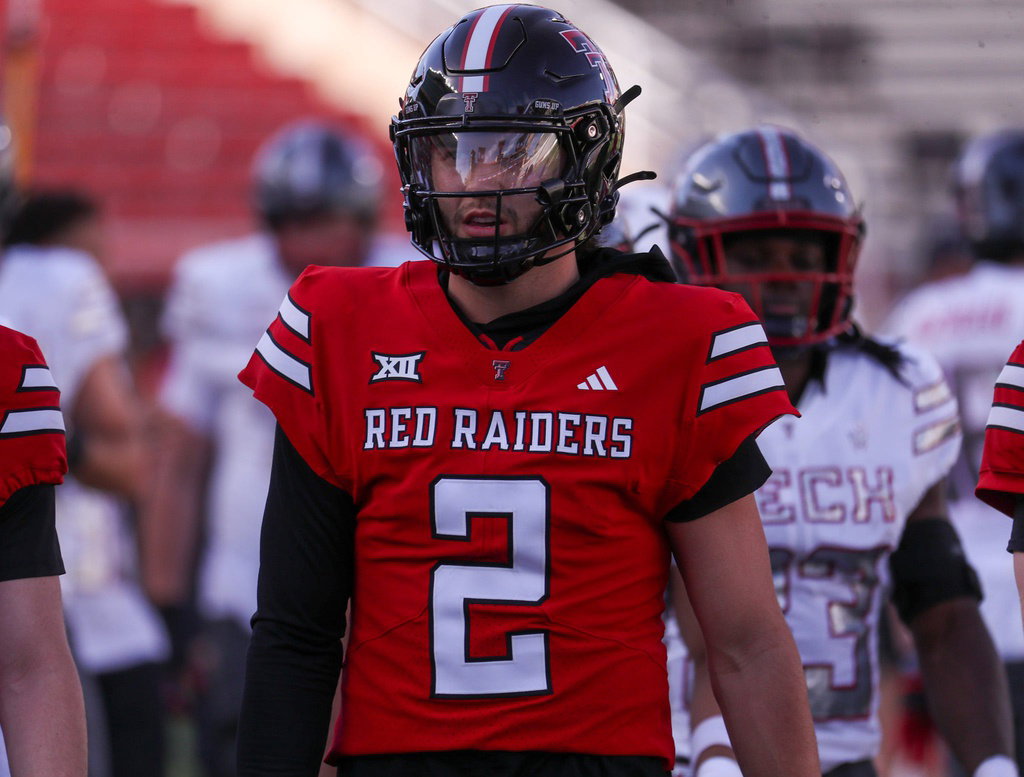
The verdict granting Brendan Sorsby eligibility created quite a frenzy across college football programs. While many teams have openly criticized the court’s decision and some have even considered boycotting games against Texas Tech, one Big 12 athletic director offered a much more neutral take on the growing controversy.
Watch What’s Trending Now!
TCU Horned Frogs AD Mike Buddie took his time responding to the ongoing controversy, recognizing the gravity of the situation. Despite being in-state rivals, Buddie still does not believe the only conclusion to this mess is boycotting a team that has been playing in the conference for many years.
“History has taught me, Jay, that for about 72 hours after crazy things happen, you probably just need to take a deep breath and think on things, not respond emotionally. But you know, I certainly understand why people would say we’re not going to compete against Texas Tech, with the way the current form of competition is,” Mike Buddie responded when asked for his thoughts on the idea of boycotting Texas Tech.

#TCU Athletic Director Mike Buddie responds to the newest Texas Tech court ruling in a new episode of Frogs Today Saturday at 10am @TCUFootball @TCUBasketball @tcuwbb @TCUWomensGolf @TCUvolleyball @TCU_Baseball #GoFrogs
“I’m not going down that road. I think competition is really good, and, to be honest with you, Texas Tech has been really good for the Big 12. They’ve had some great teams. We just have to get back to some semblance of community,” Buddie added.
The statement comes at a time when the Red Raiders are facing hostility from across college football. It all started with a Lubbock court granting a temporary injunction against the NCAA’s ban on Brendan Sorsby for gambling violations. Over four years, the QB placed thousands of bets across spots. Around 40 of those were in Indiana games, when he was a Hoosier.
After the governing body deemed Sorsby ineligible last month, Texas Tech continued to stand with their transfer QB. The program even appealed the decision, arguing that the NCAA didn’t consider his gambling addiction. Sorsby’s lawyer argued the same in court and obtained a favorable ruling. The case has now been pushed to 2027. After the verdict, the Red Raiders have also been called out.
Kansas State athletic director Gene Taylor has been the loudest to voice his frustration against the Sorsbys’ eligibility, calling it a total violation of the NCAA’s power to make decisions when it truly matters. Sorsby was not denied eligibility due to an injury. The NCAA denied his eligibility because he was involved in heavy betting, specifically on his own team, Indiana.
“It’s f—– bulls—,” Taylor told Yahoo Sports on Monday. “I know the kid has a problem. Well, get well and focus on your problem. It is absolutely devastating for him to be able to play when every other sport, no matter the level, deems an athlete ineligible or they are punished severely for betting on their team.”
Taylor is not the only one; many ADs have come out in support of boycotting Texas Tech.
Other ADs favor the idea of boycotting Texas Tech
The verdict was clear: allow Sorsby to play in the 2026 season, but ADs believe it sets a poor example for upcoming athletes that you can do anything without worrying about the repercussions. His verdict opened a can of worms, as betting already is a growing tension in the sport. Student-athletes can rely on the defense that ‘it will jeopardize my future.’
“I think there needs to be serious conversations about not playing Texas Tech in any sports,” Georgia athletic director Josh Brooks, a member of the NCAA Football Oversight Committee, told Yahoo Sports. This is not about Texas Tech. It’s about protecting our own locker room. We cannot, in good conscience, put our student-athletes on a field where the competitive integrity of the contest is compromised and overridden by the courts. If a state court wants to dictate eligibility rules, they can play themselves.”
While conference officials have yet to decide whether to move forward with a ban, SEC and Big 12 athletic directors are actively discussing their next steps. The ban is not just limited to football. Teams like Georgia and Nebraska have put a pause on scheduling any sport with the Red Raiders.