
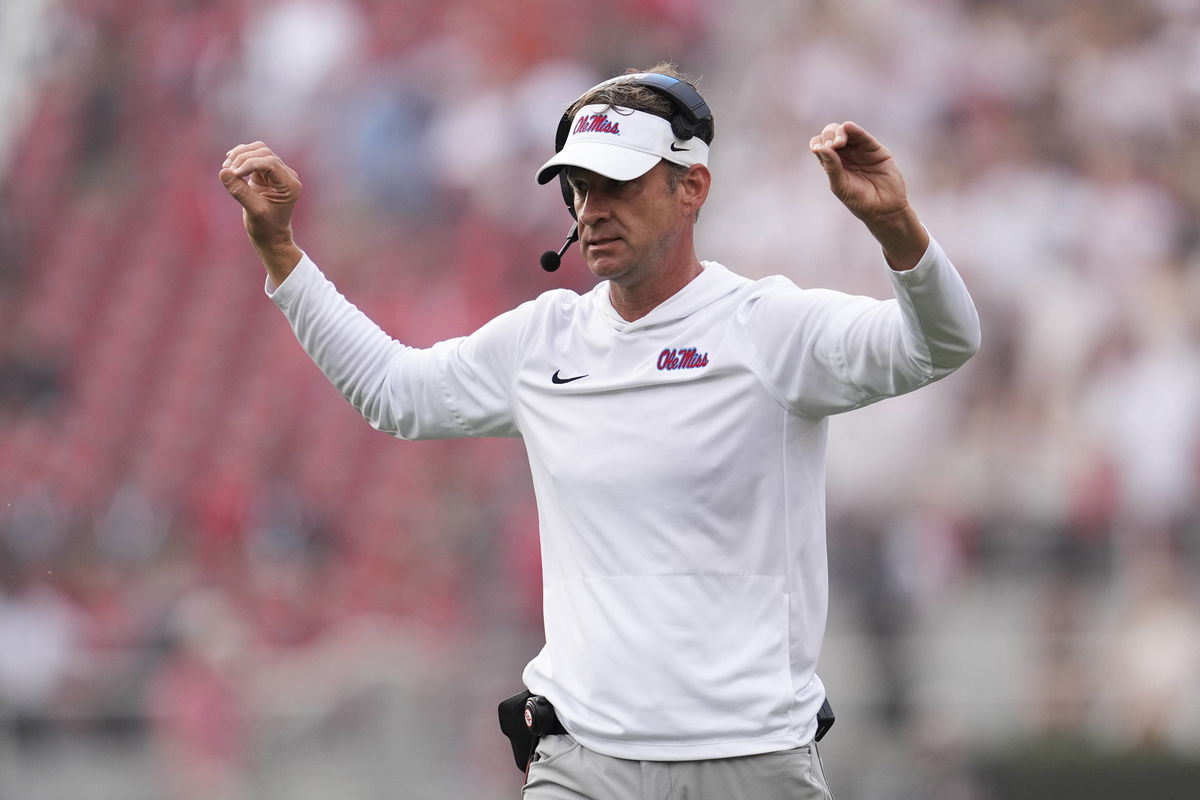
It is true that Lane Kiffin transformed Ole Miss into a national contender, delivering three 10+ win seasons and the program’s first ever playoff berth. But one number has haunted his tenure there from start to finish: 7 penalties per game on average. That chronic lack of discipline became the program’s defining flaw under Kiffin, costing the Rebels yards, momentum, and sometimes entire games.
Watch What’s Trending Now!
According to Action Network data, Ole Miss ranked ninth nationally in penalties over the last five seasons. In 2023, the Rebels were flagged 94 times in 13 games — 7.23 per contest. In 2024, the number was identical: 94 penalties for 936 yards, or 72 yards surrendered every Saturday. Against SEC heavyweights like Georgia and Alabama, that free yardage was crippling.
It cost them games. In 2024, Ole Miss lost to Kentucky after committing eight penalties for 53 yards in the first half alone. Later that season at LSU, the Rebels were flagged 12 times for 110 yards in an overtime defeat. Pre‑snap procedural errors were continuous, and hostile environments only magnified the problem.
Interestingly, the same thing happened again in 2025 against LSU. The Rebels were handed 14 flags. This time, though, LSU couldn’t win, but they were within one score of winning the game.
Players commit penalties. Coaches create the environment those players operate in. And over time, Ole Miss had far too many flags for Kiffin to completely escape responsibility. Of course, not every penalty is a coaching failure. A defender can make a bad tackle. An offensive lineman can grab a jersey. Sometimes a player simply loses his head. But when the same problem keeps appearing for years, it becomes fair to ask what is happening in practice. Butt since Kiffin kept winning, those questions never really needed to be answered.
The 2024 Rebels went 10-3 and averaged 38.6 points per game. Their offense was explosive enough to cover up plenty of mistakes. Ole Miss finished with more than 500 yards per game, and its passing attack gave defenses problems all season. The flags were there, but so were the wins. Most of the time, Kiffin ignored those penalties or laughed them off in post-game pressers. However, sometimes he couldn’t resist himself from criticising the officiating.
“Just really disappointing to have communication with the refs that came over [and were] trying to get it right,” Kiffin said to ESPN last year after a missed hands-to-face call against Florida. “The hands-to-the-face is during the play, let’s just get it right. It’s not that hard. So that’s just really discouraging to have that much time to talk about it, and they admit they’re wrong now. So what good does that do?”
In truth, Kiffin’s Ole Miss teams were built to play fast. They were aggressive. They took chances. They scored points. Sometimes that style came with penalties, but the frequency went well beyond a couple of untimely false starts or holding calls.
The Action Network study is also worth putting into context. Its “dirtiest teams” label does not mean Ole Miss was intentionally trying to injure opponents or cheat.
The ranking is about penalties and discipline. A high spot simply means a team accumulated flags at a high rate across the study’s measurements. The Rebels were consistently penalized. And they were consistently penalized under Kiffin. There is an obvious counterargument, too, to all this. How did Kiffin sustain those penalties without them becoming a problem?
Lane Kiffin Used Those Penalties to His Advantage and Produced Sheer Explosiveness
In the 2021 season, Kiffin faced Tennessee. During the game, the head coach allegedly looked to have directed fake or exaggerated injuries during the game to slow down the Vols’ offense.
Interestingly, the strategy worked, and the Rebels won the game 31-26. Many thought those ‘fake injuries’ should have drawn penalties from the officials. But none of that sort happened. The sold out crowd at Neyland eventually grew frustrated at the bad officiating and threw golf balls and mustard onto the field, many aimed towards Kiffin. Eventually police has to clear out the student section.
“I still have my souvenir golf ball,” Kiffin said later. “I also got hit with bottles with some brown stuff in them. I don’t think those fans would waste moonshine. You’ve got one of the most passionate fan bases in America. A call didn’t go their way.”
Ahead of the 2022 season, 247 Sports reported that the NCAA had decided not to award penalties for in-game injuries. Kiffin, as active as he is on social media, quickly took notice of the article and tagged Tennessee on X. In all, the now-LSU head coach knew he was doing something wrong, but knew the Vols could not do anything about it. In fact, that’s how Kiffin has always functioned at Ole Miss.
Take 2024. Ole Miss finished with 94 penalties for 936 yards, an average of 72 penalty yards per game. That is a lot of free yardage to hand an opponent. Yet the Rebels still went 10-3 and averaged 38.62 points and 526.6 yards per game. The offense was simply too productive to let a few flags wreck the afternoon. And there were games when the offense looked almost impossible to slow down.
Against Penn State in the Peach Bowl in 2023, Ole Miss faced the nation’s top defense and proceeded to put up 540 yards and 38 points. Penn State had allowed just 223.2 yards per game entering the matchup. That was Kiffin’s formula in Oxford. Play fast. Attack vertically. Score before the defense can get time to breathe.