Imago
Source Unverified
Imago
Source Unverified
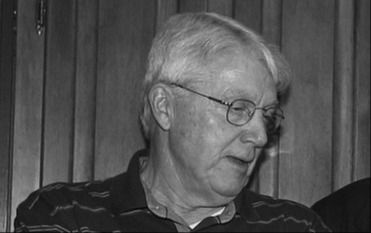
In his first year as the head coach of South Carolina in 1982, Richard Bell was asked by the AD Bob Marcum to make holistic changes in his staff. But Bell lived his life by his principles. He refused, and ultimately, after a 4-7 finish, the program let him go. That moment underscored that loyalty mattered more to the legendary football coach than anything else. He passed away Saturday at the age of 88 at an assisted living facility in Georgia.


Richard Bell’s legacy includes stops at 10 programs, including VMI, Georgia Tech, West Virginia, Texas Tech, South Carolina, Duke, East Carolina, Georgia, Navy, and Air Force.
Watch What’s Trending Now!
But before he donned the coaching hat, it all started as a college player at Arkansas, where he was part of Frank Broyles’ first team. After finishing his playing career, Bell joined the coaching staff as a graduate assistant in 1959 and played a role in Arkansas winning the Southwest Conference Championship.
Richard Bell, who was a team captain on Frank Broyles’ first team at Arkansas and a long-time college coach, died today at the age of 88.
On Bell’s career and the foundation he helped build with the Razorbacks.https://t.co/rF9hPgMAgJ
— Matt Jones (@ByMattJones) December 14, 2025
Bell’s coaching path actually began back home at the high school level, where he coached at Walnut Ridge High School (1960–61) before stepping into the college game at VMI (1962–63). From there, he advanced through major programs and established a reputation as a solid defensive coordinator.
Across a 42-year collegiate coaching career, Bell moved from one gridiron to another, leaving his imprint on more than ten programs. But his journey can’t be told without returning to his years in South Carolina.
In 1982, he received the opportunity to lead South Carolina as the head coach. Already immersed in the Gamecocks’ culture for six years as a defensive coordinator, he turned to a new chapter in his life. With a strong defensive acumen, he was ready to take the Gamecocks to new heights. At the time, Bell’s refusal to part ways with his staff was widely viewed as a defining moment, one that reinforced his reputation as a coach who valued loyalty and principle over job security.
“In my lifetime, he would be in the top three men I’ve ever known,” said Tim Horton, the former Arkansas player who worked with Bell at Air Force. “Just his character, his beliefs, and the way he lived his life were so impressive. I think every player who ever played for him would say the same thing.”
Even after the South Carolina chapter ended, Bell’s career didn’t cool off; it expanded. He joined Georgia in 1989 as part of Ray Goff’s staff. Bell coached wrestling legend Bill Goldberg and future long-time college coach Will Muschamp at the Bulldogs. Interestingly, he even impacted Kirby Smart’s decision to join the program.
“Coach Bell formed a relationship with me and communicated with me, and each week he would call, check in, ask about the family,” Smart said in a 2020 interview. “No other schools really recruited me that hard.”
In the latter part of his career, Bell’s long stint at Air Force showed that the veteran coach still had it, even though the offenses had started to evolve. In 1998, his defense averaged just 14.2 points per game, earning him the National Assistant Coach of the Year award. The same tenure also gave rise to the famous Air Force tradition.
“That week, a couple of our linebackers had been out on the town, and they met some Samoan guys, and they taught them a Samoan war chant,” said Horton, who coached RBs at Air Force. “These linebackers taught this war chant to Richard Bell. We were practicing for the bowl game, and in the stretch line, one day, Coach Bell taught the war chant to the team.”
Air Force now sings that Samoan war chant every time they win a game. Bell retired in 2006 to spend his time admiring the sport he had cherished his whole life from afar. However, the love of the ball refused to keep him on the porch. After four years, he returned, but this time it was high school football.
“You can only exercise so much and vacation so much. I’m not a golfer,” he said in a conversation with AJC in 2014. “Retirement is good for a lot of people, but you know, I was going to be active, and I still felt like I could coach.”
In 2010, he became the defensive coordinator at Prince Avenue Christian School in Bogart, Georgia. After seven years, he retired at the age of 80. Programs across college football mourned his death yesterday.
Prayers pour in as the football world mourns Richard Bell
At 88, Richard Bell spoke fondly of his coaching days, recalling the many faces he had crossed paths with. On his passing, fans and loved ones took to social media to share their heartfelt tributes.
“I lost one of my dearest and closest friends today, Coach Richard Bell,” shared Tommy Limbaugh, his former colleague. “Great man, husband, family, deep faith played @RazorbackFB.” Decades after graduating from Arkansas, Bell would remain highly interested in the Razorbacks’ program. Following the program from a long distance, he’d kept a close watch on the developments happening at his alma mater. “I’ve still got friends on staff, and they keep me up to date,” as he put it.
Ezra Namkoong, a former high school colleague, penned an emotional note on his passing. “All I know is that I’ll forever be grateful and will hope he can save me a seat so I can continue to pester him and play childish pranks on him as I did when I started as a first-year football coach at Prince Avenue.”
After retiring from high school duties, Bell took a liking to Atlanta, although the love of the gridiron never truly escaped him. He no longer worked daily on the field but stayed connected to the game through consulting and mentorship, quietly sharing decades of defensive knowledge with younger coaches.
Another coach from the football fraternity came forward and poured out his heart on Bell’s sudden demise. “RIP to one of my heroes, Coach Richard Bell. Former team captain of @RazorbackFB,” Coach Tim Horton wrote. “Coach Bell was everything I want to be as a Christian, man, husband, dad, and coach. Well Done Coach!”
Away from the turf, Richard Bell distilled his years of expertise and play-calling into writing. In retirement, he authored Winning Defensive Football, distilling decades of defensive philosophy into print.
A beloved father, respected coach, and endearing figure in the football community, Richard Bell is survived by his family and numerous fans across the nation.
Written by

Edited by

Ved Vaze