Imago
Credits: IMAGO
Imago
Credits: IMAGO
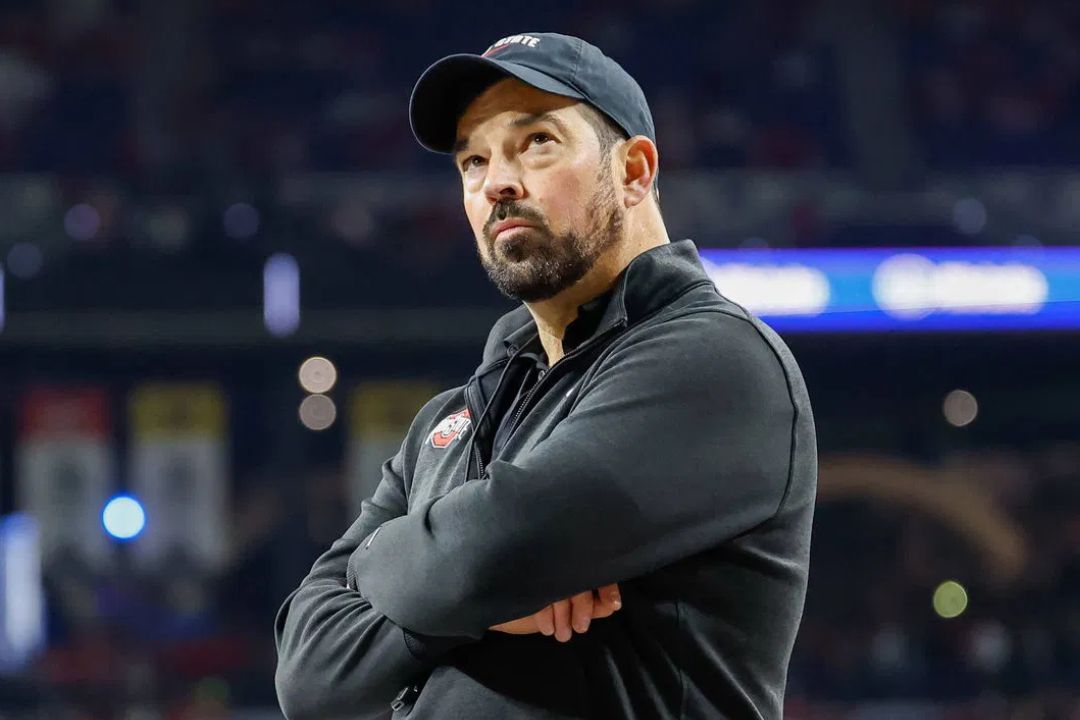
Ohio State’s athletic department is on a collision course over a new $20.5 million revenue-sharing plan, and it looks like Ryan Day’s football program is set to lose out. The House vs. NCAA settlement clearly states that schools must now pay the amount of the annual revenue generated directly to their athletes. However, schools have complete freedom to decide how to allocate funds among different sports. This rule might have benefited Day and the Buckeyes’ football in the past, but now the school wishes to change its focus.


Athletic director Ross Bjork has made it clear today to Eleven Warriors’ Dan Hope and Chase Brown that the OSU basketball team will get a higher-revenue share next season.
Watch What’s Trending Now!
“Basketball will have a bigger (revenue share) number next year,” Bjork said. “And then it’s about, again, the race to build out third-party NIL opportunities is here. We’ve done it on the football side, and we’re doing it on the basketball side. We’ve got to build that number up.”
That’s a good point, Mr. Bjork, but do we really need to make that kind of sacrifice? For the 2025–26 academic year, Ohio State distributed $18 million among its football, men’s basketball, women’s basketball, and women’s volleyball programs. But why the $2.5 million difference? The school chose to separate that cash to fund 91 new scholarships across its 36 varsity sports, leaving $18 million for direct payments.
Ross Bjork tells us how he thinks the college football calendar should change, why he thinks the CFP should continue to expand, his expectations for Ohio State basketball, his favorite bourbons and much more. pic.twitter.com/WpYgWKAjfv
— Eleven Warriors (@11W) February 10, 2026
But during the last season, football got the majority of that fund. Then comes men’s basketball asking for its share of the pie. The program allocated $2.7 million to men’s basketball. Internal revenue metrics estimate this figure to be approximately $3.2 million. Now, as per Björk, football has benefited from positive investments, and the results are already evident. The program received significant financial attention, and it built a championship-caliber team.
During the 2024 season finals, when OSU defeated Notre Dame 34–23, analysts valued that roster at $20 million. Then they were successful enough to retain proven starters like Jeremiah Smith and Caleb Downs for the 2025 season, which also resulted in a playoff run. Due to all these achievements, the school received a record $68.28 million in donor-funded contributions in the 2025 fiscal year.
Hence, the 2025 season saw an upgrade from $20 million roster spending fun to more than $35 million. The school brought in a record $44 million in gross sponsorship deals last year, including new partnerships with firms like Anduril. The football program’s financial dominance, accounting for over 81% of sport-specific revenue ($160.6 million) last year, is precisely why a shift in funding priorities toward basketball, which brought in just $23.5 million, is creating tension.
All thanks to the ticket sales that accounted for $81.7 million in revenue. Now, Bjork wants to give OSU basketball a fair chance of being nationally relevant. The Buckeyes basketball team has had many problems in reaching that stage. They finished with a 17–15 record in 2024-25 and failed to make the NCAA Tournament.
Truth be told, the issues are just with the men’s team. The women’s basketball team is arguably as good as football in its own right, consistently ranking in the top 10. So, addressing these issues in basketball (both for men and women), the school needs to shift its focus from football. Because, let’s not jinx it, but the gridiron is in safe hands. If the athletics pull out some funds from the football division, they won’t be left hanging dry.
As discussed before, Buckeyes’ football under Ryan Day has many well-wishers. And if needed, these people will not hesitate to loosen their pockets. That’s the goal Bjork wants to build for the basketball group. Football benefits from a much larger budget and significantly higher NIL support compared to basketball. Proper basketball programs like Kentucky reportedly have NIL budgets exceeding $22 million for 2025–26.
On the other hand, analysts estimate Ohio State’s total basketball “payroll” (rev-share + NIL) to fall in the $8 million to $10 million range. In order to settle the score, a basketball-type foundation, The O Foundation, has been created. But, truth be told, they depend heavily on sizeable donations from former players (e.g., Mike Conley, D’Angelo Russell) rather than on the large donor investments that football programs typically receive.
The safety net if funds go to the hoopster’s way
The only thing that can save OSU football in the coming years is die-hard football fans with heavy pockets. The situation here is that Ohio State, as a University won’t be low on funds. It’ll just be the football department that might need some financial boost. The former Buckeye QB and Heisman finalist, CJ Stroud, is someone who can help the department financially.
Being a football athlete himself, the current NFL QB has become a “Platinum Member” donor to THE Foundation (an NIL collective) in 2024. As of now, he contributed between $50,000 and $100,000. A powerful network of alumni is stepping up to bolster the football program’s finances, led by former quarterbacks like C.J. Stroud and Cardale Jones, who are heavily involved in ‘THE Foundation’ NIL collective, and they are joined by legendary figures like Archie Griffin.
Last year, he reportedly donated $12.2 million specifically to support Ohio State’s new football stadium project. Then, a very old player of the 1947 team, Jameson Crane, can also help via his family foundation. The Crane family donated $13.5 million to establish the Jameson Crane Sports Medicine Institute, which serves as a premier facility for OSU athletes.
Written by

Edited by

Himanga Mahanta