
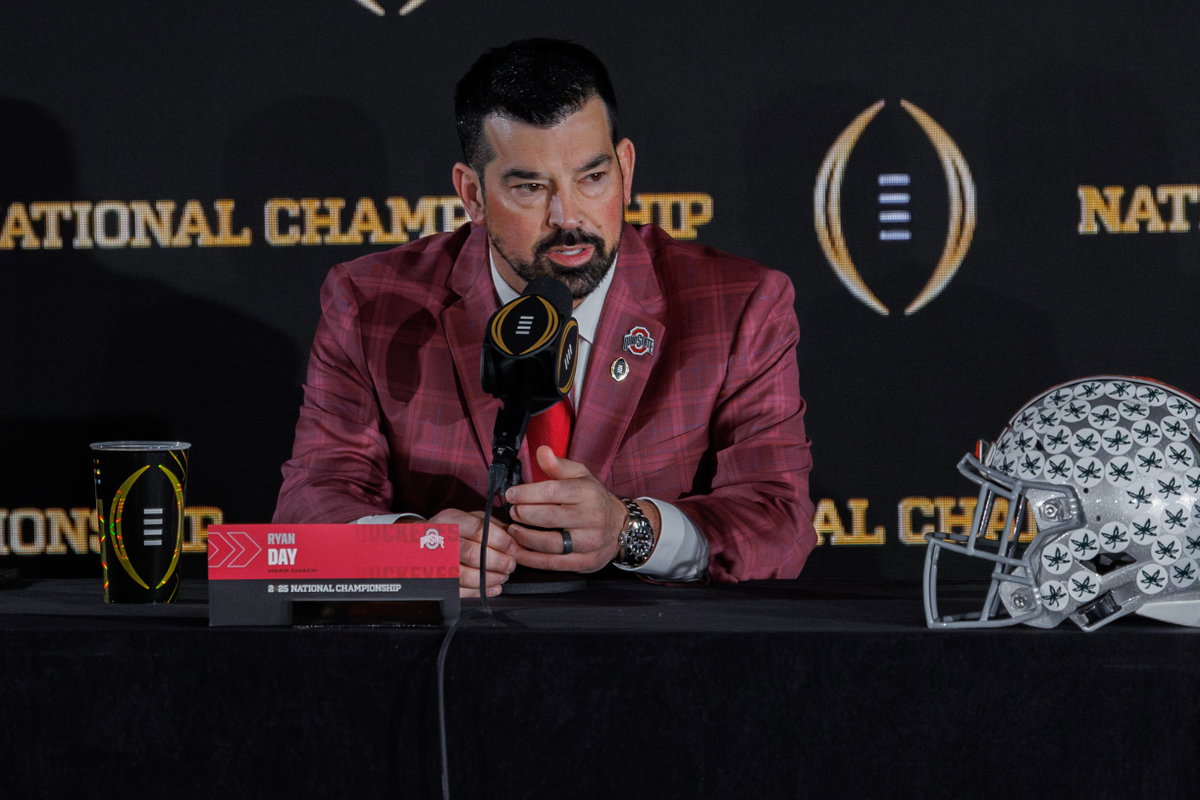
Ohio State football is heading into 2026 with a fresh look on offense, and it all starts with how head coach Ryan Day plans to use his wide receivers. After years of sticking to a tight group of starters, the Buckeyes are finally opening up the field. New wide receivers coach Cortez Hankton is bringing in a deeper rotation, giving more young talent a real shot to make plays instead of relying on just three or four starters every week.
Watch What’s Trending Now!
Former wide receivers coach Brian Hartline, who coached the position for years, left in January to become South Florida’s head coach. Hartline traditionally leaned on a tight four-man rotation, but the current WR coach, Cortez Hankton, is expected to spread the workload across five or even six players.
“Six – six could play,” Day said, Josh Poloha of Eleven Warriors reports. “Phil Bell and even Dez, those guys can find themselves playing and rotating in. They’ve been having a good camp. They’re working hard out there and showing up. It’s been good. Good competition on both sides.”

Imago
NCAA, College League, USA Football: Ohio State Defense press conference, PK, Pressekonferenz A detailed view of the Ohio State Buckeyes logo at a press conference prior to the Rose Bowl, Tuesday, Dec. 28, 2021, in Los Angeles. Los Angeles EDITORIAL USE ONLY Copyright: xImagexofxSportx ImagexofxSportx iosphotos260350
This marks a real shift for Ryan Day’s program. For years, Ohio State’s offense relied on a heavy top three or four receiver set, playing their star wideouts on nearly every single snap. That formula produced first-round NFL draft picks, but it also left the offense vulnerable whenever injuries hit late in the season.
Hankton, coming from SEC powerhouses like Georgia and LSU, brings a different blueprint. Down south, running six deep at receiver is standard practice to handle physical defenses, and now he is bringing that exact rotational mindset to Columbus.
Ryan Day identified four upperclassmen in the mix, with transfers Devin McCuin and Kyle Parker joining Jeremiah Smith and Brandon Inniss, who started in the slot for the Buckeyes last season.
Freshmen Brock Boyd and Chris Henry Jr. also emerged during spring practice and preseason training camp. Day additionally mentioned Phillip Bell and De’Zie Jones, both of whom arrived as freshmen last year and have seen more opportunities, when Parker was sidelined by an unspecified injury during preseason practices.
“Our depth at wide receiver is way better than it was last year,” Day said, according to Joey Kaufman of the Columbus Dispatch. “There’s a lot of guys you’ll see play.”
This is not a new approach to Hankton. During his four seasons at LSU, the Tigers regularly rotated six receivers, with the wideout unit playing more than 200 snaps. Now at Ohio State, Hankton has a similar depth of talent to work with and could bring that same approach to the Buckeyes.
With Ohio State potentially expanding its wide receiver rotation to six players, Ryan Day also expressed confidence in the overall talent on the offensive roster. The Buckeyes return with quarterback Julian Sayin, running back Bo Jackson, and receiver Jeremiah Smith, wth Arthur Smith as the offensive coordinator. Day believes the new coordinator can build on what already worked while adding new elements to the offense.
“Excited to get to work with him and on the field this season,” Day said, according to Orri Benatar of NBC4i.com. “I think enhanced in all areas overall efficiency, confidence, bringing different things to the table, and also combining things that we’ve done we’ve been successful.”
The receiver room is only one example of Ohio State’s depth heading into 2026. With more players capable of contributing to the roster depth, it could help Day limit the workload on his starters and help them avoid unnecessary wear as the season progresses.
Ohio State’s deep roster could change how Ryan Day manages snaps
Ohio State enters 2026 with one of the deepest rosters Day has had since taking over in Columbus, adding more than 50 players through recruiting and the transfer portal, with Day citing that the depth is “as experienced and as deep as we’ve ever been since I’ve been at Ohio State.”
The strategic logic behind expanding this rotation goes far beyond giving young guys extra playing time. College football seasons are longer than ever, and keeping star players fresh for the fourth quarter and the postseason is a massive competitive advantage.
By keeping six wideouts in active game rotation, Ohio State can run uptempo routes without exhausting their top playmakers. It reduces wear and tear, cuts down injury risks, and keeps defensive backs tired while Buckeye receivers stay at top speed all four quarters.
“The first thing we always want to do is win the game,” Day said, according to Josh Poloha of Eleven Warriors. “Then from there, we want to put the best players on the field. … If they earn that right in practice, then we’ve got to put them in the game. … We have more depth across the board.”
The depth Day has emphasized all offseason could become Ohio State’s biggest advantage in 2026, with the Buckeyes having enough players capable of handling meaningful snaps, without considering injuries to the players. That gives Ohio State more options to spread out the workload and keep its best players fresh for the long season.