Imago
Credits: Imago
Imago
Credits: Imago
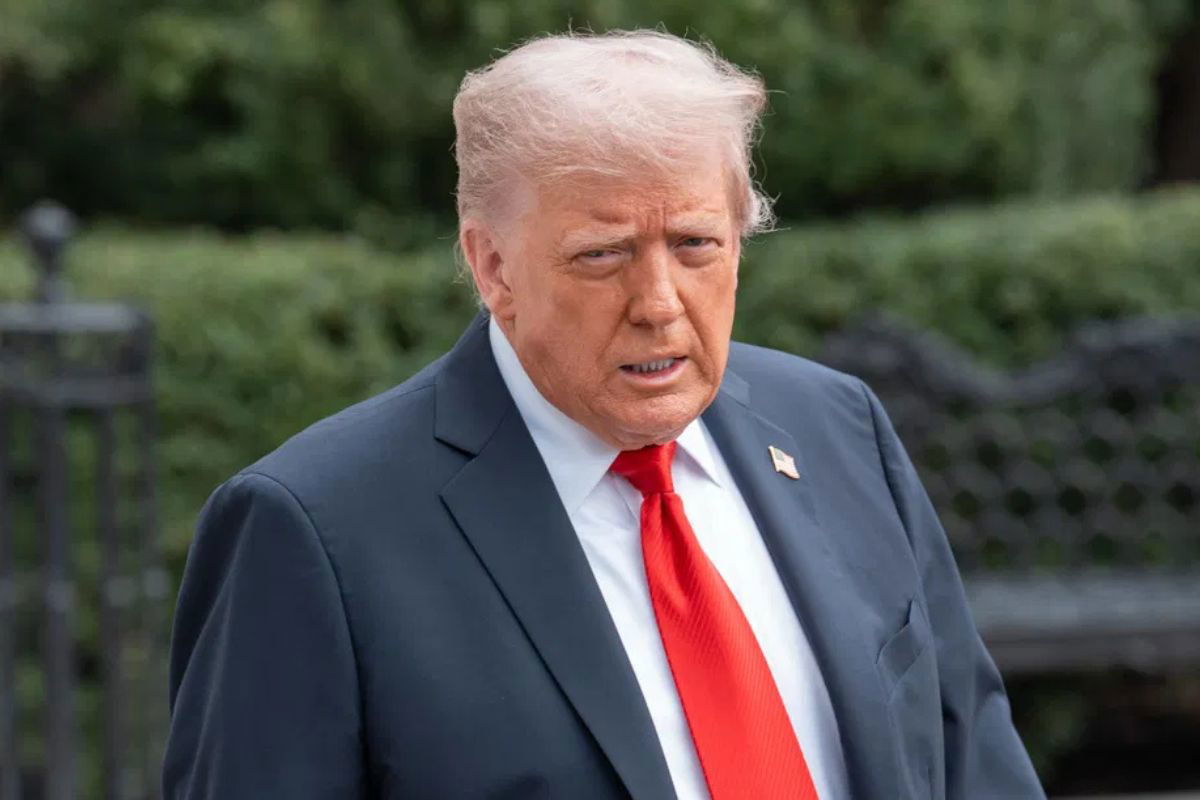
Just when everyone thought NIL and the transfer portal were the new reality of college sports, President Donald Trump came up with a shocking move. After facing mass exclusions on the transfer portal and players making moves for money, coaches like Dabo Swinney wanted a proper portal system more than ever. Now, Trump is making sure that a free moment doesn’t happen anymore, even though the Power 4 conferences are backing him up in it.
Watch What’s Trending Now!
President Donald Trump signed this new rule to finally end the chaos that the transfer portal and NIL brought to the teams. It now focuses on limiting players’ movement and bringing a more organized form of NIL earnings for them. Along with that, it will also support the Olympics and women’s sports so that they don’t lose funding because of other big sports like football and basketball.
This rule also gets the support of all Power Four conference leaders. “The Big Ten Conference would like to thank President Trump for his leadership and continuing efforts to protect college athletics and joins him in urging Congress to quickly pass legislation addressing the critical issues undermining its long-term stability,” Big Ten Commissioner Tony Petitti said.
SEC Commissioner Greg Sankey further adds to it, saying, “The establishment and enforcement of consistent national standards for college athletics remains a top priority, and President Trump’s executive order provides important clarity to help ensure all programs operate under comparable policies. We are grateful for the President’s leadership and the continued, bipartisan engagement of members of the House and Senate on these key issues.”
Other leaders shared similar views, with Big 12 Commissioner Brett Yormark saying, “Federal action is essential to protect the future of college athletics, and on behalf of the Big 12, we appreciate President Trump’s commitment to advancing a solution.”
And ACC Commissioner Jim Phillips added, “We deeply thank President Trump and his administration’s ongoing commitment to protecting college athletics by issuing today’s executive order.”
For the Power Four, roster retention had become a nightmare. This new directive gives SEC and Big Ten coaches breathing room to manage their 85-man scholarship limits without fearing constant off-season poaching. It essentially hits pause on the unrestricted free agency era that commissioners quietly despised.
Imago
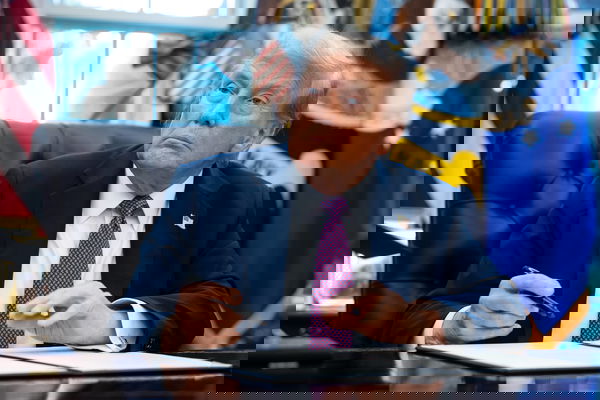
United States President Donald J Trump signs an executive order renaming the US Department of Defense the US Department of War in the Oval Office of the White House in Washington, DC, USA, on Friday, September 5, 2025. Copyright: xCNPx/xMediaPunchx
The order brings back a simpler but stricter transfer rule for college athletes. It states that a player can transfer to another school one time during their five-year playing period and still play immediately. If the athlete completes a four-year degree, they can get one more chance to transfer.
However, if a player transfers a second time without meeting the degree condition, they must sit out for a season. This is called a redshirt year. The order also introduces a clear eligibility rule called “5-for-5.” Athletes get five years in total to play five full seasons. This change makes the system easier to understand and reduces confusion that has caused court cases in the past.
Now, the executive order has strict consequences too if the university refuses to follow it. The order mentions that the government will check whether colleges are following NCAA rules. If a school breaks the rules, it could lose federal funding, such as grants or contracts. This is meant to push schools to follow proper guidelines.
It all started after Donald Trump had a meeting with Alabama’s former head coach, Nick Saban, last year. Saban, who has also strongly criticized how NIL deals are affecting college sports. They met again on March 6 at the White House, along with many other leaders, to discuss the future of college athletics. After this meeting, called the “Saving College Sports” symposium, Trump created five groups (committees) to study different parts of college sports.
These groups focus on laws, rules, NCAA changes, media, and player-related issues. The main Oversight Committee will collect ideas from all these groups and help decide what actions to take next. Just weeks after that, they passed the executive order, which will come into play in August. But is it the final verdict, or is there another play into it?
While the commissioners publicly praised the order, they know that executive actions are highly vulnerable to antitrust lawsuits. That’s exactly why their statements practically beg Congress to step in. They need a permanent federal law to shield these strict new transfer caps from being immediately frozen in court.
What happens next with Donald Trump’s executive order?
Donald Trump’s new order is strong and detailed, but it is not a final law. Courts will closely check it, and many people are expected to challenge it in court. In the past, some of Trump’s college sports orders were rejected by courts, so this one could face the same problem.
Because of this, many leaders believe a proper law passed by Congress is needed instead. That’s where the SCORE Act comes in. This bill is meant to create clear national rules about how college athletes get paid through NIL and how agents and schools should behave. Players like Bryce Underwood got deals worth $10.5 million without even taking a single snap in college football.
So, those concerns need proper attention. However, the bill has not passed yet because there is political disagreement. Senator Ted Cruz says that the SCORE Act needs 60 votes in the Senate to pass. This means that, along with Republicans, at least 7 Democrats must also support the bill for it to become law.
Even with bipartisan introduction from lawmakers like Janelle Bynum and Shomari Figures last summer, the SCORE Act faces an uphill battle. It requires 60 Senate votes, meaning Republican backers need at least seven Democrats to cross the aisle. Until Congress actually passes the protective legislation, the Power Four will have to rely solely on this executive order to keep the transfer portal in check.

