
On August 22, Dae’Quan Wright was on the Cleveland Browns’ sideline in uniform, warming up before their preseason game against Buffalo. It was only his second NFL stop of the summer. Just weeks earlier, the former Ole Miss tight end had gone undrafted, signed with the Philadelphia Eagles, been released and then claimed by Cleveland. Now, he was watching from the sideline as another NFL opportunity was already beginning to slip away.
Watch What’s Trending Now!
By Sunday, Wright had been waived by Cleveland, too. But his next football destination was not another NFL camp. Instead, he was preparing for a return to college, a possibility that would have sounded impossible a few months ago. A Louisiana court order had given Wright and other members of the 2022 class a path to another season, and Lane Kiffin was waiting at LSU. The move was about to become one player’s unusual second chance, and the SEC was preparing to draw a line.
The Big Ten has now passed a rule barring football players with certain professional ties from returning to its member schools. The rule covers players who declared for the NFL Draft and did not withdraw, appeared on an NFL roster or signed a professional contract. ESPN’s Pete Thamel reported the conference’s plans on August 25, and the Big Ten subsequently adopted the policy unanimously.
The Big 12 and ACC, meanwhile, were still considering similar restrictions as of August 25. Ross Dellenger reported that both conferences were examining whether to bar former professionals from returning to college. So the Power Four was moving toward a common answer, but it had not yet reached one. The trouble started with the NCAA’s new five-for-five model.
It lets most athletes play five seasons inside a five-year window. But the 2022 high school class had already entered college under the previous four-season structure, leaving those athletes caught between the old and new systems.
A Colorado federal court ruling first gave them another year. Then a federal appeals court froze that decision. State courts stepped in next, especially in Louisiana.
The result has been an eligibility map that can change from one day to the next. Monty Hunt, for example, was preparing to fly to Tennessee after being told he could play, only to learn the day before his trip that a federal appeals court had frozen the ruling that had restored his eligibility. He said he had already been promised $50,000 in NIL compensation and scholarship support.
That uncertainty is why the Louisiana ruling matters so much to Wright and the other NFL-linked players. It temporarily restored a fifth season for 16 football players among roughly 30 athletes covered by the case. Some had already signed NFL contracts, entered training camps or, in certain cases, played in preseason games.
A player who spent time in the NFL arrives with pro training, roster experience and preseason work. But the dispute is not simply about whether that player is better than the average college athlete. It is also about what happens to the player who never left. Every returning professional occupies a roster spot that could otherwise go to a current college player or a recruit.
Roster limits make the squeeze tighter, especially this late in the summer. High school recruits and current college players lose chances. That is the competitive-equity argument the conferences are using to justify their response. And there is another reason this NFL-to-college path suddenly makes sense: reaching an NFL roster does not necessarily mean securing an NFL career. Jack Pyburn is a useful example.
The former Florida and LSU linebacker went undrafted, signed with Tampa Bay and then recorded two sacks against the New York Jets in the preseason. His three-year Buccaneers deal was worth $3.115 million on paper, but only $115,000 was guaranteed. A return to LSU, meanwhile, was reportedly being discussed as an NIL opportunity worth around $1 million.
Zxavian Harris, another former Ole Miss player now headed toward LSU after an NFL stint with the New Orleans Saints, described his return as a “business decision.”
The timing makes that decision even more significant. NFL teams must cut their rosters to 53 players by August 30, meaning the college option has emerged precisely when undrafted players are finding out whether their NFL opportunity is real or temporary.
LSU and Lane Kiffin now stand as the test case within the SEC
The SEC first publicly opposed the return of former professionals on Monday before taking formal action Tuesday. On August 25, the conference adopted a rule barring athletes with certain professional experience from competing for SEC schools. The policy covers football and basketball and extends beyond the NFL to the NBA, WNBA and G League.
The SEC’s presidents and chancellors had unanimously backed opposition to the practice the night before, with the league stating: “College athletes, not former professional athletes, have been at the heart of the Southeastern Conference.” The conference said athletes who leave college, sign professional contracts and compete professionally should not then be allowed to return to college competition.
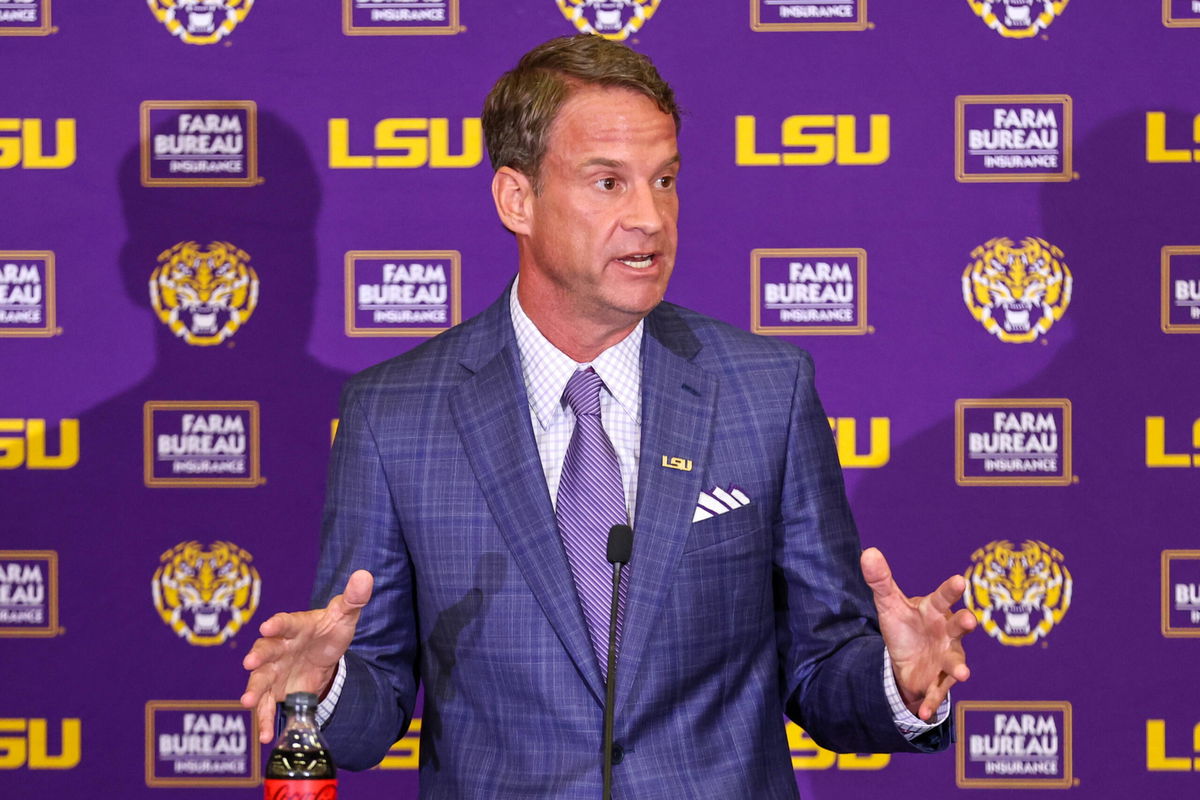
The timing puts LSU and Kiffin at the center of the SEC’s first major test of that position. Kiffin has pursued Wright and Harris, two players he coached at Ole Miss, after both entered the NFL as undrafted free agents.
Kiffin has defended the moves by pointing back to the court rulings.
“Because of the [court] rulings, they are going to play for you or someone else,” Kiffin said Monday. “We made the decision to recruit them.”
He argued that the players did not know when they made their decisions to turn professional that the NCAA would later create a fifth-year opportunity for their class. His position is that the players are simply using an eligibility path that a judge has opened to them, rather than exploiting a loophole they created themselves.
There is also a practical reason Kiffin has been willing to move so quickly: Wright and Harris are not unknowns. He coached both at Ole Miss, knows their games and already knows how they fit in the SEC.
Harris’ return is particularly striking because his relationship with Kiffin was not always warm. After Kiffin left Ole Miss for LSU, Harris called the move “like a slap in the face and then a backhand” and said the players had taken it personally. Months later, the two are preparing to work together again.
That reversal says something about the economics of this new college-football landscape: a player and coach do not have to forget what happened before. They only have to decide that the new opportunity is worth taking.
By including both football and basketball, the SEC has also made clear that this is not solely a reaction to Kiffin’s roster moves. The rule reaches a broader question: what happens when an athlete crosses into professional sports and then tries to return to college?
LSU has already become the clearest test case. Wright is the most visible example in football, while former St. John’s and UMass player R.J. Luis Jr. has emerged as the basketball parallel. Luis went undrafted, signed a two-way deal with the Utah Jazz, was traded to Boston and appeared in three NBA games before a Louisiana court ruling opened a path back to college.
A conference ban would set a standard inside each league. A court could say an athlete is eligible to compete in college, while a conference could still say that athlete cannot compete for one of its member schools because of his professional history. That creates the next legal question: who gets the final word?
The court orders and conference rules are addressing two different things. The courts are determining whether certain athletes can reclaim eligibility. The conferences are determining who can compete in their competitions. Whether those two positions can coexist is now likely to become another legal fight.
That could put conferences themselves in court as defendants rather than leaving the NCAA to absorb the entire legal battle. Dellenger noted that if athletes challenge the new conference policies, the leagues could find themselves fighting lawsuits in the same courts that already granted players eligibility.
And that is where this story becomes bigger than Wright, Harris or Kiffin. Kiffin did not create that pathway. The court rulings did. But by recruiting from it, he showed the conferences what that pathway could become. The SEC and Big Ten have now tried to close the door; the Big 12 and ACC are deciding whether to do the same.