
College football has become an expensive business, and firing a head coach is no exception. Between guaranteed contracts, buyout clauses, and the cost of hiring a replacement, a coaching change can leave athletic departments facing tens of millions of dollars in additional expenses.
Watch What’s Trending Now!
For some programs, those financial commitments can make it difficult to move on from a head coach, even when results fall short of expectations. From Mike Norvell’s contract at Florida State to Deion Sanders’ deal at Colorado, these five coaches come with financial considerations that could complicate any decision to make a change.
1. Mike Norvell, Florida State

Imago
Credits: IMAGO
Florida State faces one of the clearest examples of a coach who has become expensive to replace. Norvell’s contract reportedly requires paying 85 percent of his remaining compensation if he is fired without cause. The cost would fall to about $45.6 million after the 2026 season.
Florida State has already experienced the financial consequences of a major coaching change with Jimbo Fisher’s enormous Texas A&M buyout serving as a cautionary example. Norvell’s situation is complicated because his 13-0 regular season and 2023 ACC championship raised expectations, while consecutive losing seasons have put pressure on the program. Firing him would mean paying a buyout before funding a new coaching staff and rebuilding an entire roster.
The strongest point is that Florida State must weigh the cost of keeping Norvell against the cost of replacing him. A coaching change could reportedly push the combined expense of dismissing Norvell and his staff and hiring a successor towards $100 million.
The Seminoles sit at 3-4 following two straight ACC losses to Louisville and Miami.
2. Dan Lanning, Oregon

Imago
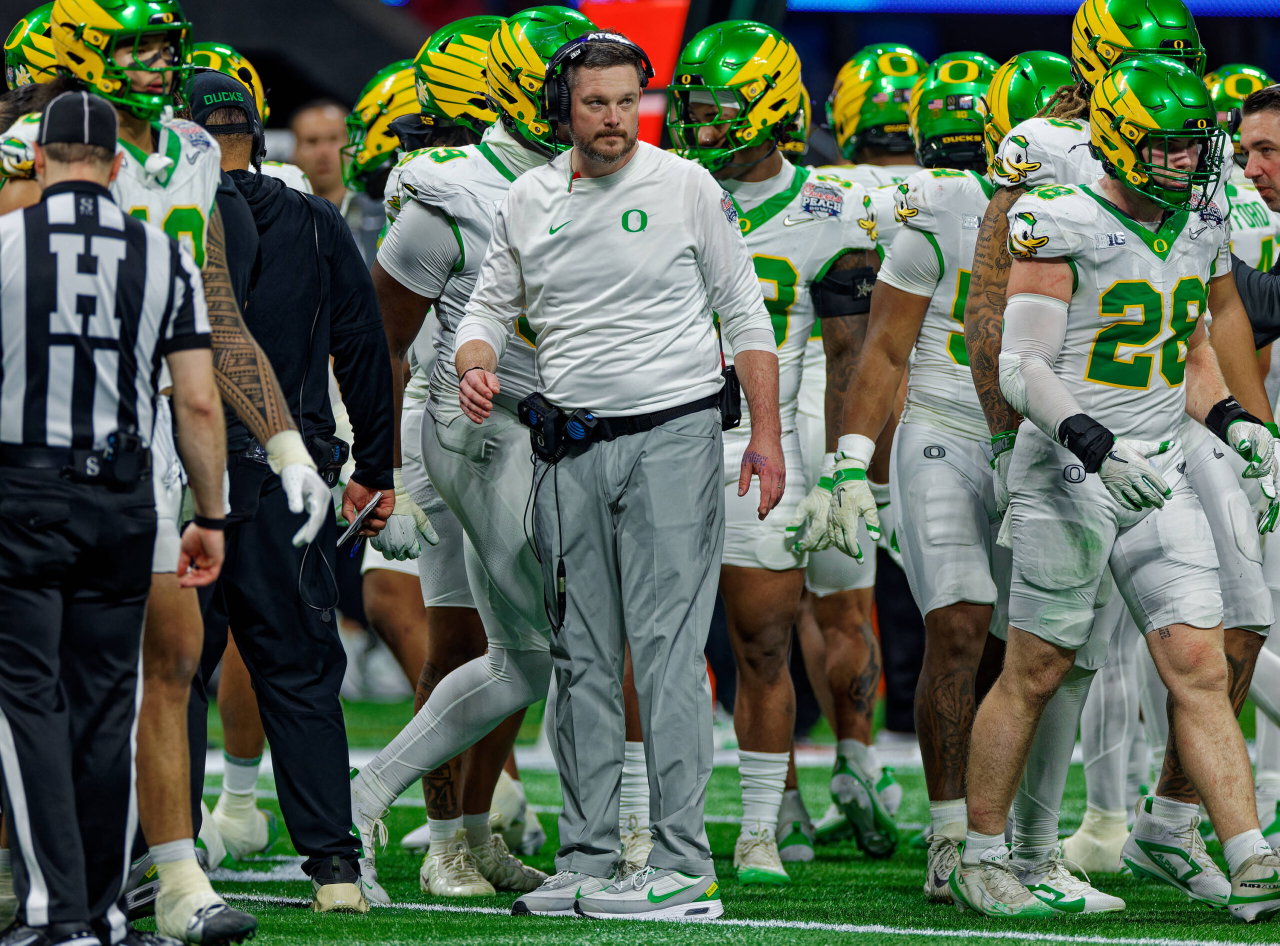
December 07, 2024: Oregon head coach Dan Lanning with the Big Ten Championship trophy after NCAA, College League, USA football game action between the Penn State Nittany Lions and the Oregon Ducks at Lucas Oil Stadium in Indianapolis, Indiana. /CSM. – ZUMAc04_ 20241207_zma_c04_480 Copyright: xJohnxMersitsx
Oregon’s official athletics department has extended Lanning’s contract through the 2030 season. A separate contract tracker lists a dismissal buyout of approximately $56.7 million, although the exact figure should be checked against the latest contract documentation.
Unlike Norvell, Lanning is not an obvious example of a coach whose job security rests solely on financial constraints. Oregon has invested heavily in maintaining a championship-caliber program, and Lanning has delivered strong results. His reported buyout adds another layer of security because dismissing him would require Oregon to absorb a massive contract expense.
Oregon is 4-3 and all but out of playoff contention. The offense took major hits with quarterback Dante Moore going down with an injury and the loss of Will Stein, who became Kentucky’s head coach. Lanning fired offensive coordinator and play-caller Drew Mehringer following the 21-10 loss to Illinois this past week.
While some Ducks fans may want Lanning gone, a lot of the problems this season have been out of his control. The Ducks would also have to consider the opportunity cost of replacing a successful coach. Even a wealthy athletic department must decide whether a coaching change would improve its chances of winning enough to justify the financial commitment. For Lanning, the combination of a long-term deal, reported buyout, and on-field success makes a firing difficult to justify financially.
3. Deion Sanders, Colorado

Imago
September 12, 2025, Houston, Texas, USA: Colorado head coach DEION SANDERS before a college football game between the Houston Cougars and the Colorado Buffaloes on September 12, 2025 in Houston, Texas. Houston USA – ZUMAc201 20250912_zap_c201_008 Copyright: xScottxColemanx
Sanders’ five-year extension runs through 2029. Reports put Colorado’s potential obligation to fire him without cause before the end of the 2026 season at around $25.5 million to $26 million. His contract’s separate provision for leaving for another coaching job should not be confused with dismissal terms.
Snaders presents an interesting contrast to the other coaches because the financial risk comes alongside the pressure to maintain the momentum he brought to Colorado. His arrival generated national attention, helped revive interest in the program, and was followed by a nine-win season in 2024. However, Colorado’s struggles in 2026 have renewed questions about his future.
The university must decide whether the potential improvement from a coaching change would justify a buyout approaching $26 million, plus the cost of hiring a replacement. That does not mean Colorado cannot fire Sanders. It means the administration would have to be convinced that continuing under him would cost the program its long-term goals more than absorbing the expense of moving on.
4. Mike Elko, Texas A&M

Imago
September 13, 2025: Texas A&M head coach Mike Elko during pregame of NCAA, College League, USA football game action between the Texas A&M Aggies and the Notre Dame Fighting Irish at Notre Dame Stadium in South Bend, Indiana. /CSM South Bend United States of America – ZUMAc04_ 20250913_zma_c04_879 Copyright: xJohnxMersitsx
This certainly hasn’t been the season Texas A&M fans expected following a college football playoff appearance. Which is why some want Elko gone. Texas A&M extended Elko through the 2031 season in November 2025. The Houston Chronicle reported his new deal is worth $69 million over six years, with substantial remaining compensation the Aggies could owe if they terminate him without cause. The exact amount depends on the contract’s terms and circumstances.
Elko’s case is interesting because Texas A&M knows what an expensive coaching mistake looks like. The school previously dismissed Jimbo Fisher with a buyout of roughly $77 million. Elko then led the Aggies to an 11-2 season in 2025 and a College Football Playoff berth, helping justify the university’s financial commitment.
That recent investment gives Texas A&M a reason to exercise patience. Replacing Elko would mean paying out the applicable contractual obligations, finding another coach capable of competing in the SEC, and financing another transition. With the program having made progress under Elko, the administration would need a really good reason to take on the costs.
5. Clark Lea, Vanderbilt
Imago
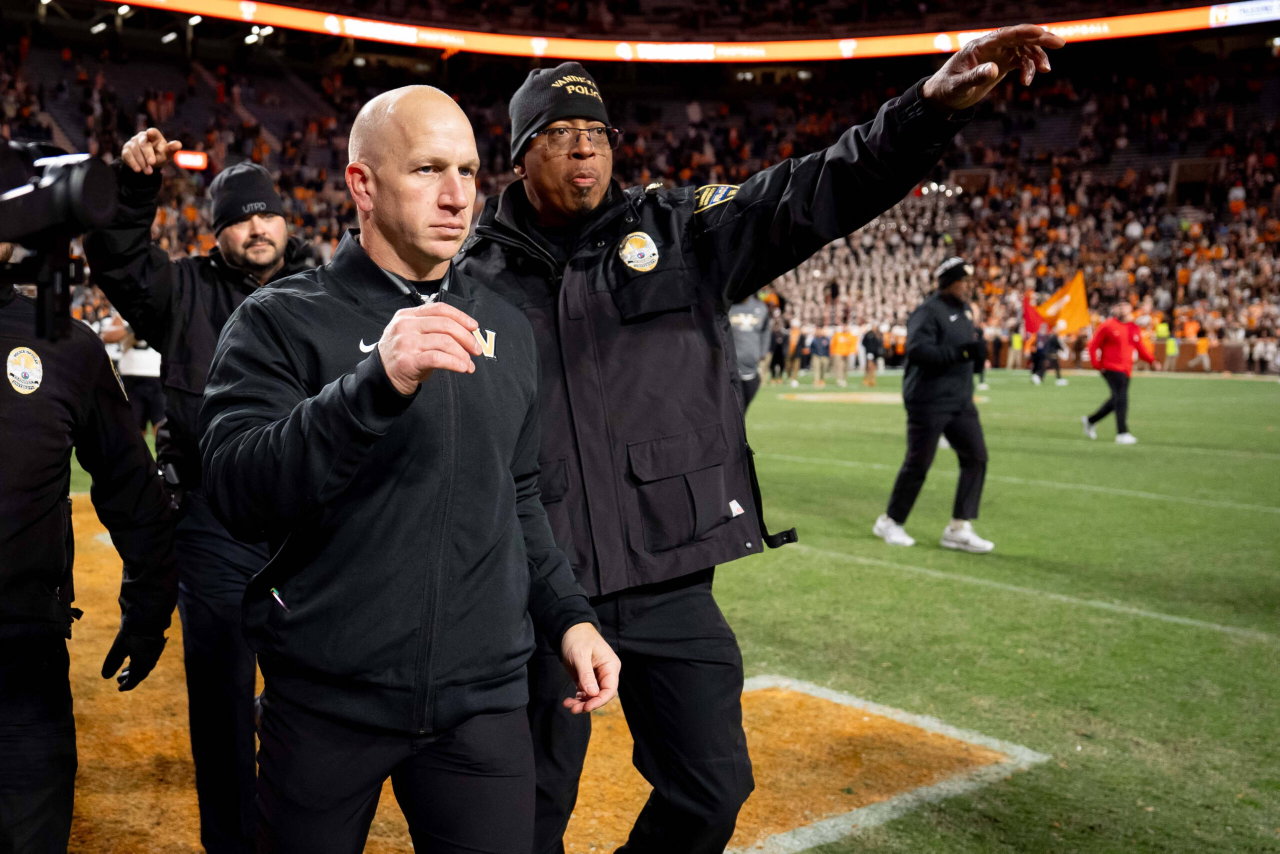
November 29, 2025, Knoxville, Tennessee, USA: Vanderbilt head coach Clark Lea goes to shake hands with Tennessee head coach Josh Heupel after their game at Neyland Stadium. Knoxville USA – ZUMAh237 20251129_zsp_h237_045 Copyright: xCamdenxHallx
Lea agreed to a six-year contract extension in November 2025 after Vanderbilt’s breakthrough season. In 2026, the team is 3-5 and has lost five straight in conference play. A coaching-contract tracker estimates a dismissal would cost roughly $10 million, but Vanderbilt is a private university, and no publicly available contract independently confirms the figure.
Lea may be the most interesting example of a coach whose job security is tied to his program’s financial and competitive realities. Vanderbilt doesn’t have the same football resources or historical expectations as Texas A&M and Oregon, so continuity and smart investment matter more.
After struggling through his first few seasons, Lea helped Vanderbilt post a 10-win regular season in 2025 and became a more attractive national coaching candidate. The university responded with a new contract.
Firing Lea would mean paying termination costs and investing in another coaching search, while risking a setback for a program that had finally made progress. His situation shows why a school might choose to remain patient rather than spend millions of dollars to start over.