Imago
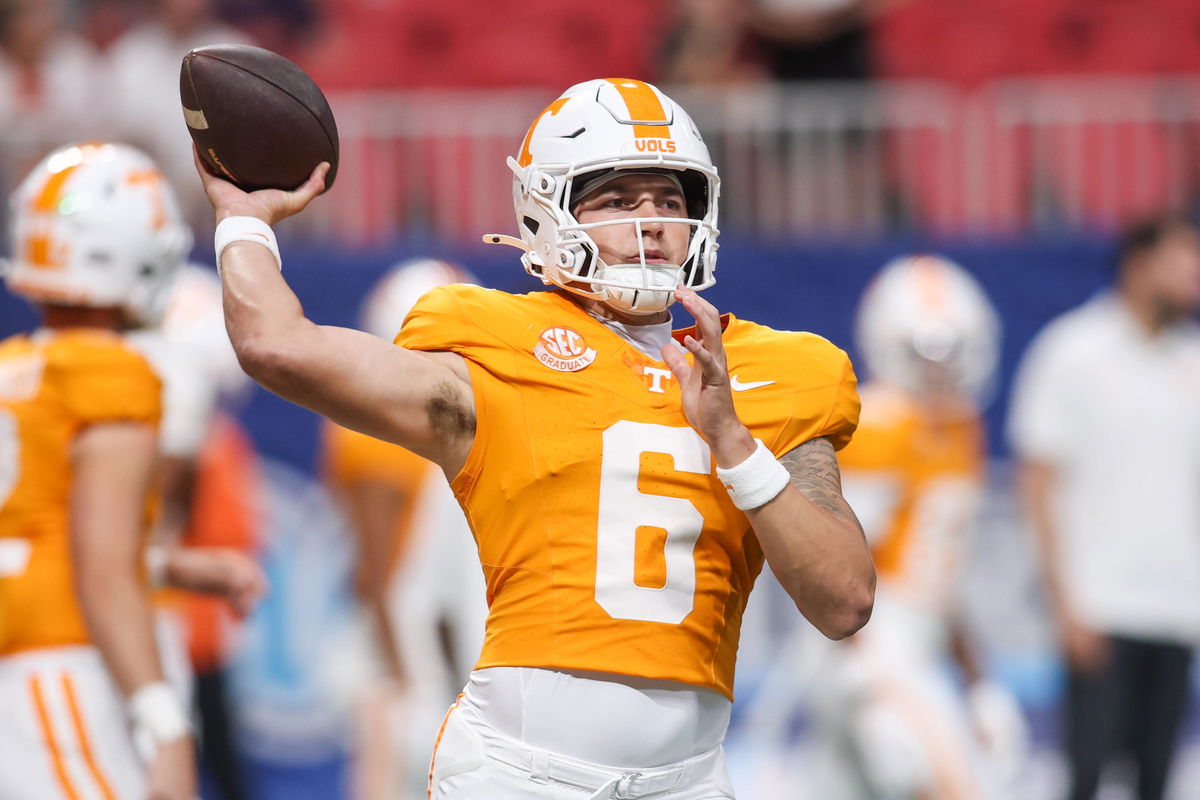
Joey Aguilar’s performance against the Oklahoma Sooners has essentially ended his chances of winning the Heisman Trophy.
Imago
Joey Aguilar’s performance against the Oklahoma Sooners has essentially ended his chances of winning the Heisman Trophy.
Imago
Joey Aguilar’s performance against the Oklahoma Sooners has essentially ended his chances of winning the Heisman Trophy.
Imago
Joey Aguilar’s performance against the Oklahoma Sooners has essentially ended his chances of winning the Heisman Trophy.
The NCAA is getting hit with lawsuits left and right. And the latest one might be their most embarrassing yet. Diego Pavia’s landmark eligibility case, in which he initially challenged the NCAA’s rule counting junior college seasons against Division I eligibility, has now ballooned to include 26 additional players. And this includes Tennessee quarterback Joey Aguilar.
Watch What’s Trending Now!
The legal filing dropped right before Christmas. Fox Sports reporter Trey Wallace shared the news on X, “Attorneys for Diego Pavia and others suing the NCAA regarding JUCO seasons have filed a ‘Memorandum In Support of a Preliminary Injunction.'” They cite James Nnaji, who has enrolled at Baylor, with a holiday poem.”
Ross Dellenger added more context. “26 former JUCO players are requesting an additional playing season, asking the court in a filing today to extend the injunction granted to Pavia last year. The players want a January hearing before the transfer portal closes.” Attorney Ryan Downton literally started his legal memo with “‘Twas the night before Christmas” before dropping the hammer on the NCAA’s double standard.
So what’s this NBA case everyone’s talking about? Meet James Nnaji, a 7-foot center who was drafted 31st overall by the Detroit Pistons in 2023. He played professionally in Europe for four years, participated in the NBA Summer League, and has just been cleared by the NCAA to play four full seasons at Baylor, starting this year.
Here are the plaintiffs that are currently suing the NCAA.
This list includes Tennessee QB Joey Aguilar as well. pic.twitter.com/oq8yfUEsKq
— Trey Wallace (@TreyWallace_) December 27, 2025
He’ll be 25 years old before his eligibility runs out. Downton’s filing put it perfectly. “The NCAA argues to this Court that high school seniors are harmed if a 22- or 23-year-old former junior college player plays one more year of college football.”


A professional basketball player who was literally drafted by an NBA team gets four years. But a kid who played at a junior college, often because he couldn’t afford a four-year school or needed developmental time, gets penalized? That’s the contradiction Downton is hammering home.
Joey Aguilar’s story mirrors countless former junior college players who feel cheated by the NCAA’s eligibility clock. Tennessee’s quarterback joined the lawsuit as one of the 26 additional plaintiffs seeking relief from the JUCO eligibility rule. Like Pavia, Aguilar spent time at the junior college level before transferring to a Division I program. And those JUCO seasons counted against his five-year eligibility window, even though he wasn’t competing with the resources, coaching staffs, or national exposure that Power Four programs offer.
Now staring down the end of his college career, Aguilar is fighting for the chance to return to Tennessee in 2026. This is an opportunity that hinges entirely on whether Judge William L. Campbell extends Pavia’s preliminary injunction to cover all 26 plaintiffs. His attorneys are pushing for a January hearing before the transfer portal closes, as without clarity soon, players like Aguilar will be stuck in limbo.
The NCAA’s willingness to grant James Nnaji four years despite his professional basketball background, while denying JUCO players the same consideration, has become the smoking gun in this case. And Aguilar is betting that the contradiction is too glaring for the courts to ignore.
The Diego Pavia case
The core issue boils down to the NCAA’s rule stating that your eligibility clock starts ticking at any “collegiate institution,” whether it’s an NCAA member or not. For Pavia, that meant his time at New Mexico Military Institute counted against him. This was a loss because junior colleges don’t offer the same resources, exposure, or competition as Division I programs.
He started at NMMI in 2020 (which didn’t count due to COVID). He led them to a 2021 national championship, played two years at New Mexico State, and then transferred to Vanderbilt for the 2024 season. It was his sixth year in college football, but only his fourth at the D-I level. After winning a preliminary injunction in November 2024, Pavia had a Heisman Trophy runner-up season.
But Pavia isn’t even trying to play another year. He’s going pro. Yet he’s continuing the lawsuit because he knows there are dozens of athletes like Joey Aguilar who deserve that extra season. Aguilar could potentially return to Tennessee in 2026 if the injunction gets extended. And this isn’t the NCAA’s only eligibility headache.
Downton is also representing Vanderbilt linebacker Langston Patterson in a separate lawsuit challenging the redshirt rule, with five players asking for injunctions to play in 2026. The NCAA is essentially fighting a multi-front war over eligibility rules. With the transfer portal closing soon, these 26 players are pushing for a January hearing to settle this before their futures hang in limbo.
Related Newsletters