
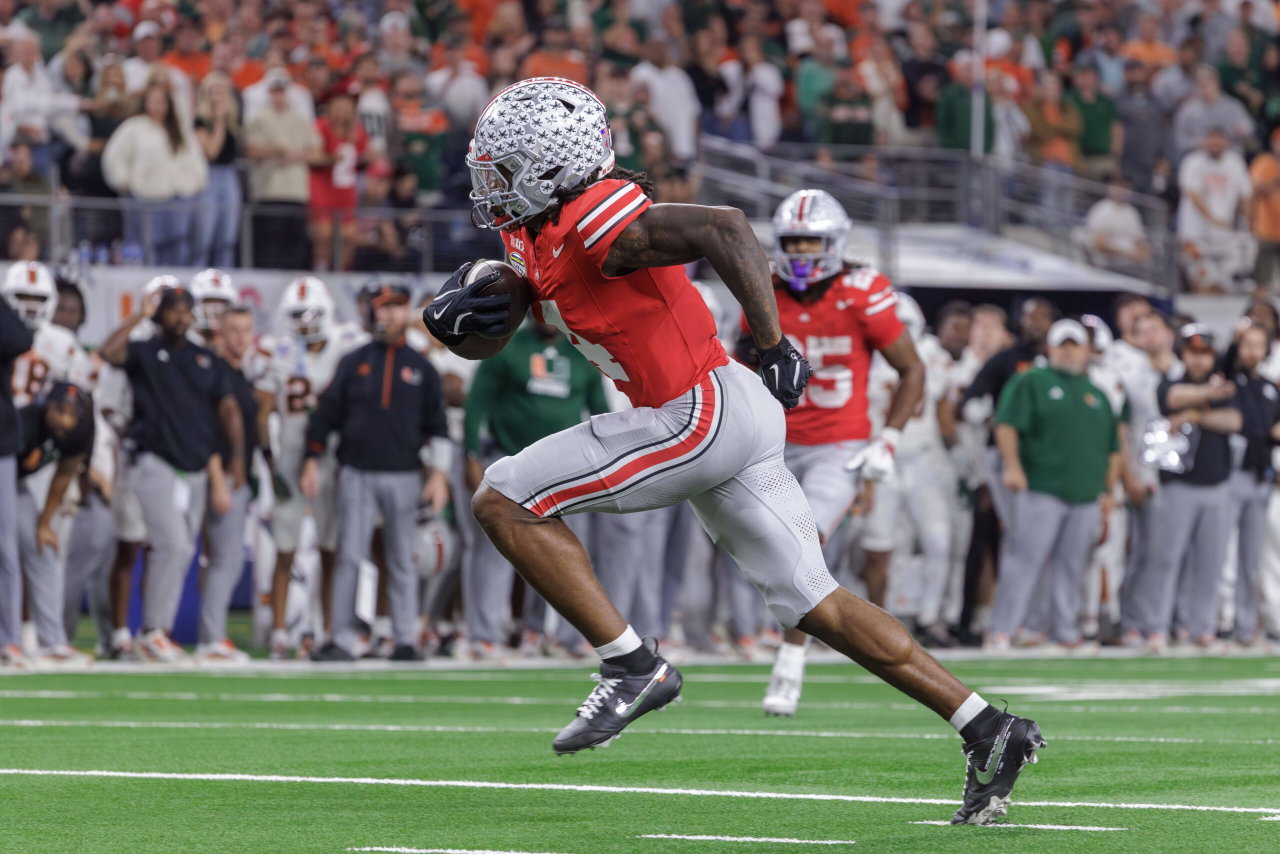
The clock had barely ticked past the opening kick when Jeremiah Smith made Memorial Stadium feel small. Luke Fahey rolled right on Ohio State’s third play and found the junior wide receiver streaking down the sideline. Smith separated, accelerated, and finished a 67-yard touchdown that put the No. 14 Buckeyes ahead 7-0. For a moment, the College Football Playoff picture still had room for Columbus. By the final whistle, Nebraska had a 31-28 win, Ohio State sat at 7-4, and any realistic path to the playoff was gone.
Watch What’s Trending Now!
Smith finished with six catches for 165 yards and two touchdowns. He tied Terry Glenn’s Ohio State single-season record with his 17th score and became the first Big Ten receiver to reach 4,000 career receiving yards. None of it was enough to save the season.
On the November 21 episode of Nightcap, NFL Hall of Famer Shannon Sharpe cut through the noise with a blunt assessment. “Jeremiah Smith did all he could,” Sharpe said. “I don’t think they’ve had a Heisman Trophy winner that’s lost four games in the regular season since 1969… But looking at Jeremiah Smith, he is the best player in college football.”
The 1969 reference is precise. Oklahoma running back Steve Owens won the Heisman that year on a 6-4 team. No winner has carried a four-loss regular-season resume since. Sharpe’s co-host and NFL legend Chad ‘Ocho’ Johnson concurred with his view. However, going by how Smith has performed this season, Ocho hopes that he’d be an anomaly.
“I hope they don’t factor in wins and losses. Is it an individual award based on what you’ve done individually? Now, what you like to happen is you like your individual performance to win a Heisman, affect those wins and losses. But it doesn’t always happen that way. It just doesn’t,” Johnson said.
Ohio State’s fourth loss arrived against a Nebraska team that had lost 31 straight games to ranked opponents before Saturday. Freshman quarterback Luke Fahey threw for 259 yards and two scores, but the Buckeyes managed only 76 rushing yards and turned the ball over twice.
Smith’s season numbers back the praise. He leads the nation in receiving touchdowns with 17 and sits near the top in yards. Opposing defenses have routinely bracketed him with double coverage, yet he still produced explosive plays against Texas, Iowa, Indiana, Oregon, and now Nebraska. The 67-yard score on Saturday was the kind of play that has defined his three years in Columbus.
Ohio State’s issues elsewhere have been harder to ignore. Julian Sayin’s season-ending injury against Indiana forced Fahey into the starting role. The offense has not been the same. Losses to USC, Oregon, and Nebraska followed. The defense allowed 376 yards and 35 minutes of possession time in Lincoln. Ryan Day’s team now faces rival Michigan next week with little left to play for beyond pride.
Sharpe’s argument returns to the core of the Heisman: individual excellence. Voters have historically rewarded winners on strong teams. Three-loss seasons have produced winners in recent years; Jayden Daniels and Travis Hunter among them, but four losses remain a rare territory. Betting markets still list Smith as the clear favorite despite the record, suggesting many observers already view his body of work as decisive.
Whether that holds when the ballots are cast remains the tension. Ohio State’s playoff hopes ended in the rain at Memorial Stadium. Smith’s individual case did not. He has one more regular-season game, against Michigan, to add to a resume that already includes program and conference records. After that, the conversation shifts from the field to the voters.