Imago
Credits: IMAGO
Imago
Credits: IMAGO
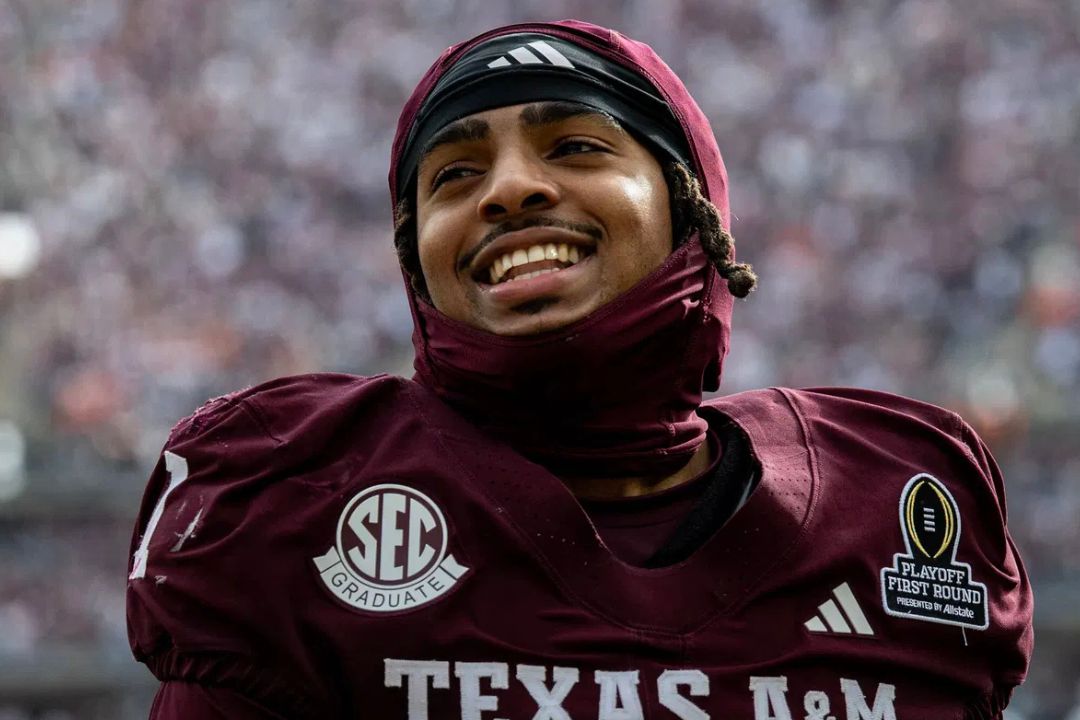
The world of college sports collectibles just got a lot more interesting. Earlier today, trading card giant Panini America officially announced major NIL deals with three of the most electrifying players in college football: Mario Craver (Texas A&M), Waymond Jordan (USC), and Rasheem Biles (Texas). The Biz of Athlete agency puts together these deals. Basically, these guys are getting paid for their “Name, Image, and Likeness,” and in return, you’re going to see their faces and autographs on official cards very soon.
Watch What’s Trending Now!
Mario Craver is now the Aggies’ undisputed top target. After racking up 917 receiving yards last year, the departure of KC Concepcion to the NFL leaves Craver fully in the spotlight. However, his deal with Panini is all about his “non-exclusive” rights.
It means he can still do other stuff, but he’s committed to signing about 5,000 autographs for them. If you’re a collector, look out for his “Chrome” and “Relic” cards, which might even feature pieces of jerseys he wore during games. He’s apparently the Aggies’ go-to guy right now, both on the field and now on the hobby.
Texas A&M WR Mario Craver, USC RB Waymond Jordan and Texas LB Rasheem Biles have inked NIL deals with Panini, their reps @thebizofathlete tell @On3. https://t.co/P0jTd9jOYp pic.twitter.com/f3fKN4SNSU
— Pete Nakos (@PeteNakos) April 4, 2026
Meanwhile, linebacker Rasheem Biles stands out as a massive transfer portal victory for Texas. The Ohio native has his work cut out for him in Austin. Half of the country was fighting for his pledge when he entered the portal. Coming over from Pittsburgh, Biles was a 2x All-ACC selection with 100+ tackles and three defensive touchdowns.
The Longhorns DC Will Muschamp brought him in, particularly to replace Anthony Hill Jr, who is heading into the draft. His NIL valuation has already shot up to around $595,000. Safe to say this Panini deal officially cements him as a national star before he even plays his first snap in Austin.
Out west, USC running back Waymond Jordan adds more value to Panini’s collegiate lineup. This RB’s journey is one for the books. He was the No. 1 junior college running back in the country before joining the Trojans.
Even though an ankle injury cut his 2025 season short, he still averaged a crazy 6.5 yards per carry and scored 5 touchdowns in just about six games. He had two 150-yard games before things went south for him. Brands like C4 Energy and Niagara Water already jumped on his bandwagon a bit earlier. But the Panini deal is the one that really puts him in the hands of fans nationwide. With him returning healthy for 2026, he’s a legitimate contender for the Doak Walker Award.
It’s a win-win situation for every party involved. By signing these guys to non-exclusive licenses, Panini can feature them in its biggest products. The players get a payday and a chance to build their personal brands.
Panini’s breakthrough into college football
Historically, Panini didn’t always have this direct “pipeline” to college stars. For decades, they had to wait until a player was officially drafted into the NFL before they could strike a deal. Everything changed in July 2021 when the NCAA dropped the NIL (Name, Image, and Likeness) bombshell. Panini jumped in and took advantage of it, realizing they could capture a player’s journey from their freshman year all the way to the pros. Basically, it helped them build a long connection with collectors.
In those early days of 2021, the strategy was a bit of a Wild West scramble. Panini’s origin in the NIL space started with ‘instant’ cards like digital or physical cards printed immediately after a big game. Shortly afterwards, they changed their business model. They signed exclusive long-term deals with legacy names like Quinn Ewers and Arch Manning.
The evolution of these deals has also changed how the cards actually look. In the beginning, because of complicated licensing rules of the NCAAs and other guidelines, you’d always see players in “generic” uniforms with the team and their logos photoshopped out. However, as Panini secured more “Collegiate” licenses, they were able to feature official school colors and logos without any problem.
This was a game-changer for the “origin story” of these cards, as alumni and die-hard college fans started buying in. Now, the brand focuses on “non-exclusive” deals that allow players to sign with multiple companies.
Looking back, Panini’s college history is really a story of scouting. They treat their NIL department like a front office, looking for the next breakout transfer or the freshman who is about to take over the SEC. By the time a player becomes a household name, Panini usually already has their signature on file, hopefully.
Written by

Edited by

Himanga Mahanta