
With 5:36 left in the second quarter against the Kansas State Wildcats, the Colorado Buffaloes had a chance to get off the field. Blake Barnett threw an incomplete pass on third down, but the play was wiped out after defensive lineman Gideon Lampron was called for roughing the passer.
Watch What’s Trending Now!
Instead of punting, Kansas State got a fresh set of downs at the Colorado 40. The Wildcats made the extra opportunity count. Less than four minutes later, Barnett found Joshua Manning for a 28-yard touchdown, tying the game at 7-7.
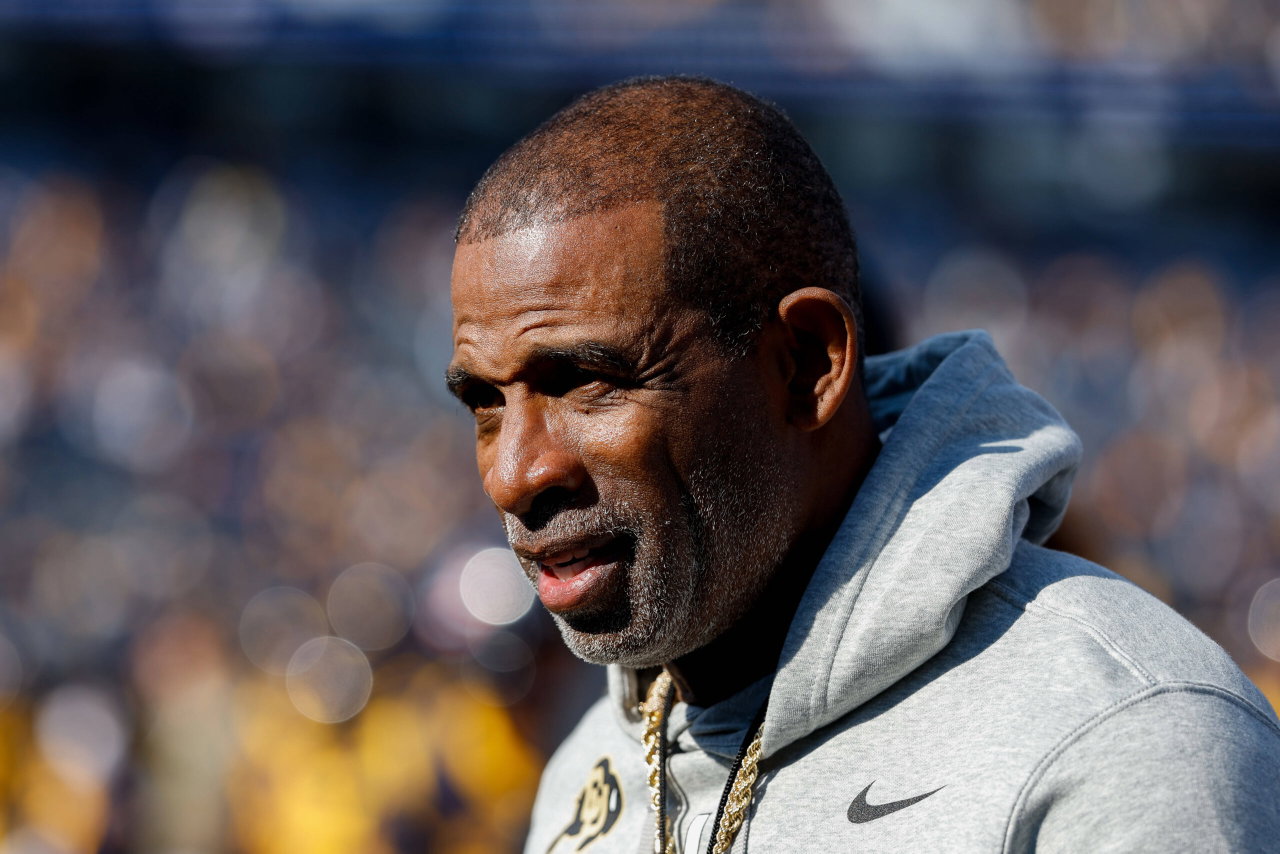
It was the kind of mistake Deion Sanders has been trying to avoid from his team all season. And even after Colorado escaped with a 27-24 overtime victory on Oct. 31, the head coach was not prepared to let it slide.
“First and foremost, man. Truly, I said it yesterday after the game. I’m truly proud of you,” Deion Sanders addressed his players and staff in the CU conference room, as seen in a Nov. 2 “Well Off Media” YouTube Video.
After hailing his players for their grit, he got real with them about the amount of penalties they got.
“Penalties? KSU had five for 35 yards. Actually, we had 11 because they declined three. 11 penalties. Coaches, players, 11 penalties. That stuff hurts … that can’t happen, guys,” Sanders sternly added.
Sanders has had this conversation before. The penalty problem was already one of his biggest frustrations heading into the Kansas State game, and it was not something he could dismiss as a bad afternoon.
Before the matchup, Colorado ranked 136th nationally in penalties per game, averaging 9.4. Only Syracuse (9.7) and Liberty (10.1) had been penalized more often. The Buffaloes had committed 10 penalties for 93 yards against Utah and 11 for 84 yards in their loss at Oklahoma State.
Sanders had been particularly irritated by the contrast between what he expected from his players during the week and what he saw on Saturdays.
“We’ve been consistent the last couple weeks on special teams, but defensively, offensively, running the ball, throwing the ball, creating turnovers, eliminating penalties — we got to have some kind of consistency,” he said before the Kansas game. “That’s the only thing we’re consistent in, is getting penalties, and that doesn’t make sense to me. We have to do better and prepare much better.”
The numbers after eight games have not offered much relief. Colorado has been charged with 74 accepted penalties for 643 yards, an average of 9.25 flags and 80.4 penalty yards per game. That put the Buffaloes at the bottom of the conference in both categories.
That is a lot of free yardage to hand opponents before accounting for the damage caused by the timing of those calls. A holding penalty can kill a promising drive. A personal foul can turn a punt into another scoring opportunity. The roughing-the-passer call against Kansas State was a clear example.
There was another uncomfortable moment at the end of regulation. Kansas State were at the Colorado 3-yard line with six seconds remaining, trailing 21-14. After a spike and a delay-of-game penalty against the Wildcats, Barnett completed an eight-yard touchdown pass to Garrett Oakley.
Colorado was flagged for both defensive pass interference and defensive holding on the play. The pass-interference penalty was declined, while the holding call was accepted. Immediately, Kansas State tied the game with the extra point.
In September, after Colorado’s loss to Northwestern, Deion Sanders had questioned how a team that spends so much time discussing discipline could continue making avoidable mistakes once it stepped onto the field.
“Everything they do is discipline, discipline, discipline,” Sanders said. “Then when you get out there on the field, you’re undisciplined. I don’t understand.”
The message became even more serious. After Northwestern steamrolled Colorado, Sanders dismissed several players from the program as he tried to change the team’s standards. He also pointed to the penalty count, which had reached 28 for 247 yards at that stage of the season.
“We’re challenging them to be who they say they want to be,” he said.
There had been other changes before the season, too. Sanders introduced a fine system in January that included financial penalties for missing or arriving late to practices, meetings, film sessions, and treatment.
Violations of team rules and public or social media misconduct also carried fines. The idea was to make expectations clear. Players knew what was required of them and what could happen if they ignored those rules. Yet the penalties on the field have continued.