
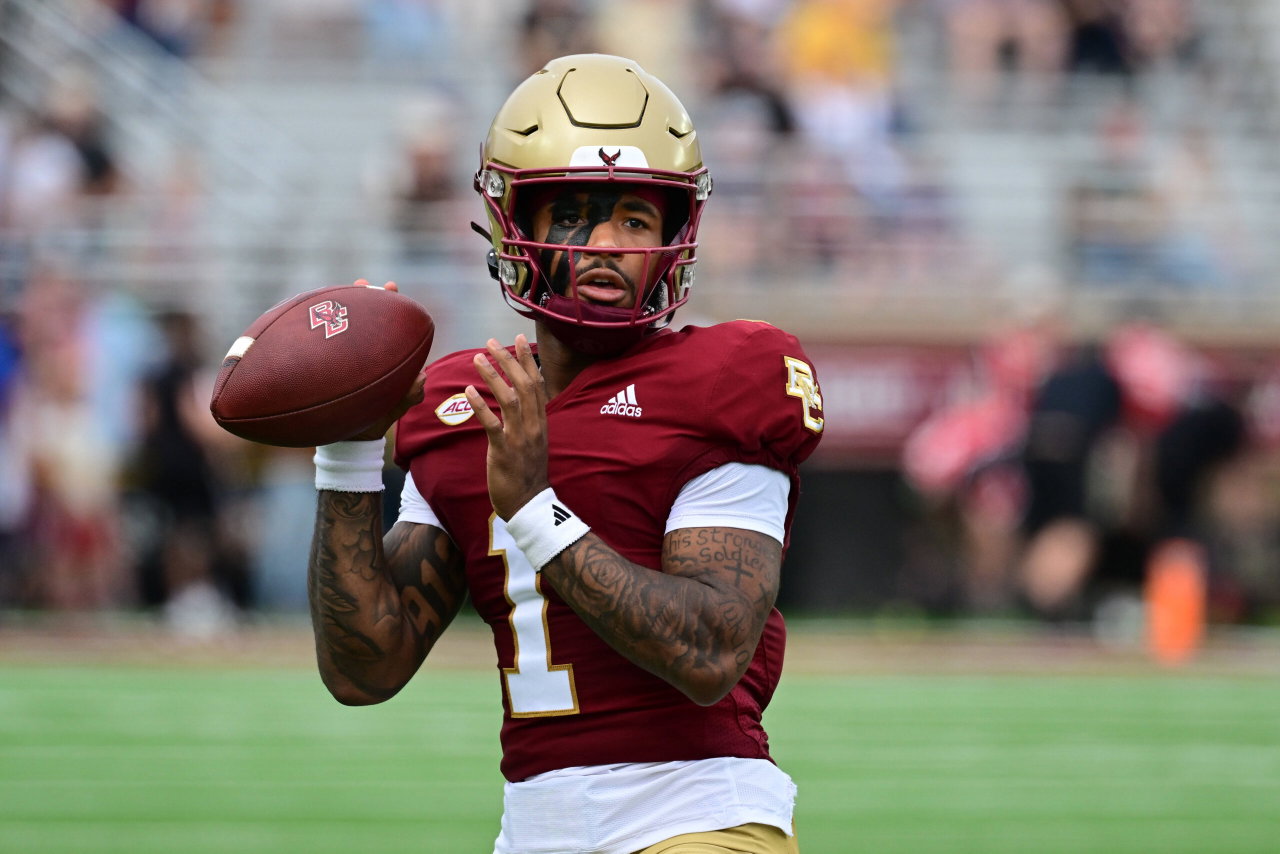
Ever since a local judge in Louisiana approved an injunction giving the 2022 class one more year of eligibility and potentially pulling around 16 NFL rookies back into the college ranks, fans have been pushing the idea that Thomas Castellanos could be the perfect QB for Texas Tech’s national championship push. With Brendan Sorsby gone and Will Hammond returning from an ACL injury, Castellanos looked like a promising addition to the Red Raiders’ quarterback room. But after the Big 12’s latest statement, the situation doesn’t look nearly as promising as it did just yesterday.
Watch What’s Trending Now!
Hours after Castellanos announced his Texas Tech commitment, the Big 12 athletic directors voted unanimously to implement an all-sports ban on returning professional athletes.
An excerpt of their statement on X read:
“No member institution may roster an athlete who has, at any time: 1. Declared for the draft or supplemental draft of a professional sports league and did not timely withdraw before the draft; 2. Been listed on the roster of a professional sports league; or 3. Signed a contract with any professional sports league to provide athletics services.”
The power conferences essentially built a wall around college sports, warning schools that the rule functions completely independently of what individual state courts or the NCAA say. The technical trap catching Castellanos comes down to a fine-print definition of what a “professional” actually is under these sudden regulations.
Castellanos went completely undrafted last spring, and never actually signed an NFL contract or drew a pro regular-season paycheck. He only accepted temporary invitations to rookie minicamps as a wide receiver for the Miami Dolphins and Tennessee Titans.
Under the Big 12’s newly minted guidelines, however, any athlete who formally submits their name to a professional draft pool and fails to withdraw in time before the event is strictly ineligible. Because he went through the entire draft cycle, the conference views him as an ex-pro, regardless of his empty bank account.
However, a league spokesperson told CBS’ Richard Johnson that since Castellanos went undrafted and didn’t sign a contract, he would be eligible to play in the Big 12. But the league has yet to release a formal confirmation.
This leaves Joey McGuire and the Texas Tech athletic department in an incredibly stressful, high-stakes corner. The Red Raiders enter the 2026 season as a top-12 ranked team and heavy favorites to win the conference championship.
As good as Will Hammond’s been for Tech whenever he got to ball, with Castellanos, they would hit a higher ceiling and have more options on the run. Not to mention, he’s one of the longest-serving veterans with starting experience. In his 38 games, he has thrown for 6,449 yards and 48 touchdowns, while recording 1,984 rushing yards and 24 touchdowns. However, his breakout came at Boston College, where he became the first player in school history to throw for over 2,000 yards and rush for over 1,000 yards in a single season.
So that’s what’s on the line here for Joey McGuire. The Red Raiders already have arguably the best RB duo in Cameron Dickey and J’Koby Williams. Last season, they combined for just under 2,000 rushing yards and 20 touchdowns. Adding Castellanos would have potentially put the Red Raiders as the best running attack.
All Eyes On ACC After Big 12’s Statement
This chapter in the NCAA’s eligibility history comes after a Louisiana court granted a temporary restraining order to many athletes, allowing them to return to college football for a fifth year for eligibility.
Now that the Big Ten, SEC, and Big 12 have completely closed their doors on former NFL rookies, this policy change has completely derailed the plans of those athletes who thought they would have one more season’s worth of playing time on their hands.
For example, tight end Dae’Quan Wright, who was with the Cleveland Browns, and defensive tackle Zxavian Harris, who was with the New Orleans Saints, both left the NFL expecting to suit up for LSU.
Because they signed NFL contracts and were on active preseason rosters, the SEC’s new rule blocks them from taking the field. The conferences are playing absolute hardball to make sure coaches do not try to sneak these players onto the field anyway. In the Big Ten, any school or coach that breaks this rule reportedly faces institutional fines, while the head coach gets slapped with an automatic suspension for half the season.
The ACC is the only Power Four conference yet to officially pass a ban. Word is, conference leaders are actively meeting and debating whether to follow the other leagues.
This could have immediate legal consequences. Lawyers representing Wright, Harris, and the other blockaded athletes are reportedly evaluating their next steps in the matter.