
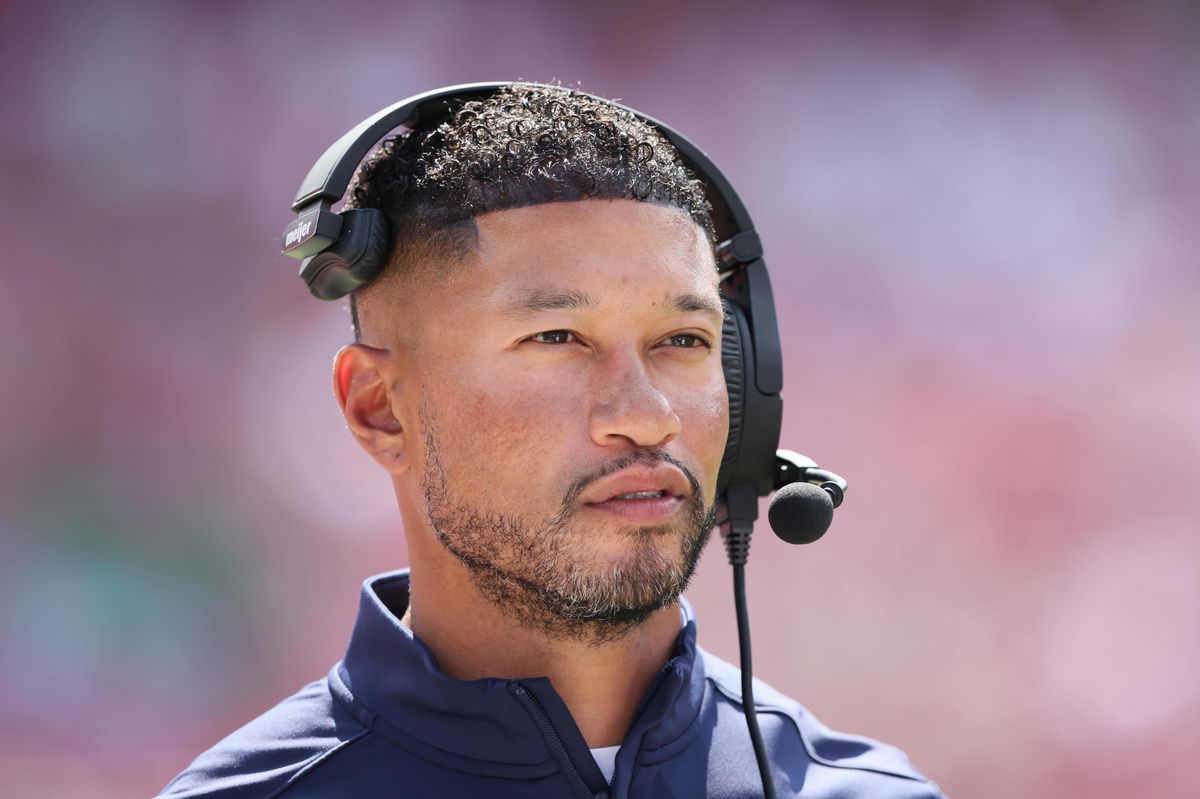
When Marcus Freeman talks about the people who shaped him, one name keeps coming back. It is Jim Tressel. Nearly two decades after leaving Columbus as a player, Freeman says his old coach still guides him every day.
Watch What’s Trending Now!
“I still learn lessons from him till this day,” Freeman said on Cam Heyward’s July 1 podcast. “When I think back to my time at Ohio State and coach Tress, everybody talks about culture. To me, it’s the environment when you walk into that building. Coach Tress made every single person feel important. Your role didn’t determine your value. When you were part of that program, no matter what your role was, there was no role too big or too small.”
That philosophy became the foundation of Freeman’s coaching career. He arrived at Ohio State as a linebacker recruit in 2004 and played under Tressel until 2008. He started 37 games and became one of the leaders of the defense. But Tressel’s influence grew even stronger after Freeman’s playing days ended early due to a heart condition discovered early in his NFL career.
The former OSU head coach quickly brought him back to Columbus as a graduate assistant, giving him his first real coaching opportunity. That first step opened the door to stops at Kent State, Purdue, Cincinnati, and eventually Notre Dame. Tressel taught him that leadership was not tied to titles.
Freeman remembers seeing his coach pick up trash around the building. That image stayed with him. Tressel believed the head coach should serve the program rather than sit above it. The message was simple: if the leader is willing to do every job, nobody else has an excuse not to. That’s one of the major philosophies that still dictates Marcus Freeman at Notre Dame.
Tressel stands apart from many Ohio State coaches because his focus stretched far beyond football. His teams won plenty. He captured a national championship in 2002, won six Big Ten titles, and beat Michigan nine times in ten meetings. But people often remember something else. Tressel assigned sheets that asked players to write down their short- and long-term life goals.
Years later, he mailed those goals back to them as reminders of who they wanted to become. Coaches rarely operated that way. Tressel did. His influence also extended well beyond football. After leaving coaching, Tressel became president of Youngstown State University and later became lieutenant governor of Ohio. Those moves only reinforced the image many former players already had of him: teacher first, coach second.
Marcus Freeman and Tressel remain close today. Their relationship has moved from coach-player to mentor-friend. The Irish HC also shared a story that perfectly captured Tressel’s personality. A few weeks ago, they planned to attend a game involving former Buckeye star Ted Ginn Jr. and the Aviators. Freeman brought two of his sons along for the trip.
Before heading to the game, they stopped for dinner. As they prepared to leave, Tressel looked at Freeman’s oldest son and said, “Hey Vinny, you’re riding with me.” For Freeman, that moment immediately felt familiar. “That’s a Coach Tress thing to do,” Freeman said. It did not matter that Tressel had only met the boy once or twice before.
He wanted to make him feel important. The same way he once made every player, assistant, staff member, and support worker inside Ohio State’s football building feel important, too.