
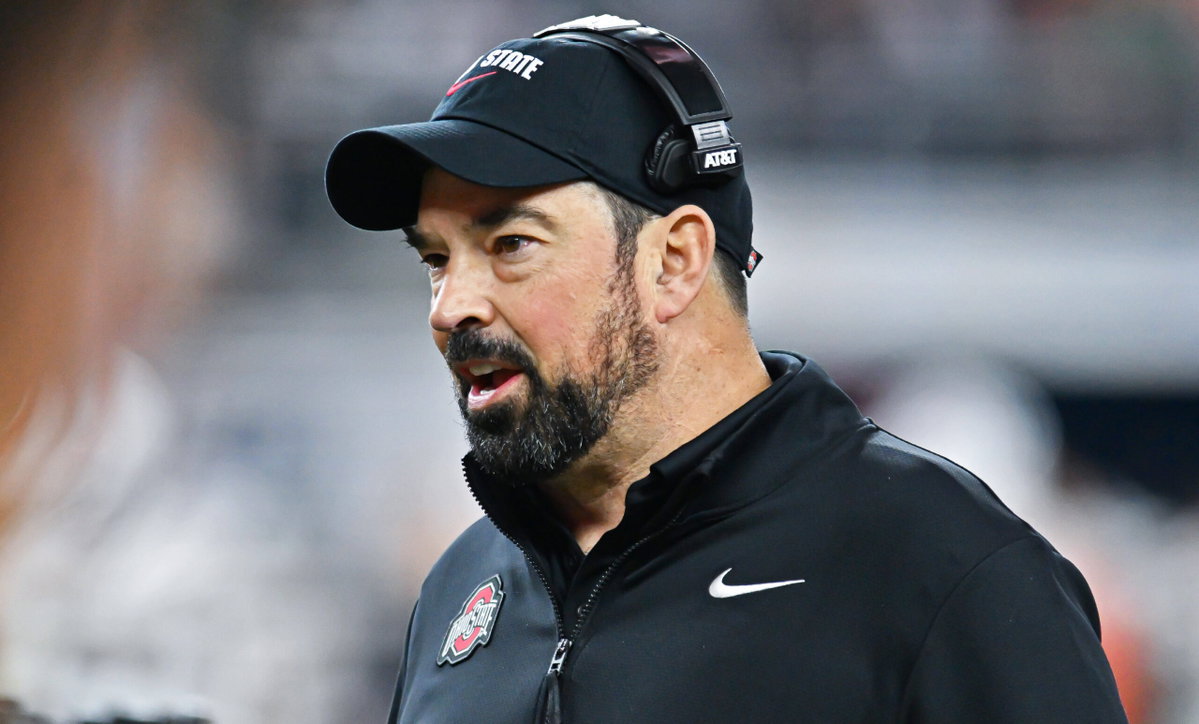
The 24-team CFP format is gaining momentum, with several stakeholders vying for expansion. The likes of the ACC and Big 12 have embraced the idea after the Big 10’s initial push. Even Ohio State head coach Ryan Day backed it. But for the former Buckeye HC Urban Meyer, it still doesn’t make sense.
Watch What’s Trending Now!
“I think 24 is too much,” said Meyer during his Wednesday appearance on The Script. “You know, I thought, but I was wrong about 12. I thought 12 was a little bit too much. Miami gets in. They would have never got in, and they should have won the national title. So I think 24 is too much. You start dipping down, like you said, in the teams that have very mediocre years that should not be in the playoffs. So I think 24 is too much.”
Meyer believes that the elite teams that survived the regular-season gauntlet should be in the postseason. However, the 24-team format allows mediocre 3-loss and 4-loss teams into the postseason. That can destroy the elite “survival of the fittest” standard of the CFP. Furthermore, a 24-team field can weaken the stakes of historic rivalries like “The Game” between OSU and Michigan.
Being a longtime OSU supporter, having a 7-0 record against the Wolverines, and being an Ohio guy, Meyer is unwilling to embrace it. However, the ex-OSU head coach wasn’t satisfied with the 12-team format either. He was furious about the 2025 playoff results because of the exclusion of teams like Vandy, Notre Dame, and BYU, while Tulane and JMU were included.
“It’s not the twelve best teams in America. It’s really not even close, to be honest with you,” Meyer said in December last year on his The Triple Option podcast. The goal of the playoffs is to crown a true champion from the best teams, according to Urban Meyer. He believes it’s not for distributing “goodwill” or participation trophies to the conference.
“Are you a group hug guy? You want a group hug? You want to say, hey, everybody get a chance, and let’s all put our arms around each other? We understand you don’t have one player recruited on your team that can compete with the other one, but, you know what, let’s all do a group hug and we’ll sing afterwards? No. That’s not what you do,” added the ex-OSU head coach.
View this post on Instagram
Meanwhile, Ryan Day supported the 24-team CFP format, citing that it is good for the sport for 137 FBS teams. However, he acknowledged that he isn’t sure about its benefit to his own program.
“It’s debatable whether it’s best for Ohio State, you can go back and forth on that, but it’s certainly best for the conference and great for college football in general,” said Day to ESPN. “It engages more fan bases late in the season.”
However, the OSU head coach knows the difficulty of becoming a legitimate title contender in this expanded format.
Ryan Day’s take on the challenges of the 24-team format
Under a 4-team or 12-team CFP format, a talent-rich program like the Buckeyes has a relatively straightforward path compared to the 24-team format. This is because 24 teams introduce a much larger pool of opponents and a more exhausting postseason route to a championship.
“When there were four (teams), you just had to win two games,” said Ryan Day. “Now there’s more games to be played, there’s a bigger pool, a bigger field. But when you take a step away from it, you’re always going to be late in the season, playing for an opportunity to be the highest seed that you can be.”
In this 24-team CFP format, the top 8 teams receive a first-round bye, so securing a high seed forces teams to play at maximum intensity, preventing them from “resting starters.” To spare players from unnecessary wear and tear, the proposed layout would eliminate conference championship games entirely. That, in itself, has become a source of contention between the SEC and the Big 10. For now, we have to ride with the 12-team format, at least for the 2026 season.