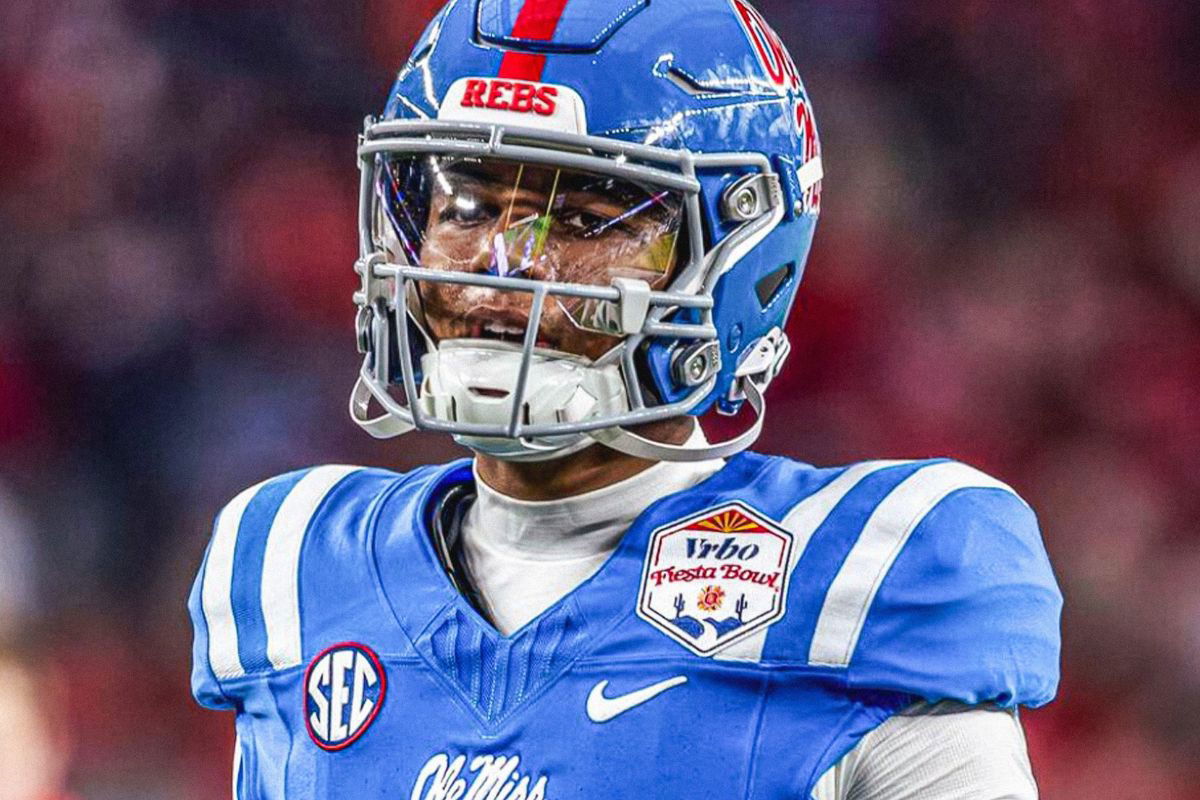
The NCAA’s decision landed Friday with finality, but Ole Miss did not treat it as the end. QB Trinidad Chambliss was formally denied a waiver for a sixth year of eligibility. That ruling bars him from the 2026 season. It saw the Rebels quietly preparing for life without him by bringing in former Auburn QB Deuce Knight. But it has also triggered a direct legal confrontation that the school appears willing to see through, regardless of precedent or pushback.
Watch What’s Trending Now!
“NEWS: Lawyers for Ole Miss QB Trinidad Chambliss plan to file suit against the NCAA this week in state court in Mississippi for a preliminary injunction to secure Chambliss’ eligibility for 2026,” Pete Thamel reported on X on January 11. “Lawyer Tom Mars will work with noted Mississippi trial lawyer William Liston.”
The attorneys leading the effort are not accidental choices. Tom Mars, long known for his role in reshaping transfer eligibility during Justin Fields’ exit from Georgia, is joined by William Liston, who also serves as founder and general counsel of The Grove Collective, tying the legal strategy directly to Ole Miss’ NIL infrastructure.
NEWS: Lawyers for Ole Miss QB Trinidad Chambliss plan to file suit against the NCAA this week in state court in Mississippi for a preliminary injunction to secure Chambliss’ eligibility for 2026. Lawyer Tom Mars will work with noted Mississippi trial lawyer William Liston. pic.twitter.com/vse9z0jEQm
— Pete Thamel (@PeteThamel) January 12, 2026
Mars confirmed to ESPN that work on the “Complaint for a Preliminary and Permanent Injunction on behalf of Trinidad Chambliss” has been ongoing for days.
“We expect the lawsuit to be far more detailed and documented than other eligibility lawsuits that have been filed in the past year,” he said.


According to Mars, the plan is to pursue both preliminary and permanent injunctions unless the NCAA appeals committee reverses course before then. Until that point, silence is strategic. Ole Miss, meanwhile, is preparing for a legal battle that could redefine the boundaries between eligibility enforcement and athlete rights.
The NCAA, for its part, has chosen to say little publicly. The organization reiterated it would not comment further unless litigation is formally filed and directed inquiries back to its written explanation from Friday. That explanation centered on one core issue with insufficient medical documentation.
Trinidad Chambliss arrived at Ole Miss from Division II Ferris State as a presumed backup to Austin Simmons. When Simmons was injured early in the season, he stepped in and never gave the job back. He threw for 3,937 yards and 22 touchdowns, guiding the Rebels to the CFP semifinals, where their run ended against Miami.
Trinidad Chambliss played four seasons at Ferris State, including limited action in 2022, when he appeared in just two games. His argument hinges on that year. The QB contends he should receive a retroactive redshirt because Division I redshirt rules differ from the Division II framework in place at the time. To complicate matters, Division II did not formally adopt a redshirt rule until this year, leaving no clear mechanism to reclaim eligibility retroactively.
That technical gap is now central to a case involving real money. Trinidad Chambliss had already agreed to return to Oxford under first-year head coach Pete Golding, contingent on the waiver’s approval. Incentives could push the total value beyond $6 million. With the legal strategy taking shape, Ole Miss is also pressing every available option within the NCAA framework.
Ole Miss pushes back after NCAA reaffirms Trinidad Chambliss waiver rejection
Ole Miss will appeal the waiver denial, though the NCAA’s written rebuttal suggests little chance for reversal. The organization disclosed that it has received 784 clock-extension requests this academic year, including 438 in football. Of the 25 cases citing incapacitating injury, 15 were approved, all with medical documentation from the time of injury. Every denial, including Trinidad Chambliss’, lacked that documentation, according to the NCAA.
The statement also clarified that a redshirt year can be used only once and that a student-athlete must lose two seasons for reasons beyond their control to qualify for a clock extension. The NCAA further stated that Ole Miss cited an incorrect bylaw in public discussion and noted that the school first received a verbal denial on December 8, weeks before Friday’s confirmation.
Tom Mars was unmoved. He called the decision disappointing but unsurprising and questioned whether the NCAA is the proper arbiter in a case with this level of consequence.
“There’s now an opportunity to move this case to a level playing field where Trinidad’s rights will be determined by the Mississippi judiciary instead of some bureaucrats in Indianapolis who couldn’t care less about the law or doing the right thing,” he added.
Mars also emphasized that further decisions ultimately belong to Trinidad Chambliss and his family. So here we are.
Related Newsletters