Imago
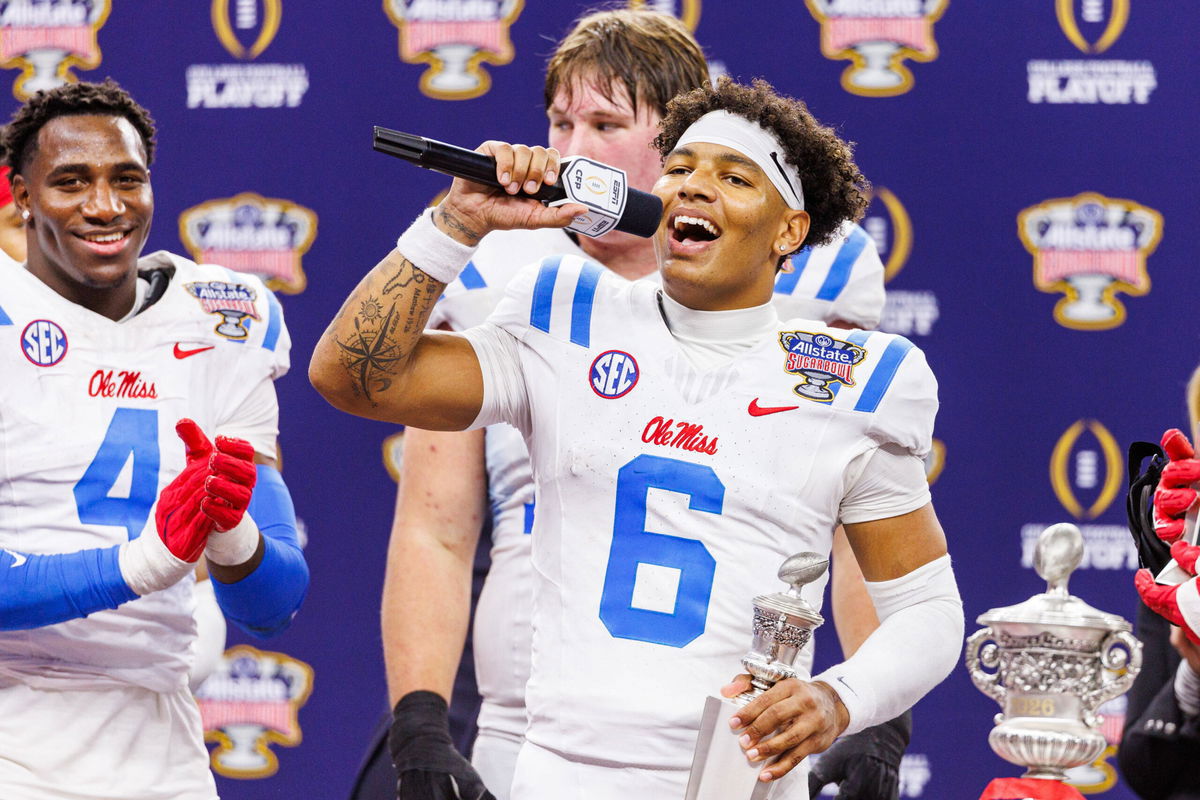
January 01, 2026: Mississippi quarterback Trinidad Chambliss 6 pumps up the Ole Miss fans of NCAA, College League, USA football game action between the Ole Miss Rebels and the Georgia Bulldogs at Caesars Superdome in New Orleans, Louisiana. /CSM New Orleans United States of America – ZUMAc04_ 20260101_zma_c04_398 Copyright: xJohnxMersitsx
Imago
January 01, 2026: Mississippi quarterback Trinidad Chambliss 6 pumps up the Ole Miss fans of NCAA, College League, USA football game action between the Ole Miss Rebels and the Georgia Bulldogs at Caesars Superdome in New Orleans, Louisiana. /CSM New Orleans United States of America – ZUMAc04_ 20260101_zma_c04_398 Copyright: xJohnxMersitsx
On February 12, inside the Calhoun County courtroom, Judge Robert Whitwell finally ended Trinidad Chambliss’s eligibility dilemma. He granted the Ole Miss quarterback a temporary injunction against the NCAA, which didn’t just lose another eligibility case, but it was also publicly rebuked for acting in ‘bad faith’. This means Chambliss is immediately eligible to compete for Pete Golding’s class in 2026 while the lawsuit plays out. But this hearing was a messy turn for the NCAA.


“This court is of the opinion [that] the NCAA breached its duty of good faith and fair dealing owed to Trinidad, and acted in bad faith by denying him an additional year of eligibility,” Judge Whitwell said during his ruling.
Watch What’s Trending Now!
Let’s rewind for a moment. Trinidad Chambliss sued the NCAA after it denied his eligibility waiver. He argued that the 2022 season at D2 Ferris State should count as a medical redshirt year. After all, he didn’t play a single game. He testified about how he dealt with recurrent throat infections, lingering respiratory issues, and fatigue that he described as “torture.” Chambliss’s medical concerns eased once he had surgery to remove his tonsils. He said Ferris State coach Tony Annese told him he’d be medically redshirted. But that appeal was rejected on February 4.
The NCAA countered, saying there’s no proof of incapacity. And if they let this case go, it would incite more players to line up at the courthouse with similar cases. But the judge didn’t buy it and flat-out said the NCAA would suffer “no immediate harm.” The NCAA lawyers also made a curious move by leaving as the decision was read, and Judge Whitwell openly considered contempt later.
Judge Whitwell, with a strong stance towards NCAA, who says acted in bad faith to Trinidad Chambliss
“This court is of the opinion the NCAA breached its duty of good faith and fair dealing owed to Trinidad, and acted in bad faith by denying him an additional year of eligibility”
— Trey Wallace (@TreyWallace) February 12, 2026
Since Diego Pavia won his eligibility fight at Vanderbilt, the NCAA has been on the losing end in courtrooms across the country. Athletes have lawyers now, and judges are willing to scrutinize “good faith.” Trinidad Chambliss’s attorneys, Arkansas-based Tom Mars and Mississippi-based William Liston, leaned heavily on Mississippi law’s duty of good faith and fair dealing. They argued the NCAA ignored medical records and testimony questioning whether the rules were applied fairly.
When a judge says an organization breached its duty of good faith, that’s a finding of moral misconduct. If this ruling holds, Trinidad Chambliss gets a sixth season, four years at Ferris State, and potentially two at Ole Miss, extending his college career and his time to develop in the program.
What 2026 means for Trinidad Chambliss
In his hearing, Trinidad Chambliss didn’t just argue about football. He also testified that he hasn’t been able to sign a revenue-sharing deal with Ole Miss because he wasn’t eligible. He’s done a commercial with AT&T and is in talks with other companies. And if he couldn’t play in 2026, those NIL and revenue-sharing opportunities would dry up.
It’s good that his eligibility status is cleared now. The way Ole Miss fought for his case will make this Heisman finalist even more focused on pushing for a better record than their last 13-win CFP season. A lost year also affects the financial and professional aspects of a player, as well as having a sentimental effect on them, because they can’t get draft stock once it’s gone.
The NCAA can appeal, and he can appeal if things flip later. This could wind all the way to the Mississippi Supreme Court. Ole Miss, nonetheless, kept everything prepared for just-in-case scenarios. Pete Golding secured QB commitments from Auburn transfer Deuce Knight and Louisiana transfer Walker Howard. But if Trinidad Chambliss is coming back, there’s no debate about where he stands.
Written by

Edited by

Himanga Mahanta