
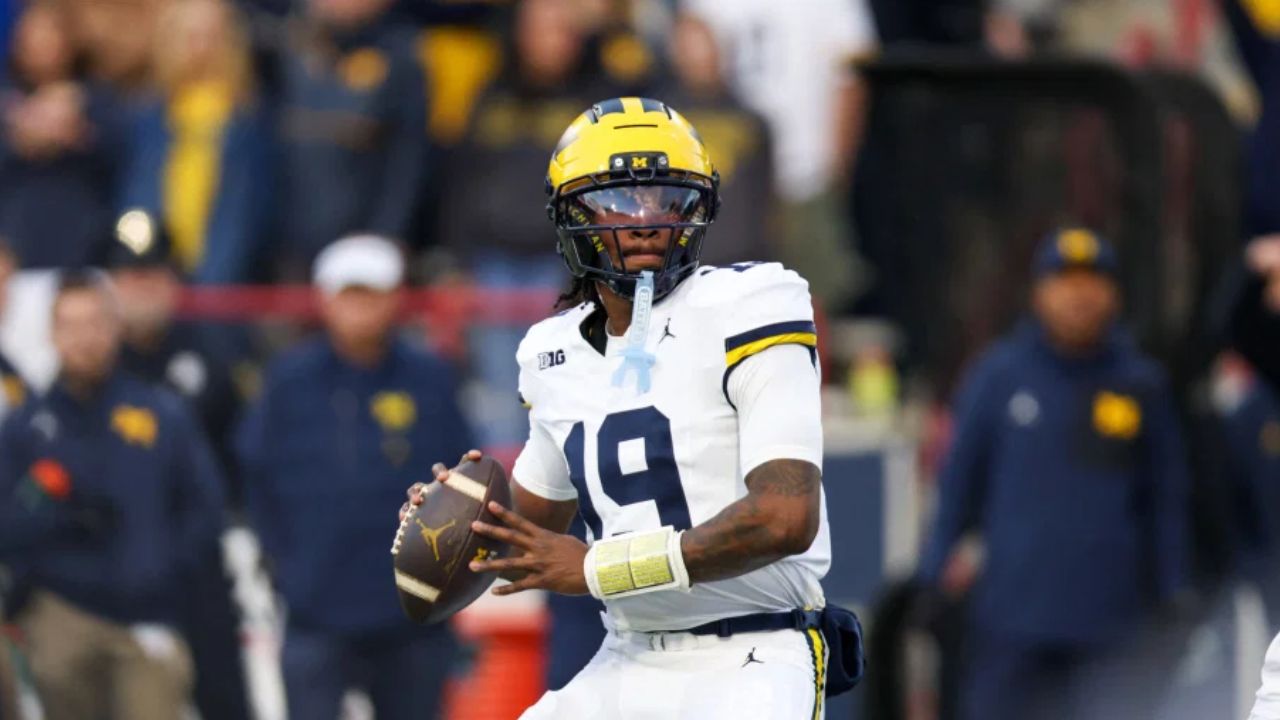
A quarterback’s recruiting ranking can make him a star before he even steps onto a college football field. Add a reported multimillion-dollar deal to the picture, and the expectations get even bigger. But what happens when the results do not match the hype? Michigan is now facing that question after a major decision involving its highly rated quarterback brought fresh attention to the money programs are spending to land top high school talent.
Watch What’s Trending Now!
The Wolverines’ 21-18 win over Penn State should have been a straightforward reason to celebrate. Instead, the game left people talking about a halftime quarterback change and what it could mean for Michigan’s reported $12 million investment in Bryce Underwood. The situation has also caught the attention of Power Four general managers, who are weighing whether spending big on high school quarterbacks is worth the risk when experienced players are available through the transfer portal.
“Spoke with front office staffers and P4 GMs this week about the Bryce Underwood situation. In so many words, should people be more judicious about spending big money on high school quarterbacks? A lot of really interesting answers and philosophies,” College Sports Writer for Fox Sports Ben Portnoy wrote on X on October 23.
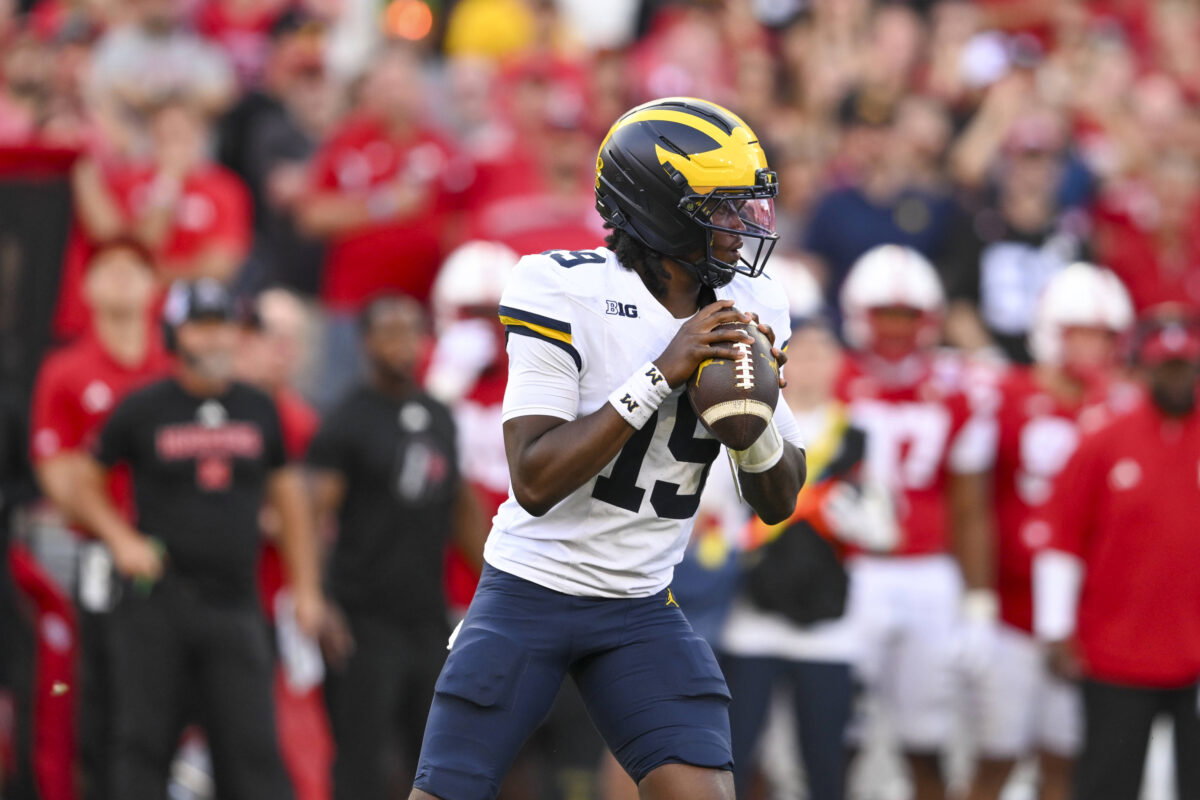
Imago
Credits: IMAGO
Underwood arrived in Ann Arbor as the No. 1 overall recruit in the 2025 class. His decision to choose Michigan over LSU became a major recruiting story, with a reported four-year, $12 million package adding to the attention surrounding his commitment.
Michigan has rarely committed this kind of mega-money to an untested teenager straight out of high school. Traditional powerhouses usually spread NIL funds across veteran rosters rather than breaking the bank on a single unproven freshman. That unprecedented gamble is exactly why rival programs are watching Ann Arbor so closely right now.
Michigan expected the young quarterback to become a key part of its future. However, his performances have not consistently matched those expectations, and his latest outing against Penn State brought the issue into sharper focus.
Underwood completed just five of 11 passes for 43 yards in the first half and threw two interceptions. Michigan struggled to find its rhythm on offense, managing only 80 yards before head coach Kyle Whittingham made the switch at quarterback.
True freshman Tommy Carr took over after halftime and gave the Wolverines a different look. He completed five of seven passes for 47 yards and added 36 rushing yards, including a 12-yard touchdown run late in the fourth quarter. Michigan eventually came away with a 21-18 win.
Carr’s performance gave the coaching staff another option to consider, although one strong half does not automatically settle a team’s long-term quarterback plans. Still, the decision to bench Underwood has added a new layer to the discussion about the investment Michigan made in him.
The warning comes from several Power Four general managers who spoke anonymously to Ben Portnoy. One said, “Sometimes you have to walk away and get your ego out of the way,” arguing Michigan “didn’t need” Underwood and that “there are plenty of quarterbacks that can get you to a championship.”
Another said he leans toward paying for players with less projection. “Ideally, you see what you’re getting before you buy it. Spending big on a high school QB is a massive gamble, and it’s really hard on both sides because there is an urgency to play that player early because of the money.”
A third pointed to the data, saying transfer results at quarterback have always been uncertain, but investing in a portal passer is usually the smarter business decision than paying an unproven high schooler. Another predicted accountability will follow: “It highlights how strictly GMs will be evaluated moving forward. There’s a real cost to having money on the sidelines.”
“Think you’re going to see schools be more judicious, period, about spending big money on high school players. Will always be a few exceptions, but priority will be retaining your best players and spending in the portal at the premium positions,” Low wrote on X.
Underwood’s contract has often been described as a four-year, $12 million package. However, the supplied reports indicate that the agreement includes conditions that make the full amount less straightforward than the headline figure suggests.
The first two years were reportedly guaranteed at approximately $3 million per season. After the 2026 season, Michigan is reported to have an option to end the arrangement before the final two years, without owing the remaining money if it does not exercise that option.
The reported deal also included a 50% compound increase for the third and fourth years. Under that structure, the annual figure would have risen to approximately $4.5 million in the third year.
These details could matter as Michigan considers its next move. The reported $12 million figure does not necessarily mean the school must pay the entire amount regardless of how the situation develops. However, the exact terms and any decisions about the remaining years should be confirmed through reliable reporting or an official statement.
For Michigan, the question is now about more than the quarterback who starts the next game. The program must weigh Underwood’s potential, Carr’s emergence, and the resources available for other roster needs.
Figures from NIL data provider Opendorse, cited in the supplied reporting, suggest that transfers received around 48% of football revenue-sharing money, compared with roughly 9% allocated to high school recruits. The reporting also indicated that transfers were receiving more than twice the average amount paid to high school recruits.
That approach offers a different kind of evaluation. Coaches can review a transfer’s college performance, experience, and ability to handle the demands of the game. A high school recruit may have a higher ceiling, but there is less evidence of how he will perform against college competition.
There are still reasons to invest in young quarterbacks. Players such as Notre Dame’s CJ Carr and Ohio State’s Julian Sayin illustrate why programs continue to recruit and develop talent from high school. The challenge is deciding how much money to commit before that potential becomes proven production.
What Comes Next for Bryce Underwood and Michigan?
Reports ahead of Michigan’s matchup with No. 6 Indiana indicated that Carr was expected to start following the Penn State game. However, the longer-term quarterback situation remains a developing story, and the future of Underwood’s deal should not be treated as settled without confirmation.
Michigan must decide how to handle a highly recruited quarterback whose arrival generated significant expectations while also giving Carr an opportunity to build on his performance. Other programs will be watching, too, as they work out how to balance spending on high school prospects with retaining current players and recruiting experienced transfers.
The situation does not prove that investing in high school quarterbacks is always a mistake. It does, however, highlight the risk of making a major financial commitment before a player has shown what he can do at the college level.
For Power Four GMs, the warning is about being careful with their investment. Underwood’s Michigan situation has brought the issue into focus, and the decisions made in Ann Arbor could become part of the wider conversation about how college football programs spend their money in the seasons ahead.