
Few coaching returns carried the weight of Nick Saban’s 2008 trip back to LSU. Baton Rouge greeted him with effigies hanging in the parking lot, setting the stage for a brutal 27-21 overtime battle. Alabama walked away victorious, but the hostility became part of the rivalry’s lore. Now, Saban has stepped forward to address it.
Watch What’s Trending Now!
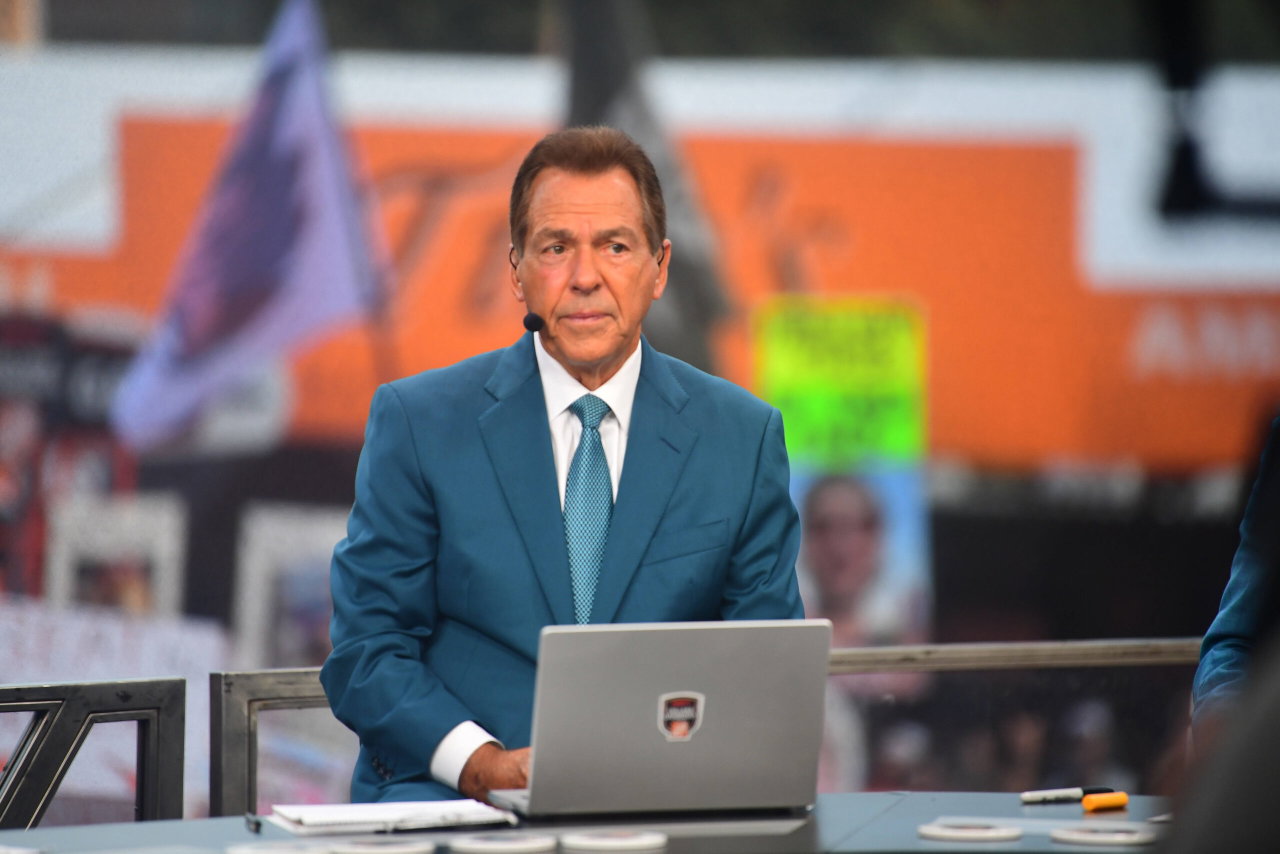
During an ESPN exclusive, Nick Saban was asked about his 2008 return to Alabama and the hostile environment surrounding the game. Saban said he holds no hostility toward the LSU program and that defeating his former team was not intentional.
“To me, it was never personal to want to beat somebody. Just to say you beat him or just to satisfy your ego. It was never that way for me,” said Saban.
“They say to me, ‘Oh, they thought I was the scum of the earth, no doubt. And that I betrayed them.’ The betrayal—I mean, people use that to motivate others emotionally. Fires a lot of people up. But I think we won the game, did we not? I think we won the game, did we not?”
Back in 2000, Nick Saban took over a struggling LSU program after his wife, Terry, spent two days visiting the college. When she returned, she told Saban that despite the program’s rundown infrastructure, she had spotted something promising: some talented, good-looking athletes on the roster. That glimpse of potential was enough to convince Saban to take the job.
From 2000 to 2004, Saban transformed the mediocre program into one of the nation’s top programs, delivering LSU’s first consensus national championship since 1958 in 2003 with a 48-16 record in five years. However, after the 2004 season, Saban left Baton Rouge to pursue his NFL ambitions with the Miami Dolphins.
It was an emotional farewell. However, when Saban returned to college football in 2007, he didn’t choose LSU, but rather its fierce SEC West rival, the Alabama Crimson Tide. That decision quickly drew the ire of LSU fans, who labelled him a traitor for choosing their biggest rival instead of returning to Baton Rouge.
And then came the fateful day in 2008, when it was Saban’s turn to return to the very same team he had once built. The atmosphere was venomous; LSU fans hung Saban in effigy around the tailgating lots, while inside the stadium, the deafening noise made it clear that this was far more than a football game.
For Saban, it was a deeply personal homecoming. The animosity was so intense that it rattled both coaches and players. Kirby Smart, now the Georgia head coach who was Saban’s defensive coordinator at the time, recalled that Saban was visibly tense and consumed by the hostility outside the windows, leaving the assistant coaches paralysed with fear.
“You want to talk about scary now, don’t sit next to Nick on the bus,” Georgia coach Kirby Smart, who was Saban’s defensive coordinator at the time, said in the excerpt. “It was like, ‘Who’s getting off the bus first?”
Nick Saban himself warned his players that the 2008 LSU crowd would be their biggest test yet, telling them it would be the toughest atmosphere they would face all season.
“I told the players you played on the road before, you’ve played on the road before. We’ve played in some tough places where there are tough fans, but you’ve never been in a place like where we’re going to go for this game. These will be the most hateful people you’ve ever seen in your life,” said Saban.
On that very day, amid the boos and cries of traitor, Nick Saban ultimately defeated LSU in a thrilling 27–21 overtime battle, clinching Alabama’s first SEC Western Division title in nearly a decade. From there, the Alabama-LSU rivalry only intensified.
Yet when Saban retired in 2024, he still held the upper hand, finishing his Alabama tenure with a commanding 13–5 record against LSU.