

Urban Meyer thinks too many college football coaches are getting in the way of their own locker rooms. Drawing on a heated turning point from Florida’s 2006 national championship run, the former Gators coach called out staffs that silence player confrontations instead of letting team captains enforce the standard.
Watch What’s Trending Now!
Speaking on a recent episode of The Triple Option podcast alongside Mark Ingram II and Rob Stone, Meyer pointed to a raw locker room moment after Florida fell to Auburn in October 2006. Rather than breaking up the argument, Meyer stepped back and watched.
“You get called out by a teammate, especially a captain, that’s different. I get fired up because that’s a damn captain’s job. You’re elected captain of your team. You have every right, and now you’ve got to be your personality. That’s your job as a captain. It’s not going to be, ‘Okay, I would drive me nuts when, ‘Hey, it’s okay. It’s okay, bro. It’s okay, dude.’ That’s not okay. We’ve got to get this thing fixed,” Urban Meyer explained why he believes captains must be willing to challenge their teammates.
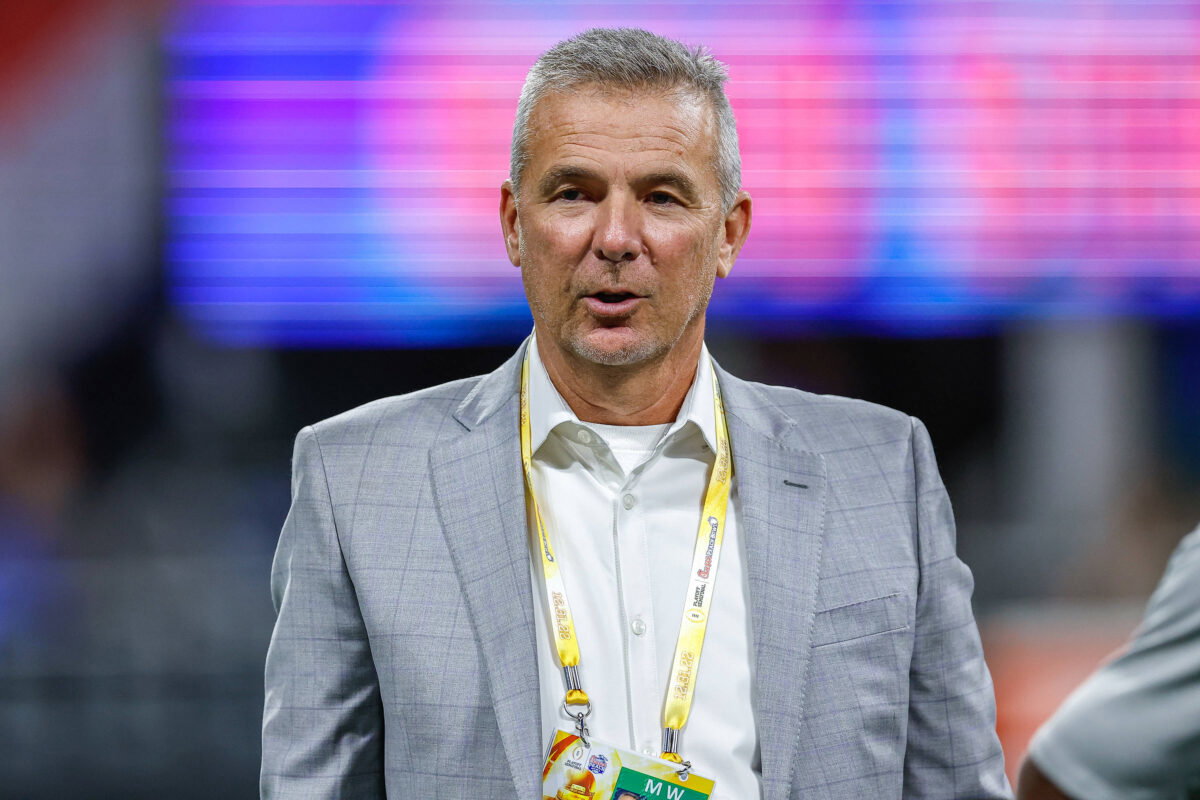
Imago
Credits: IMAGO
Meyer was discussing Florida’s loss to Auburn in 2006. The Gators had one of the country’s strongest defenses, but their offense was struggling. Following the defeat, a defensive captain became frustrated with the offensive players and openly challenged their effort.
Meyer recalled that the captain called the offense soft and accused the unit of not doing its share for the team. The criticism was intense, with players being directly confronted over their performances. Defensive coordinator Charlie Strong, who was standing beside Meyer, suggested that they intervene before the situation went further.
Meyer chose to let the players speak. He told them he wanted the frustration addressed immediately rather than allowing it to remain unresolved after they left the locker room. The confrontation continued for approximately 30 minutes, with teammates openly calling one another out.
According to Meyer, the offense improved after the confrontation. He believes the criticism made the players more conscious of their responsibility to their teammates and gave them a reason to raise their level of play.
“You know what happened to our offense after that? They got better. You know why? You don’t want to let your teammate down. I think coaches fail by not letting players speak. If I didn’t do that, I don’t think we win the national title because that would have been pent-up frustration behind the scenes,” Meyer added.
Meyer clarified that allowing players to speak does not mean letting disagreements turn into fights. Instead, he encouraged coaches to give their teams room to address problems openly. His broader message is that captains and team leaders must help maintain standards rather than leaving every accountability issue to the coaching staff.
Meyer’s comments fit his wider criticism of programs that rely too heavily on fines and coach-imposed punishments instead of building accountability within the locker room. He has also drawn on conversations with NFL figures Tom Brady and Mike Vrabel when discussing how successful teams develop strong internal leadership.
His own Florida experience gives that perspective added context. Meyer coached the Gators from 2005 to 2010, recording a 65-15 record and winning national championships in 2006 and 2008. He was inducted into Florida’s Ring of Honor in November 2026.
Now working as a college football analyst for Fox Sports, Meyer continues to draw on lessons from his coaching career. His recollection of the Auburn confrontation highlights his belief that coaches can establish expectations, but players must also take ownership of them. For him, allowing a captain to speak up is an important part of building a team that holds itself accountable.