
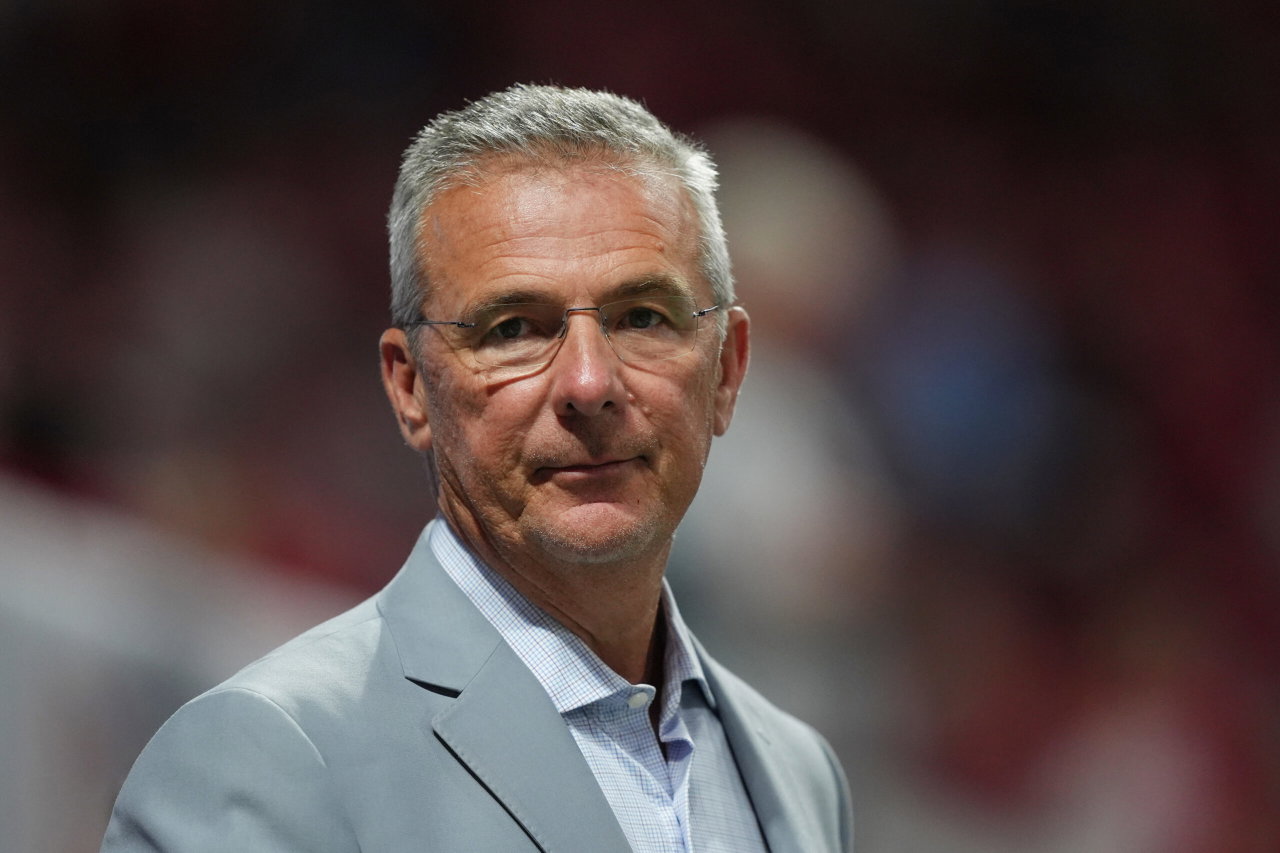
If you ask Urban Meyer, Lincoln Riley is facing a disaster far worse than hot-seat rumors. Hot-seat noise only threatens a coach’s job, but Meyer’s warning targets something deeper: rival programs using USC’s instability to attack their recruiting pipeline. Following the Trojans’ 41-27 loss to Oregon, Meyer raised the alarm because he knows this predatory game better than anyone, since he used to play it himself.
Watch What’s Trending Now!
Speaking on his podcast, The Triple Option, Meyer introduced his “Injured Animal” recruiting theory. He described the Trojans as a tactic he used during his coaching career. Whenever a powerhouse program started stumbling, Meyer moved in fast to steal their top recruits.
“I’d call it the injured animal,” Meyer told Rob Stone. “Right now, there might be an injured animal in Los Angeles, boys. And that’s USC. They’re injured.”
The comments came after No. 12 USC fell 41-27 to No. 20 Oregon on September 26, dropping the Trojans to 4-1 and 1-1 in the Big Ten. Meyer isn’t guessing here. He built championship rosters following the same blueprint. When Texas struggled during his time at Ohio State, Meyer assigned four assistants strictly to the state of Texas. The result? The Buckeyes snatched three of the state’s top prospects in a single cycle. He pulled off similar raids in Georgia before Kirby Smart built his dynasty.
“Okay, the injured animal is this: Texas, when I was at Ohio State, was really struggling. I put four coaches in Texas, and we got the three top players one year. The three top players in Texas went to Ohio State,” Meyer further stated. “Normally speaking, that’s not going to happen. When Georgia was going through their stuff, this is pre-Kirby, I put four coaches in Georgia, and we got some of the best players. So I was always on my board.”

Imago
Credits: IMAGO
That is why Meyer’s words carry so much weight for USC right now. When a blue-blood program shows weakness, rival coaches do not just watch the games, but also call the committed recruits. They whisper that the head coach might not be around much longer.
The timing could not be worse for the Trojans, as a single bad loss often acts as a blood signal for rival recruiters. Elite Big Ten rivals like Oregon and Ohio State do not wait for a full collapse; they strike within days of a high-profile stumble to sow doubt.
Five-star commits like athlete Honor Fa’alave-Johnson become immediately vulnerable because top prospects pick programs for stability, not just NIL deals. Historically, when a program enters a multi-game skid or faces head-coach uncertainty, high-rated commits flip at elevated rates as rival pitchmen convince them the ship is sinking.
The Trojans’ status quo makes Meyer’s warning so much more consequential than a simple observation after one bad game. USC, already burdened with Riley’s 10-year, $110 million contract, has invested significant resources in rebuilding a strong roster. Hence, Riley cannot afford to be complacent.
If rival recruiters convince teenage prospects that Riley’s program is falling apart, USC’s pipeline of elite national talent can dry up overnight.
For rivals circling the Trojans, they just need a split-second advantage to run with their pitch. The chatter about Riley’s buyout has refused to die down. Before the Oregon Ducks visited Los Angeles, Pete Thamel, ESPN college football insider, said it was reasonable to discuss Riley’s position if USC lost, as they did.
He also emphasized the enormous financial cost for USC. According to reports, Riley’s buyout is estimated to be around $70 to $72 million, which the university will have to pay if Riley is fired in this calendar year. This forces the school to tread carefully over this expensive decision. Oregon’s 27-41 win over the Trojans and ability to sneak top players from their area added fuel to the fire.
Meyer’s warning targets USC’s recruiting pipeline, not Riley’s employment status, which the $70M buyout shields. That massive payout makes an immediate firing unlikely, but it cannot stop rival coaches from raiding his commitments. As Meyer made clear, blood is in the water in Los Angeles.
If Lincoln Riley cannot steady the ship quickly, competitors will strip the Trojans of their future stars long before the university ever pays that buyout.