
Sacrifices are often for a greater cause, and the NAACP is asking young elite Black student-athletes to boycott SEC schools in states accused of undermining Black voting rights. But with NIL money, top-class facilities, and professional opportunities on the line, Sabreena Merchant believes there has to be a better way to apply pressure.
Watch What’s Trending Now!
“It almost makes more sense to target the people who are giving the NIL money and say, like, please stop giving it to schools that are in states that are restricting voting rights,” Merchant opined on Tuesday’s episode of the No Offseason podcast.
The NAACP has been encouraging fans not to buy tickets and brands to stop their sponsorship deals with colleges in the region. Merchant does not question the logic behind this, but feels that this will make the lives of many athletes difficult.
“It’s true that these athletes are bringing billions of dollars to these universities that are supported by governments and governing officials that are going against black voting rights and are trying to stamp out the power of the black vote,” she added.
Imago
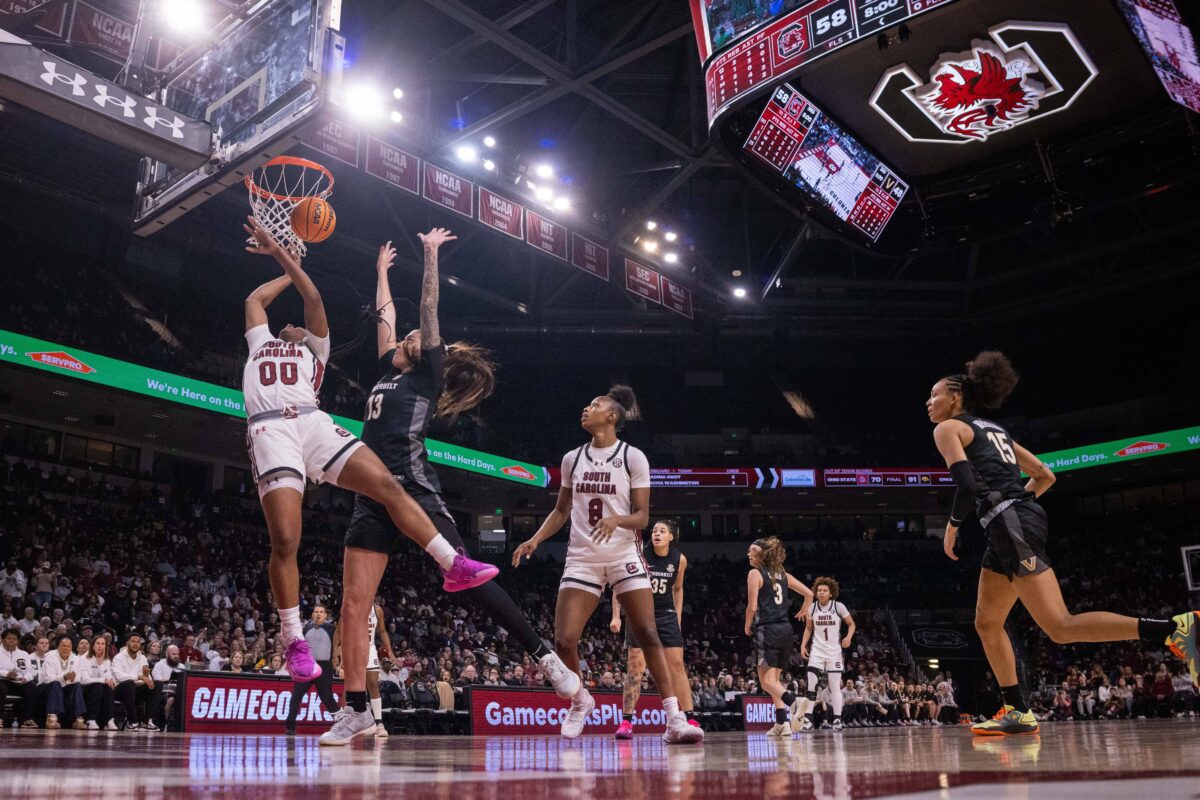
January 25, 2026: South Carolina Gamecocks guard Ta Niya Latson 00 shoots on Vanderbilt Commodores guard Justine Pissott 13 during the second half of the NCAA, College League, USA Womens College Basketball matchup at Colonial Life Arena in Columbia, SC. /CSM Columbia United States – ZUMAc04_ 20260125_zma_c04_204 Copyright: xScottxKinserx
Merchant further said, “These Black athletes that are trying to, in some cases, utilize their NIL money and rewards to create generational wealth for themselves, and some of these schools are the only schools that have the capacity to do that for them.”
It’s difficult for these athletes to put their lives and careers on hold because, in their minds, they want financial freedom for themselves and their families.
This campaign, “Out of Bounds”, was a direct response to the Supreme Court’s ruling in Louisiana vs Callais, which dismantled a majority-Black congressional district and weakened key provisions of the Voting Rights Act. The NAACP wants to leverage the huge financial influence of college sports in Southern states to put pressure on lawmakers.
If athletes do join a boycott, it could affect programs in schools like Alabama, Texas, and Georgia, schools with major football and basketball money.
Athletes are quiet amid NAACP’s demands to boycott NIL money
So far, there’s been little reaction from athletes. No recruits have decommitted from SEC schools, and no active players have entered the transfer portal in response to the announcements. Many are already locked into NIL deals at premium schools with scholarships and remain committed.
High-level athlete recruitment also takes place years in advance, which is why prospects by now would have already built deep relationships with the staff, locking themselves into enrollment tracks. In fact, some highly rated recruits like Garrett Nussmeier (LSU) and LaNorris Sellers (South Carolina) are already on multi-million-dollar NIL deals. They wouldn’t just call it quits all of a sudden.
A boycott cannot be ruled out entirely, considering the chatter around it. But logically, it’s looking more and more unlikely. The financial and professional incentives tied to playing in the SEC are simply too big for these young athletes to walk away from. And of course, that would not necessarily mean these athletes do not value or recognize the importance of the campaign.
There is a real hole in the logic of the campaign as currently constructed, and it may be one the NAACP needs to reckon with. Merchant’s proposal to redirect pressure toward NIL donors rather than the athletes themselves may not be a perfect solution, but it’s a creative rethinking that doesn’t burden the most vulnerable people in the equation.