49ers Legend Roger Craig Announces Concerning Health Diagnosis After Pro Football Hall of Fame Induction

Add us on Google
49ers Legend Roger Craig Announces Concerning Health Diagnosis After Pro Football Hall of Fame Induction
Add us on Google
Imago
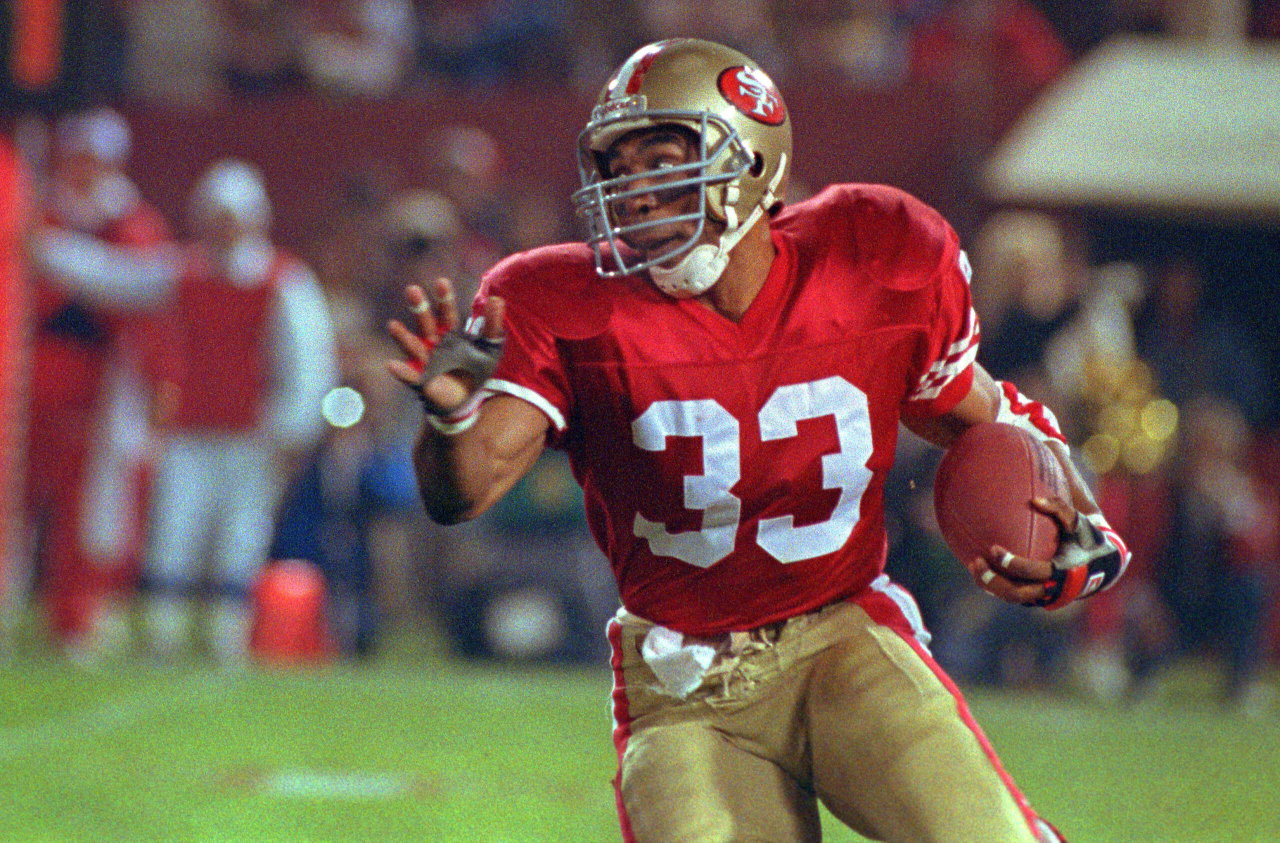
December 3, 1990 – San Francisco, California, U.S – San Francisco 49ers vs New York Giants at Candlestick Park Monday, December 3, 1990. 49ers beat Giants 7-3. 49er running back Roger Craig Copyright: xAlxGolubx
Imago
December 3, 1990 – San Francisco, California, U.S – San Francisco 49ers vs New York Giants at Candlestick Park Monday, December 3, 1990. 49ers beat Giants 7-3. 49er running back Roger Craig Copyright: xAlxGolubx
When Ronnie Lott and Charles Haley showed up at Roger Craig’s house earlier this year, they brought news the former 49ers running back had waited 28 years to hear. But before Lott could even knock, Craig opened the door first. The two old teammates shouted and embraced: Craig was going to Canton.
Watch What’s Trending Now!
Eight months later, Craig walked into the Pro Football Hall of Fame in a gold jacket, with the people who had shared so much of his career waiting for him. Joe Montana, Jerry Rice, Ronnie Lott and Charles Haley were there. Jamie Williams, another 49ers teammate, presented him. For most of the nine-minute speech, Craig stayed with the game that brought him there. He spoke about Bill Walsh seeing something others didn’t, becoming the first player to rush for 1,000 yards and catch 1,000 more in a season, teammates who valued winning over credit, and the opportunities football gave him. Then, Craig used the final stretch to reveal the game may have left him with something heavier to carry.
“My doctors believe may be related, at least in part, to the concussions I experienced during my career,” Craig said in his speech. “The changes were gradual. At first, they were easy to dismiss as normal aging. Over time, my family noticed it too and ultimately led us to seek answers from my doctor. Two things can be true: Football gave me opportunities beyond anything I could imagine. It helped shape the man I became.
“At the same time, we know more today about brain health than when I played, and I hope sharing my story encourages people to pay attention to their health and seek help when something doesn’t feel right. I want people to know this diagnosis doesn’t define me. I am still Roger Craig. I am still a father, a husband, a teammate, a friend and someone who loves this game and the people who brought it to my life. If sharing my story helps even one family or one former player, then it’s worth it. Football gave me everything.”
The diagnosis Craig was referring to was vascular dementia, a form of dementia linked to damage to the brain’s blood vessels and the resulting disruption of blood and oxygen supply. It can develop gradually rather than arriving as one unmistakable moment, with changes in thinking, attention, language, planning or memory sometimes becoming noticeable only over time. That gradual progression fits the way Craig described his own experience:
Craig has not publicly detailed his symptoms or disclosed a complete medical history. What he has made clear is that the concerns became noticeable enough at home that his family urged him to seek answers. And his career provides a complicated backdrop to that diagnosis, because the public record contains evidence of head injuries, even if it cannot account for every concussion he may have sustained across 11 NFL seasons.
One of the clearest examples came in October 1988, during a game against the Los Angeles Rams. Craig had just produced one of the best rushing performances of his career, finishing with 190 yards and three touchdowns. But a report in the Los Angeles Times noted that he had suffered a concussion several plays before the end of the game and developed a headache afterward. The detail is easy to overlook beside the numbers that made the afternoon memorable. Craig had spent the game running through the Rams’ defense; by its end, his head was hurting too.
Another documented concussion came two seasons later, and the setting was considerably bigger. In the 1990 NFC Championship Game against those same Rams, Craig played through what the Washington Post described as a mild concussion. He still rushed for 93 yards and a touchdown as San Francisco won 30-3 and advanced to the Super Bowl. Two contemporary reports, separated by more than a year, therefore leave behind a record of Craig sustaining concussions and continuing to play. They do not, however, tell us how many more went undocumented.
That distinction matters because the NFL Craig played in was not the NFL that exists today. There were no modern sideline concussion protocols, no widespread understanding of CTE, and far less public discussion about what repeated blows to the head might mean decades after a player had stopped taking them. A headache after a concussion could become another detail in the box-score story of a Sunday, particularly when the player was still producing at the level Craig was.
And head injuries were only one part of the physical toll of his career. Craig’s playing style demanded contact on almost every possession, but his injury history also shows how often he was expected to return to the field after his body had taken a beating. In the 1985 NFC divisional playoff game against the New York Giants, for instance, he played through injuries to both knees before eventually being removed because he could no longer run or block effectively. Five years later, a right-knee PCL injury suffered against Houston cost him five games, the first time in eight NFL seasons that an injury had forced him to miss multiple games.
By then, the running back who had once seemed almost indestructible was beginning to lose the durability that had defined his prime. Craig moved from San Francisco to the Raiders in 1991 and later played for Minnesota, finishing his career after the 1993 season. The transition had nothing specifically to do with his later dementia diagnosis, and there is no basis for treating every injury he sustained as part of one continuous medical story. But taken together, those years show the environment in which he spent his career: thousands of carries, hundreds of receptions and a professional expectation that pain was often something to work around rather than something that ended the afternoon.
That is also why simply counting the concussions Craig remembers would not necessarily capture the full picture researchers are now studying. A concussion is only one kind of head injury, and football players can experience repeated impacts without ever receiving a formal concussion diagnosis. Modern research has increasingly turned toward cumulative exposure to those impacts, rather than treating diagnosed concussions as the only meaningful measure of what a player’s brain experienced.
The distinction is particularly important in Craig’s case because his doctors did not publicly diagnose him with CTE. They told him his vascular dementia may be related, at least in part, to the concussions he experienced. Those are not interchangeable conditions. Vascular dementia is associated with problems involving the brain’s blood vessels and blood supply, while CTE is a distinct neurodegenerative disease associated with repetitive head impacts. Craig’s diagnosis should therefore not be turned into a CTE diagnosis simply because of his football history.
There is, however, growing evidence that traumatic brain injury and later dementia can be connected. A large 2025 study examining health records from more than 1.7 million people found that a history of traumatic brain injury was associated with a higher risk of dementia, including vascular dementia, with the risk increasing among people who had experienced multiple TBIs. That does not establish that Craig’s concussions caused his condition. It does, however, provide some context for why his doctors would consider his playing history relevant.
The football-specific evidence has been moving in the same direction. A 2026 study of nearly 20,000 former NFL players found that they had substantially higher mortality from dementia and other neurodegenerative diseases than the general population. Players with longer NFL careers also showed greater neurodegenerative mortality risk. Craig spent 11 seasons in the league, long enough to belong to the generation of players whose careers were built before the sport had begun treating long-term brain health with the urgency it does today.
On the other hand, the same sport that gave Craig three Super Bowl rings, a gold jacket and a place in football history may also have left him with questions he could not have imagined when he was running through defenses in the 1980s. He did not try to resolve that contradiction. He simply acknowledged that both sides of his football life now exist together.
Written by

Edited by

Afreen Kabir