
Imago
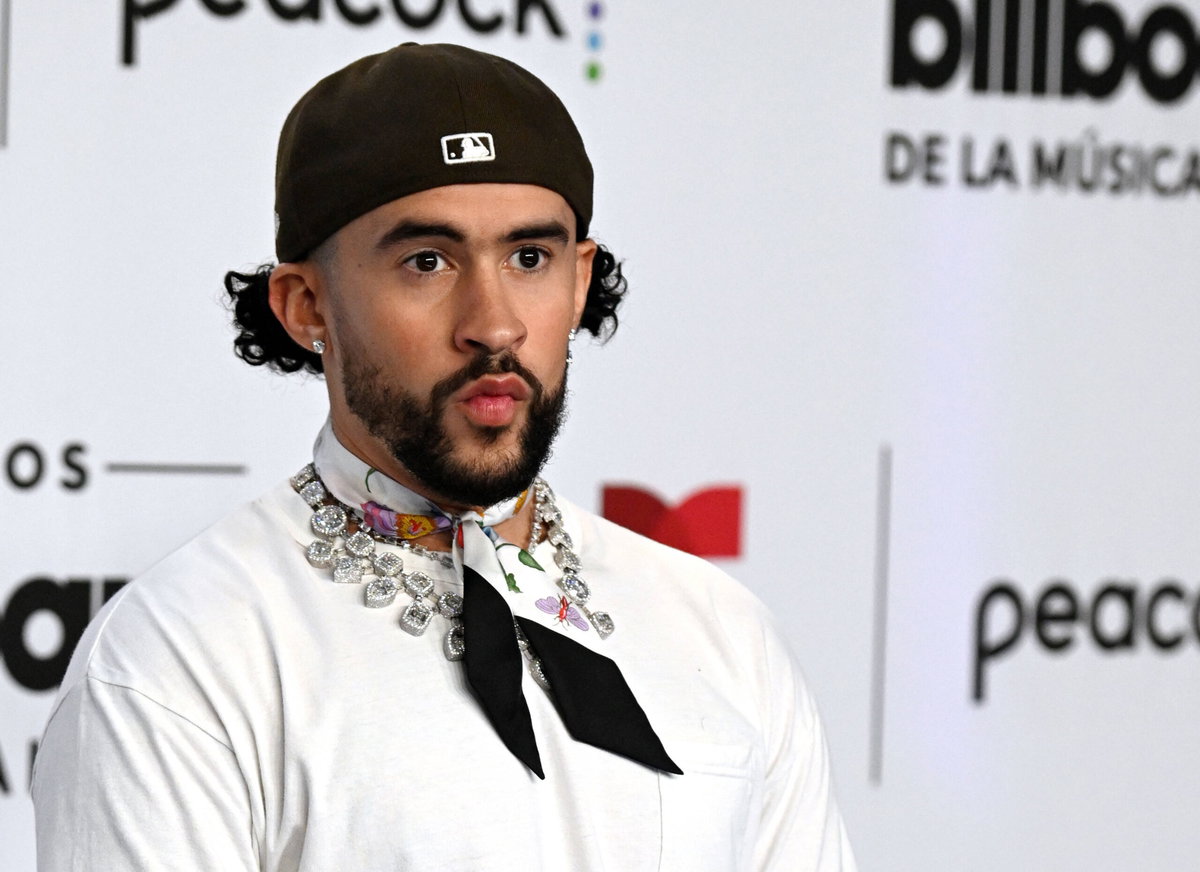
CORAL GABLES, FL – OCTOBER 5: Bad Bunny at the 2023 Billboard Latin Music Awards at the Wasco Center in Coral Gables, Florida on October 5, 2023. Copyright: xmpi04x
Imago
CORAL GABLES, FL – OCTOBER 5: Bad Bunny at the 2023 Billboard Latin Music Awards at the Wasco Center in Coral Gables, Florida on October 5, 2023. Copyright: xmpi04x
Essentials Inside The Story
- After Kendrick Lamar's performance at the Super Bowl drew complaints, Bad Bunny is in the same boat.
- Texas took the number one spot in filing complaints against Bad Bunny.
- The Federal Communications Commission has already shared its findings after an investigation.
By the end of the Super Bowl night, the Seahawks weren’t the only thing people were talking about. Bad Bunny’s halftime show exploded into a cultural event of its own, pulling a staggering record-setting 4.157 billion views within just 24 hours. What unfolded on stage became a pop culture moment that dominated timelines, debates, and headlines alike. But while millions celebrated the performance, others watched with discomfort, arguing the spectacle crossed the line into something highly inappropriate, though the Federal Communications Commission has its own thoughts on it.
TMZ‘s latest article on the halftime show reported that the FCC received over 2,000 complaints following Bad Bunny’s performance. Amongst those, 100 messages described the rapper’s show as raunchy, too sexual, and inappropriate. For instance, one user was unhappy with the performance and claimed they were “forced to see a man’s pe–s and balls.” Other viewers mentioned that the Puerto Rican grabbed his crotch while the background dancers touched each other inappropriately.
Watch What’s Trending Now!
The backlash came from several directions. Some viewers were frustrated that they couldn’t understand the Spanish lyrics, while others took issue with the meaning behind the words once they were translated. Multiple complaints argued the reaction would have been far stronger had the same “sexualized” and “inappropriate” lyrics been performed in English. But things don’t end here.
Critics also labeled parts of the performance “anti-American,” with some going as far as accusing Bad Bunny of speaking in a “demonic tongue.” And since the show was well within a time when children could have been watching the Super Bowl (the event was to start between 8 and 8:15 pm ET), many parents were unhappy.
Interestingly, Texas took the number one spot in filing those complaints. The state collectively sent 226 complaints to the FCC. Texas was followed by Florida (182 complaints) and California (156 complaints).
Plus, Bad Bunny’s set also stood out for being political, since this was a time when ICE raids were frequently being reported from Minnesota. Viewers felt that using Spanish-language lyrics was “un-American” and “unpatriotic,” and President Donald Trump was one among them.
“The Super Bowl Halftime Show is absolutely terrible, one of the worst, EVER!” he wrote on Truth Social. “It makes no sense, is an affront to the Greatness of America, and doesn’t represent our standards of Success, Creativity, or Excellence.”
But that did not stop Bad Bunny from growing into a bigger entity than the Super Bowl. After the game, the top five songs on Billboard Hot 100 were his songs, with the uber-popular Debí Tirar Más Fotos sitting right at the top. That one song is considered the most seminal part of the entire show, as it was a direct ode to the singer’s Latin American roots. And with dancers holding up Latin American flags and running through the field, it drove home the idea of diversity in America.
However, the FCC did step in when complaints piled up. A formal review was launched into the performance to see if any lyrics or visuals violated its rules on indecent or profane content. So, did it did not find any violations?
FCC weighed in on Bad Bunny’s Super Bowl halftime show in February
The criticism did not stop at complaints alone. After Bad Bunny’s Super Bowl halftime show, several Republican lawmakers called for an investigation, claiming the performance may have broken federal indecency rules.
For example, GOP Rep. Andy Ogles, of Tennessee, called the show “pure smut” and called for an investigation. Similarly, Florida Rep. Randy Fine described it as illegal. So, the FCC was called in to look at it right after the show was done.
According to FCC Commissioner Anna Gomez, in February, she reviewed the transcripts after learning the commission had requested them and found “no violation of our rules and no justification for harassing broadcasters over a standard live performance.”
The FCC also found that three of Bad Bunny’s songs, Tití Me Preguntó, Monaco, and Safaera, had their explicit sexual references removed or edited for the Super Bowl versions. The New York Post later reported that the FCC does not plan to continue reviewing the matter unless new evidence comes up.
Many of the viewers, who claimed to be bilingual speakers, alleged that Bad Bunny still included inappropriate lyrics. But complaints against explicit content in Super Bowl halftime shows are nothing new. Kendrick Lamar’s performance last year was also flagged for the same reason. Surprisingly, he got away with only 125 complaints. Even Rihanna’s set had drawn such FCC complaints.
However, Bad Bunny wanted to make sure one message hit home. He closed out the show with a simple message on the billboard: “The only thing more powerful than hate is love.”
Written by

Edited by

Afreen Kabir