Imago
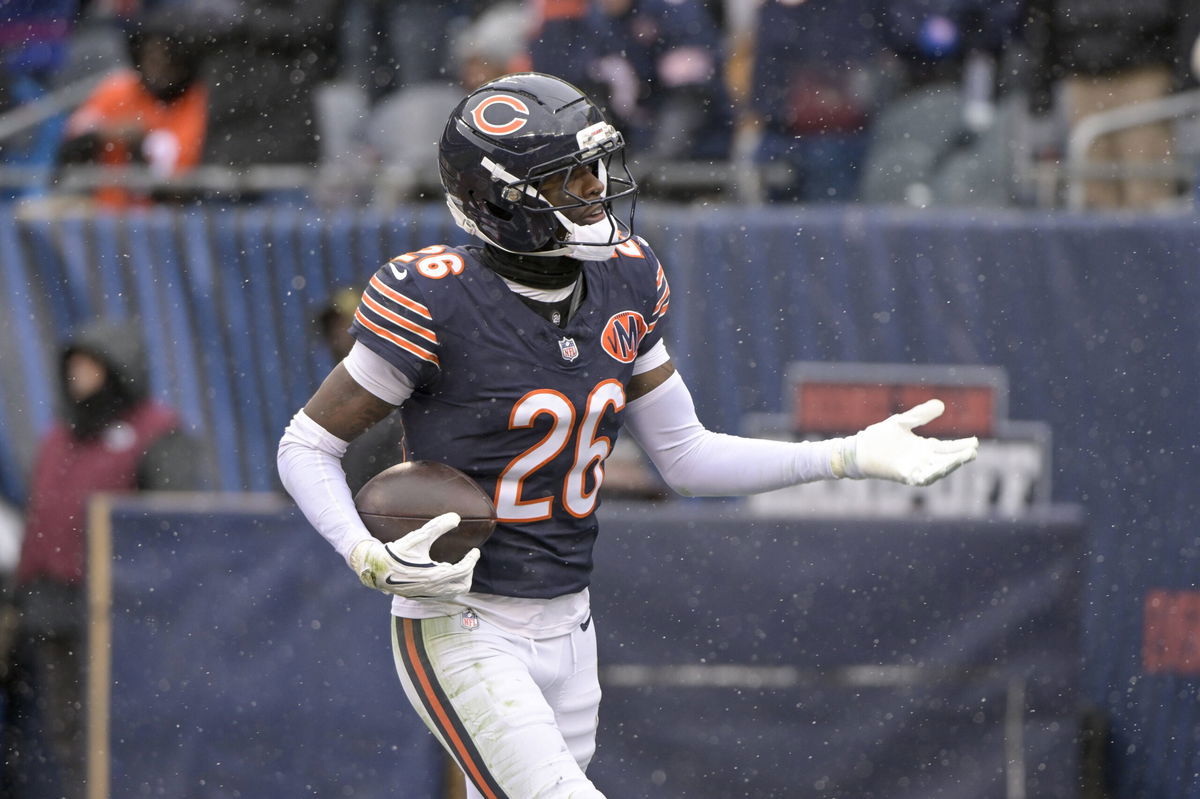
Chicago Bears cornerback Nahshon Wright 26 celebrates his fourth quarter fumble recovery against the New York Giants at Soldier Field in Chicago on Sunday, November 9, 2025. The Bears defeated the Giants 24-20. PUBLICATIONxNOTxINxUSA CHI20251109114 MARKxBLACK
Imago
Chicago Bears cornerback Nahshon Wright 26 celebrates his fourth quarter fumble recovery against the New York Giants at Soldier Field in Chicago on Sunday, November 9, 2025. The Bears defeated the Giants 24-20. PUBLICATIONxNOTxINxUSA CHI20251109114 MARKxBLACK
Essentials Inside The Story
- The NFL distributed a total of $542 million in performance-based pay for the 2025 season.
- That amount is much higher than the 2024 season's $452 million.
- A former Chicago player got the highest performance-based pay this year.
Back in 2002, during the NFLPA negotiations for a new Collective Bargaining Agreement, there was a quiet but meaningful push: to take care of the players who gave everything on Sundays without the big contracts to show for it. The union urged the league to create a fund that would reward those on smaller deals who still played major roles on the field, ensuring their contributions didn’t go unnoticed. The money, spread evenly across all 32 teams and classified as a benefit rather than salary cap spending, became a small but powerful acknowledgment of their grind.
Now, more than a decade later, that effort still echoes through locker rooms, with players continuing to benefit from that system. On Monday, the NFL announced that it had distributed a total of $542 million in performance-based pay for the 2025 season. And ex-Chicago Bears star Nahshon Wright was the biggest beneficiary.
He earned the most through the program: $1.4 million. That bonus more than doubled what he originally earned during the season. Interesting, a total of 25 players received more than $1 million. But that brings up an interesting question: Why did the league decide to give Wright and many other players such a huge bonus?
Well, the program is designed to benefit players who see meaningful time on the field despite being on smaller contracts. Take Wright, for example. As a rookie with the Dallas Cowboys in 2021, he was on the field for just 10 percent of the defensive snaps. That number rose to 27 percent in 2022, before dropping to 7 percent in 2023. Dallas eventually traded him to the Minnesota Vikings, where he didn’t log a single defensive snap in 2024. That sequence of events allowed the Chicago Bears to sign him to a low-cost deal in 2025, a move that paid off when Wright broke out, playing 97 percent of the defensive snaps along with 4 percent on special teams.
Any player who appears in even a single official snap during the season qualifies for a payout through the program. However, the biggest gains typically go to those who log heavier playing time while still being on relatively modest contracts. Where does this money come from, though?
Here’s the thing: The money for the performance-based pay pool is generated from savings created by slower growth in both the rookie salary pool and minimum veteran contracts. From there, payouts are determined using a player index, a formula that compares a player’s “PBP Playtime” (their total regular-season snaps across offense, defense, and special teams, measured against the highest snap count on their team) with their “PBP Compensation” (which includes base salary, prorated signing bonus, and any earned incentives).
Once calculated, a player’s index is measured against those of his teammates to decide how much he receives from the performance-based pool. That turns it into an internal competition within the roster for a share of the funds. All that said, the program operates completely outside the league’s financial restrictions, meaning these payouts have no impact on the salary cap and don’t create any additional cap pressure or relief for teams.
It goes without saying that the pool money keeps increasing. For example, $452 million in performance-based pay was distributed after the 2024 season. In 2023, that amount was $393.8 million and $336 million after the 2022 season.
NFL players will receive more than $542 million in Performance-Based Pay for their performance during the 2025 season. The Performance-Based Pay program is a collectively bargained benefit that compensates all players based upon their playing time and salary levels. Top 25 here pic.twitter.com/1YkTTPD9RZ
— Brian McCarthy (@NFLprguy) March 16, 2026
Interesting Fact: Since the program was introduced, the NFL collectively distributed close to $3.3 billion in total payouts.
Nahshon Wright had a historic season with the Chicago Bears
Wright appeared in 17 games in the 2025 season and started 16. Throughout those outings, he recorded five interceptions, 80 combined tackles, and one QB hit. Those were the highest numbers of his career. He also got his first touchdown. But it doesn’t end here.
The player also starred in two playoff games at cornerback for Chicago after the secondary was banged up. That included Pro Bowler Jaylon Johnson. With Wright’s help, the Bears featured in the WildCard and Division rounds in the 2025 season. That was big, considering the franchise last made it to the playoffs in 2020.
Additionally, the Bears had a historic comeback victory, 31-27, against the Packers in the WildCard round. Chicago had completed the largest postseason comeback in franchise history. No wonder Bears coach Ben Johnson was emotional after the win.
“There was probably a little bit more noise coming out of their building up north to start the week, which we heard loud and clear, players and coaches alike,” Johnson told the media. “This one meant something to us.”
And throughout Chicago’s 2025 run, Wright was right there, supporting his team. His time with the team is now over. He signed a $3.5 million contract with the New York Jets.
List of top 25 earners from the PBP program after the 2025 season
1. Nahshon Wright (Chicago Bears): $1,441,397
2. Ronnie Hickman (Cleveland Browns): $1,293,843
3. Elijah Wilkinson (Atlanta Falcons): $1,272,054
4. Nick Scott (Carolina Panthers): $1,262,216
5. Chris Paul (Washington Commanders): $1,202,142
6. Andrew Vorhees (Baltimore Ravens): $1,199,318
7. Jalen Redmond (Minnesota Vikings): $1,184,087
8. Mason McCormick (Pittsburgh Steelers) $1,173,614
9. Chamarri Conner (Kansas City Chiefs): $1,150,312
10. Craig Woodson (New England Patriots): $1,149,910
11. Xavier Watts (Atlanta Falcons): $1,144,510
12. Riley Moss (Denver Broncos): $1,136,103
13. Devin White (Las Vegas Raiders): $1,133,486
14. Payton Wilson (Pittsburgh Steelers): $1,102,206
15. Jack Jones (Miami Dolphins): $1,101,585
16. Anthony Bradford (Seattle Seahawks): $1,098,394
17. O’Cyrus Torrence (Buffalo Bills): $1,091,163
18. Matt Goncalves (Indianapolis Colts): $1,083,538
19. Kingsley Suamataia (Kansas City Chiefs): $1,067,367
20. Antonio Johnson (Jacksonville Jaguars): $1,065,214
21. Malachi Moore (New York Jets): $1,042,230
22. Dane Belton (New York Giants): $1,023,291
23. Drake Thomas (Seattle Seahawks): $1,022,512
24. Jordan Battle (Cincinnati Bengals): $1,021,703
25. Evan Williams (Green Bay Packers): $1,003,098
Watch What’s Trending Now!
Related Newsletters