
Imago
Image Credits: Social Media, taken from X @SoldierField
Imago
Image Credits: Social Media, taken from X @SoldierField
Essentials Inside The Story
- The future home of the Chicago Bears is back in the spotlight
- Lawmakers in Illinois prepare for a critical legislative session
- Time is running short on the proposed Arlington Heights project
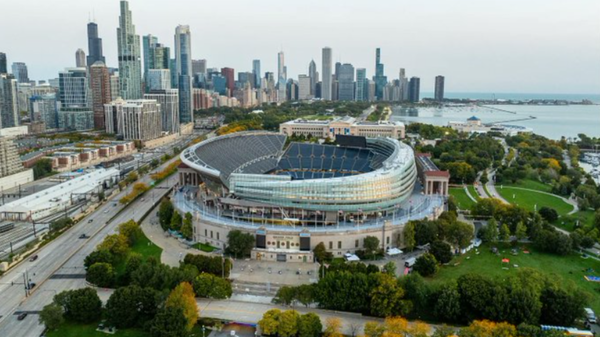
The long-running stadium drama around the Chicago Bears has reached another tense moment. The team, which has called Soldier Field in Chicago home for over a century, is now exploring plans for a new stadium. With lawmakers returning to Springfield next week, pressure is growing on Illinois to approve financial help for the project. Local leaders say the upcoming legislative session could become a key moment in determining the future of the Bears’ stadium plans.
Watch What’s Trending Now!
Arlington Heights Mayor Jim Tinaglia warned that the next legislative session could be a turning point. Speaking during his state of the village address, Tinaglia stressed that the timeline is getting tight for the franchise’s proposed stadium project in Arlington Heights.
“Next week is a big, big, big week,” Tinaglia said while discussing the situation.
Illinois lawmakers will return after a nearly three-week break and could take up a bill tied to tax breaks and financial incentives for the Bears’ stadium project.
“Waiting until the end of May I think, is a no go for the Bears,” he said. “They’ve already been through the wringer too many times.”
The proposed legislation would allow the Bears or any developer spending at least $500 million to negotiate property tax payments directly with schools and other local governments for up to 40 years. The bill already cleared a House committee on Feb. 26 but did not receive a full vote before lawmakers adjourned.
Tinaglia admitted that he and village manager Randy Recklaus had doubts about the bill’s chances last year. Still, he said, Bears’ leadership believed the proposal could have passed and were disappointed when the legislative session ended without a vote.
Imago
Arlington Heights, Illinois (credit: X)
The mayor believes the political environment may look different now. With primary elections finishing just before lawmakers return, the pressure around such a large decision could be reduced. At the same time, another factor has changed the conversation: competition from Indiana.
Last December, Bears president Kevin Warren announced the franchise was expanding its stadium search because of a lack of “legislative partnership” in Illinois. The statement immediately raised concerns that the team might look outside the state.
“The Bears aren’t just kidding around. Maybe they would consider going to Indiana,” Tinaglia said. “Since that happened, it’s been a whole different tone.”
Tinaglia also shared he regularly speaks with Bears leadership, including chairman George McCaskey and stadium development executive Karen Murphy. According to him, the team still wants Arlington Heights to work. However, they still need help from the state lawmakers. While discussions continue, the project itself remains large in scope.
Meanwhile, team leadership has made it clear they hope to open a new stadium by 2029, a goal that leaves little room for prolonged political delays. Bears’ president previously signaled frustration with the pace of discussions in Illinois, warning that the organization cannot afford to keep waiting while construction timelines grow tighter.
The broader redevelopment tied to the proposed Arlington Heights site is estimated to cost around $5 billion and would require major infrastructure upgrades around the stadium. While the Bears have indicated a willingness to fund the venue itself, they have continued to push for public support to help cover surrounding improvements, a sticking point that has kept negotiations with state leaders unresolved.
The proposed domed stadium could take around three years to build, while the surrounding mixed-use district of hotels, restaurants, offices, and homes could take more than a decade to fully develop. With the legislative clock ticking and pressure rising, another state has already stepped forward with its own proposal.
Indiana pushes stadium plan as the Bears explore relocation option
While Illinois lawmakers debate incentives, leaders in Indiana have started building their own case to attract the Bears. The idea of moving the franchise to northwest Indiana has quickly become part of the broader stadium discussion.
Indiana lawmakers have already passed legislation creating a stadium authority that could finance and build a Bears stadium in Hammond. The location being discussed is near the city of Hammond, about 30 miles southeast of Chicago.
Todd Huston, speaker of the Indiana House, told lawmakers the project could represent a major economic boost for the region. He also revealed that the Bears are prepared to invest around $2 billion into the stadium development if the plan moves forward.
In a statement on X, Indiana Governor Mike Braun later clarified that the proposal is still in early stages.
“Indiana is open for business, and our pro-growth environment continues to attract major opportunities like this partnership with the Chicago Bears,” Braun wrote on X on February 19. “We’ve identified a promising site near Wolf Lake in Hammond and established a broad framework for negotiating a final deal.”
Indiana is open for business, and our pro-growth environment continues to attract major opportunities like this partnership with the Chicago Bears. We’ve identified a promising site near Wolf Lake in Hammond and established a broad framework for negotiating a final deal. If…
— Governor Mike Braun (@GovBraun) February 19, 2026
The proposed Indiana plan includes several tax measures to support the project. The city of Hammond could introduce a 12% admissions tax on large events, while Lake and Porter counties may adopt a 1% food and beverage tax. Lake County could also add a 5% hotel tax to help repay stadium construction bonds.
Under the NFL’s territorial rules, the Chicago Bears hold marketing rights within a 75-mile radius of downtown Chicago, a range that even stretches into parts of northwest Indiana. That detail matters because the proposed stadium site in Hammond lies within that same territory. In other words, a move there wouldn’t technically pull the team out of its established market. Still, it wouldn’t be that simple.
Any relocation would first need the green light from the league and its owners before anything could move forward. Meanwhile, officials in Illinois have been watching the situation closely. A spokesperson for Governor J. B. Pritzker even expressed surprise when Indiana lawmakers pushed ahead with their proposal while talks were still ongoing back in Illinois. Through it all, the Bears themselves have mostly stayed quiet, offering only brief updates as negotiations continue. And that silence only adds to the intrigue.
After more than a century rooted in Chicago, the Bears remain one of the city’s most storied franchises. Now, with stadium talks dragging on and interest from Indiana growing louder, the conversation about where the team’s future home might be built has taken on a whole new layer.