
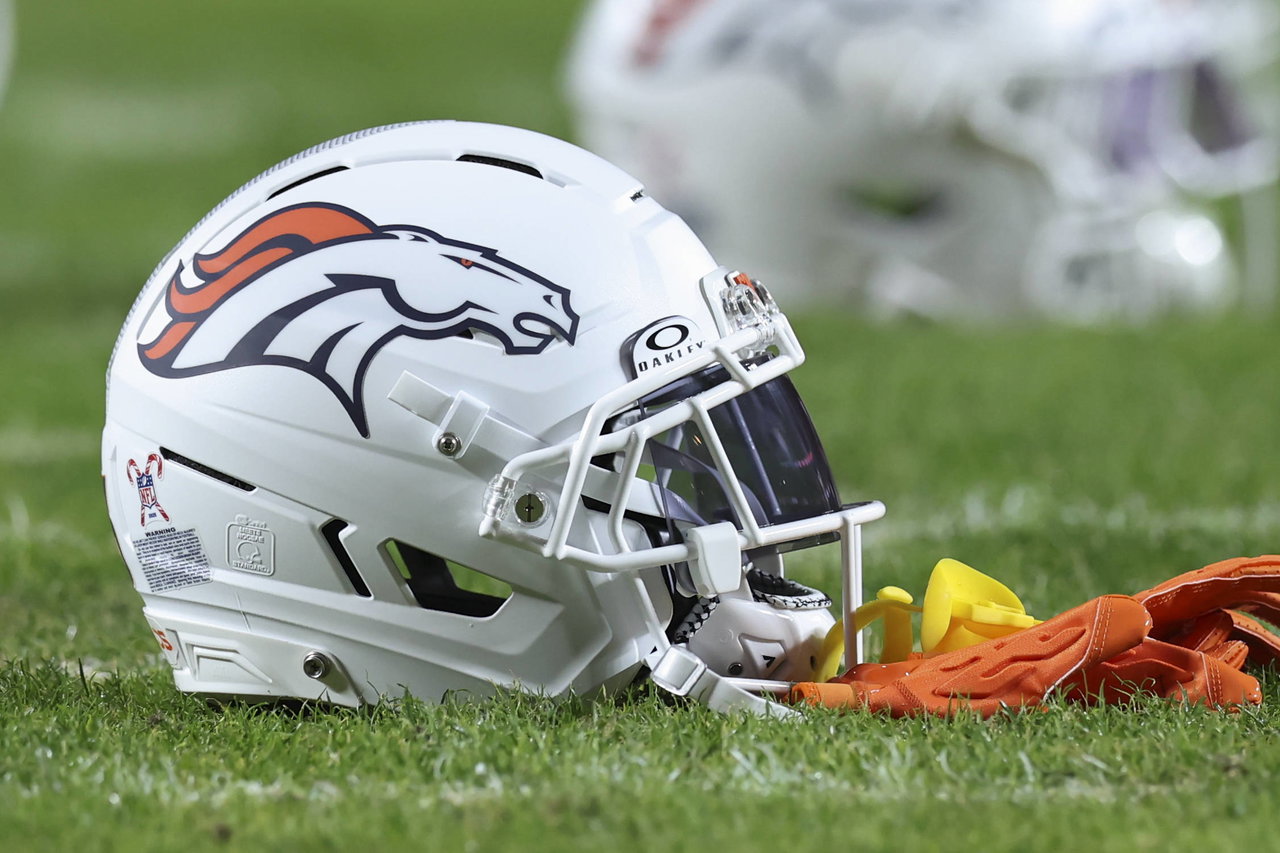
In January 2023, the Denver Broncos had just one home game left when Greg Penner decided to spend $400,000 on a new playing surface at Empower Field. The grass had taken a beating from bad weather and heavy stadium activity. But rather than let the team finish the season on a field that didn’t meet its standards, the Broncos’ CEO and owner ordered a complete replacement. And so, fresh sod was brought in from Arizona ahead of their January 8 game against the Los Angeles Chargers. That wasn’t even a one-off generous event.
Watch What’s Trending Now!
By November 2024, the Broncos were bringing in 14 truckloads of Kentucky bluegrass from Platteville, Colorado. It took the grounds crew just 36 hours to lay the new surface. And if that wasn’t enough, residents around Denver had another reason to look towards the stadium that month. A strange pink glow was lighting up the night sky. The source? The Broncos’ LED grow lights, installed to help the grass survive the colder months. Under turf and grounds director Chris Hathaway, maintaining the field had become a year-round operation. That investment in field maintenance continues in 2026.
“It’s that time of the season! For the fifth consecutive year, the @Broncos are conducting a full field replacement at @EmpowerField during the season, demonstrating the Walton Penner Family Ownership Group’s commitment to player safety and a best-in-class playing surface throughout the season,” the Broncos home stadium’s official page wrote on X.
Why the Broncos are replacing their grass again
The primary driving force behind the regular replacement of grass is player well-being. Between multi-game home stretches, summer concert tours, and fluctuating weather, the living turf undergoes considerable wear and tear. Repeated use can leave sections loose, uneven or divoted, creating inconsistent footing for players who constantly plant their cleats, accelerate and change direction.
That does not mean the Broncos’ existing field had become unsafe or that it had caused injuries. The franchise is taking a preventive approach, replacing the surface before accumulated wear becomes a bigger maintenance concern.
For the 2026 NFL season, the Broncos are among the 16 teams using natural or hybrid grass surfaces. The distinction matters because hybrid fields combine living grass with synthetic reinforcement; they are not the same as fully artificial turf.
The timing of the overhaul is planned around the Broncos’ playing schedule rather than a sudden problem with the surface. The Broncos initiated their full field replacement on November 4–5, 2026, utilizing two weeks away from playing in their home stadium to complete the process. In Week 9, they face the Carolina Panthers on the road, and then in Week 10, the Broncos will have a bye week before returning to their home stadium in Week 11 against the Las Vegas Raiders on November 22.
That gap gives the new sod time to settle before the Raiders visit. It is also important because Denver cannot simply schedule the work whenever it wants. The availability of suitable sod, the weather and the grounds crew’s installation window all influence when a replacement can happen.
The Broncos have also invested in technology to maintain the field between replacements. Their LED grow-light system, supplied by Netherlands-based SGL, uses approximately 95% red light and 5% blue light to support grass growth when the playing surface receives less natural sunlight. The lights are particularly useful during Denver’s colder months and after heavy snowfall. They supplement the grounds crew’s regular maintenance rather than replace the need for fresh sod.
The wider NFL debate over grass and artificial turf
Denver’s approach also comes amid a long-running debate over the surfaces NFL players compete on. The NFL Players Association has repeatedly pushed for natural grass, arguing that players prefer it and that high-quality grass can offer a safer playing experience.
In February 2024, then-NFLPA executive director Lloyd Howell said that 92% of players preferred natural grass. “It’s not rocket science. Ninety-two percent of our union wants grass,” he said.
The debate gained attention after Aaron Rodgers suffered a season-ending Achilles injury during his New York Jets debut at MetLife Stadium in September 2023. The game was played on artificial turf, but the surface was never established as the cause of his injury. Jets head coach Robert Saleh also pushed back against that suggestion, saying, “If it was a non-contact injury, I think that’d be something to discuss obviously. But I think that was trauma-induced.”
Still, concerns about playing surfaces have continued. The NFLPA has also questioned the practice of installing natural grass at stadiums for the 2026 FIFA World Cup before switching back to artificial turf for NFL games.
What the research says about playing surfaces
There is research supporting concerns about how artificial turf interacts with players’ cleats. Some studies suggest that the traction created by synthetic surfaces can place greater rotational forces on a player’s lower body. Natural grass, depending on its condition, may allow a player’s cleats to release more easily under certain forces.
One 2024 study published in the Orthopaedic Journal of Sports Medicine examined 718 lower-extremity injuries recorded during the 2021 and 2022 NFL seasons. It found an injury rate of 1.22 per game on natural grass, compared with 1.42 on artificial turf. The study also reported that the odds of an injury requiring season-ending surgery were 60% higher on artificial turf.
However, not every study has found a statistically significant difference. A separate 2024 study in Translational Sports Medicine, which examined 199 season-ending lower-extremity injuries across the 2020–22 seasons, found a higher injury rate on artificial turf. But the difference between the two surfaces was not statistically significant.
That distinction matters. These findings point to a possible difference in injury risk, but they do not prove that a particular surface caused an individual injury. Nor does natural grass automatically guarantee a safer playing field. Its condition matters just as much. Grass that is loose, uneven, too soft or poorly maintained can create problems of its own.
Denver isn’t the only team dealing with field conditions
Other NFL teams have also had to replace or repair their grass during the season. The Pittsburgh Steelers, for instance, share Acrisure Stadium with the University of Pittsburgh and have a history of resodding the field twice a season. The surface came under particular scrutiny after Pittsburgh’s October 2025 game against the Cleveland Browns.
Aaron Rodgers described the field as “borderline unplayable,” while cornerback Darius Slay compared parts of it to “playing in sand.” Kicker Chris Boswell also slipped during the game. The Steelers replaced the sod shortly afterward, although the team said the work had already been planned.
The Buffalo Bills faced a different problem in September 2026. Their new Highmark Stadium had opened with grass installed in October 2025, but the surface did not develop as expected. The roots had grown down into the soil, but not sufficiently across it, leaving some areas vulnerable to tearing.
The Bills decided to replace the grass before their first regular-season home game. Senior director of stadium operations Aaron Ramella explained the decision: “We chose to re-sod because we were not happy with the way the current field was performing.” The NFL and an independent consultant had reviewed the surface and deemed it safe and playable, but Buffalo still wanted to address the areas that were not meeting its standards.
The examples show why simply choosing natural grass does not settle the issue. Stadiums have different weather conditions, event schedules and maintenance challenges. Some teams can maintain grass throughout the season, while others find that artificial turf is more practical for their facilities.
The NFL is tightening its playing-surface standards
The league has also taken steps to make playing surfaces more consistent. In December 2025, the NFL and NFLPA announced new mandatory requirements for both natural and synthetic fields. The changes followed concerns about surface performance and the need for more reliable testing across stadiums.
The new process includes two testing systems. BEAST, or the Biomechanical Elite Athlete Shoe-Turf Tester, assesses how a player’s cleats interact with the surface, including traction and rotational forces. STRIKE measures how the field responds to impact and evaluates its firmness and energy absorption.
Beginning with the 2026 season, teams must select their playing surfaces from an approved set of standards and metrics. New synthetic turf installations must also meet the league’s screening requirements. All NFL stadiums, including those outside the United States, are expected to comply by the start of the 2028 season.
The rules do not require teams to switch to natural grass. Instead, they set performance standards for both types of surfaces, giving the league and players’ association a more consistent way to assess field conditions.
None of this means that natural grass is free of injury risks, or that replacing the field can prevent every injury. But Denver’s approach shows how much work goes into keeping a natural playing surface ready for an NFL season, especially in a city where the weather can make that job harder.