
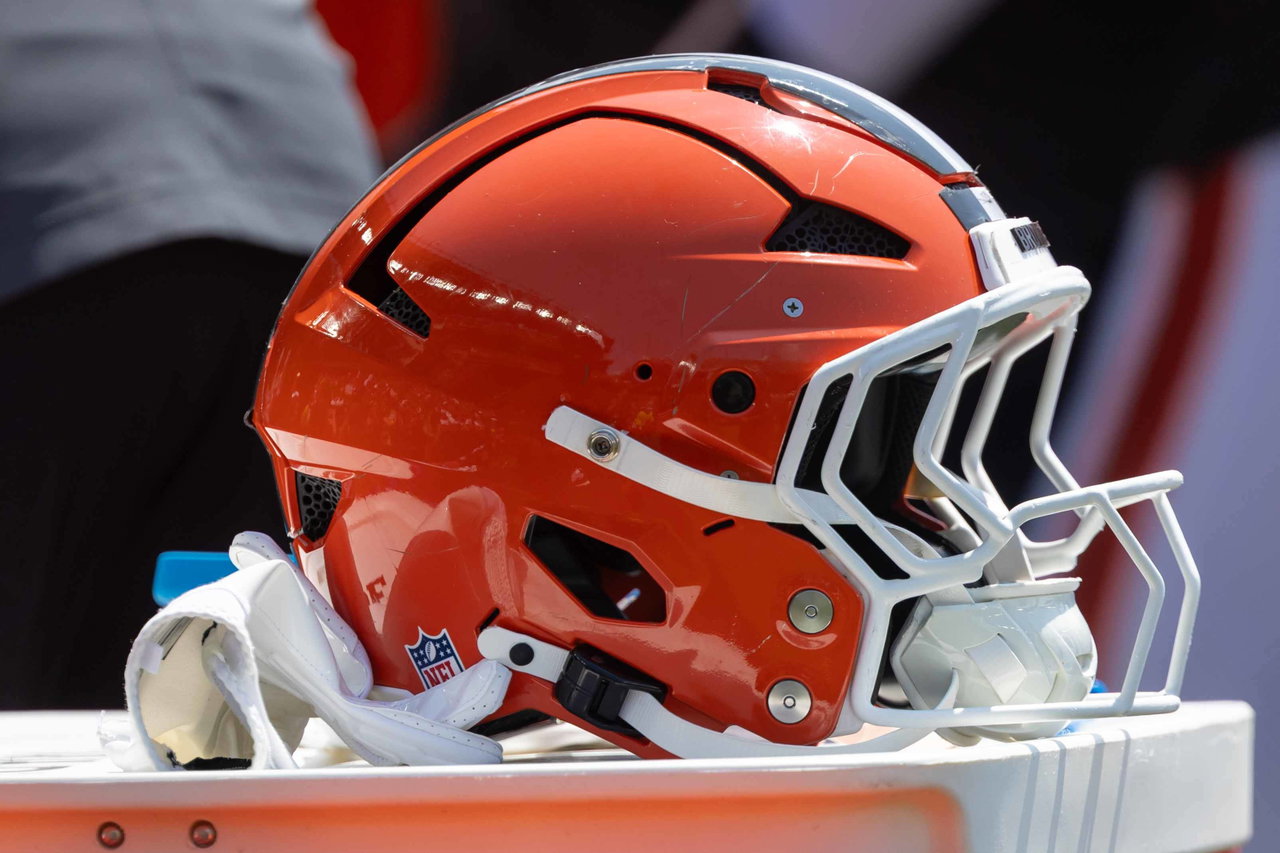
Ever seen a loophole work this well in someone’s favor? Dae’Quan Wright’s time with the Cleveland Browns appears to be ending, but this is not shaping up as another forgettable roster cut. Instead, the young tight end could be on the verge of an NFL-to-NCAA reversal that once seemed impossible.
Watch What’s Trending Now!
“Breaking: The Browns are waiving tight end Dae’Quan Wright and, if he clears waivers, he has an agreement in place for the 2026 season to play for LSU, his agents told @AdamSchefter,” ESPN posted on X. “Wright is believed to be the first player who could play for an NFL team and then go back to play in college.”
After going undrafted, Wright signed a free-agent deal with the Philadelphia Eagles, only to get waived earlier this month. Cleveland scooped him up off waivers, but his stay with the Browns didn’t last either, and he’s since been cut loose from that roster too.
The bigger story began with the NCAA’s eligibility overhaul. The association adopted a new model that would allow qualifying athletes to compete for five seasons within a five-year window. But the change did not initially extend to athletes from the high school Class of 2022 who had already completed four seasons and exhausted their eligibility by the end of the 2025-26 academic year.
That transition rule prompted a federal challenge in Colorado. On July 8, Northern Colorado basketball player Brock Wisne and 11 other Division I athletes filed a proposed class-action lawsuit against the NCAA, arguing that athletes who started college in 2022 were being denied the same fifth-season opportunity available to later entrants under the new system.
The plaintiffs argued that being shut out of a fifth season affected more than their ability to keep playing. It also threatened their access to roster spots, scholarships, NIL income and revenue-sharing opportunities tied to another year of college athletics. Their case, Wisne v. NCAA, became the vehicle for a broader challenge to the NCAA’s decision not to apply the new eligibility model to their class.
On July 31, U.S. District Judge Charlotte Sweeney certified a nationwide class and issued a preliminary injunction that temporarily prevented the NCAA from using its transition rule to deny a fifth season to a defined group of Division I athletes. The order covered athletes who began college in 2022-23, completed four seasons of competition and lost eligibility because of the rollout of the new model.
Wright’s case was not unfolding in isolation. Similar eligibility challenges were being filed around the country by athletes seeking a fifth season under the NCAA’s new model, with more than 100 players involved in related litigation by mid-August.
The NCAA argued that reopening eligibility for athletes whose college careers had appeared finished could disrupt rosters, scholarships and team planning, leaving courts in different jurisdictions to issue temporary and sometimes conflicting answers.
But two days later, the scope of that relief narrowed. On August 2, Sweeney clarified that her ruling did not wipe out the rest of the NCAA rulebook. Transfer restrictions, roster limits and, most importantly for Wright, the rule barring athletes from signing professional contracts and then returning to college still stood.
That is when Wright and the others decided the NCAA’s line was not good enough. A group of 33 athletes, including 16 football players and several who had signed with NFL teams, took the fight to Louisiana. They argued that the NCAA could not give the Class of 2022 a fifth year and then shut out players simply because they had already pursued professional opportunities.
On August 19, a Louisiana judge granted the group a temporary restraining order, temporarily blocking the NCAA from enforcing those restrictions against the plaintiffs. The ruling opened a seven-day transfer-portal window and created a legal path for players such as Wright to seek a return to college football despite having signed NFL contracts.
The order did not give the players an unconditional return to college football. Under the reported terms, plaintiffs who had signed NFL contracts needed to be released by their teams and end their professional arrangements before joining a college roster. Wright’s status with Cleveland therefore mattered for more than his place on the Browns’ depth chart. A waiver or release was a necessary step if he wanted to pursue another college season.
September 1 is now the key date in Wright’s case. Under the reported terms of the Louisiana temporary restraining order, NFL-contracted plaintiffs must be released by that deadline to join a college roster for the 2026 season. If Wright clears waivers and Cleveland’s transaction fully ends his NFL contract in time, he can move forward with LSU. If not, the court-created path back to college could close before he ever takes a snap for the Tigers.
Wright wasted no time using it. In the days after the ruling, while still technically on Cleveland’s roster, he entered the NCAA transfer portal and became the first active NFL player believed to have done so.
Even before Wright made history in the portal, Cleveland was already wondering what was going on. He had missed the Browns’ first two preseason games and more than a week of practice before finally dressing against Buffalo.
Head coach Todd Monken chalked it up to injury.
“Man, ain’t this s*** crazy? I mean, I don’t even know what to say,” Monken admitted after the loss. “As far as I know, he’s had a medical issue that wasn’t allowing him to practice. And that’s a medical issue; it’s nothing to do with me. Then he was cleared, so we dressed him just in case we had to have him, but when you don’t rep, it’s hard to put him on the field.”
Wright isn’t navigating this alone either. Fellow plaintiffs include Buccaneers edge rusher Jack Pyburn, Seahawks running back Anthony Hankerson, and Cardinals defensive back Wydett Williams Jr. Former Ole Miss teammate Zxavian Harris is part of the lawsuit as well. However, he’s since been cut by the Saints.
Along with Wright, players like TJ Harden, Harris, and offensive lineman Weylin Lapuaho have already entered the transfer portal rather than waiting to see how the legal fight plays out.
According to ESPN, the case stretches well beyond football, involving 33 athletes across multiple sports, 16 of them football players, all of whom are now eligible for that extra year of eligibility the Louisiana court has, at least for now, made possible.
The legal fight is far from over. On Friday, the 10th Circuit Court of Appeals granted the NCAA a stay, temporarily blocking the Colorado ruling while the appeal plays out.
But that does not automatically erase the separate state-court orders already won by Wright and other athletes, leaving college football with different courts pulling eligibility rules in different directions.
Dae’Quan Wright’s college football return
LSU apparently was not reacting to Wright’s sudden availability. Lane Kiffin had already been looking into it before Cleveland even knew where this was headed.
“I wondered why Lane Kiffin reached out a week ago, now I know,” Monken said, clearly still processing it. He didn’t hold back on his reaction either: “S***, I didn’t know, now I know. I didn’t call him back, guess I should’ve.”
Wright wasn’t just another undrafted rookie looking for one more shot at football. He was a legit contributor for a Playoff team, finishing his final season with 39 catches for 635 yards and five touchdowns, including one in an SEC win over South Carolina and another in the national semifinal loss to Miami.
Across four college seasons split between Virginia Tech and Ole Miss, Wright totaled 113 receptions for 1,603 yards and nine touchdowns.
If he clears NFL waivers, Wright will be reuniting with the coach who got him here. Smart move or cautionary tale, the door Louisiana’s court opened will keep raising questions.