
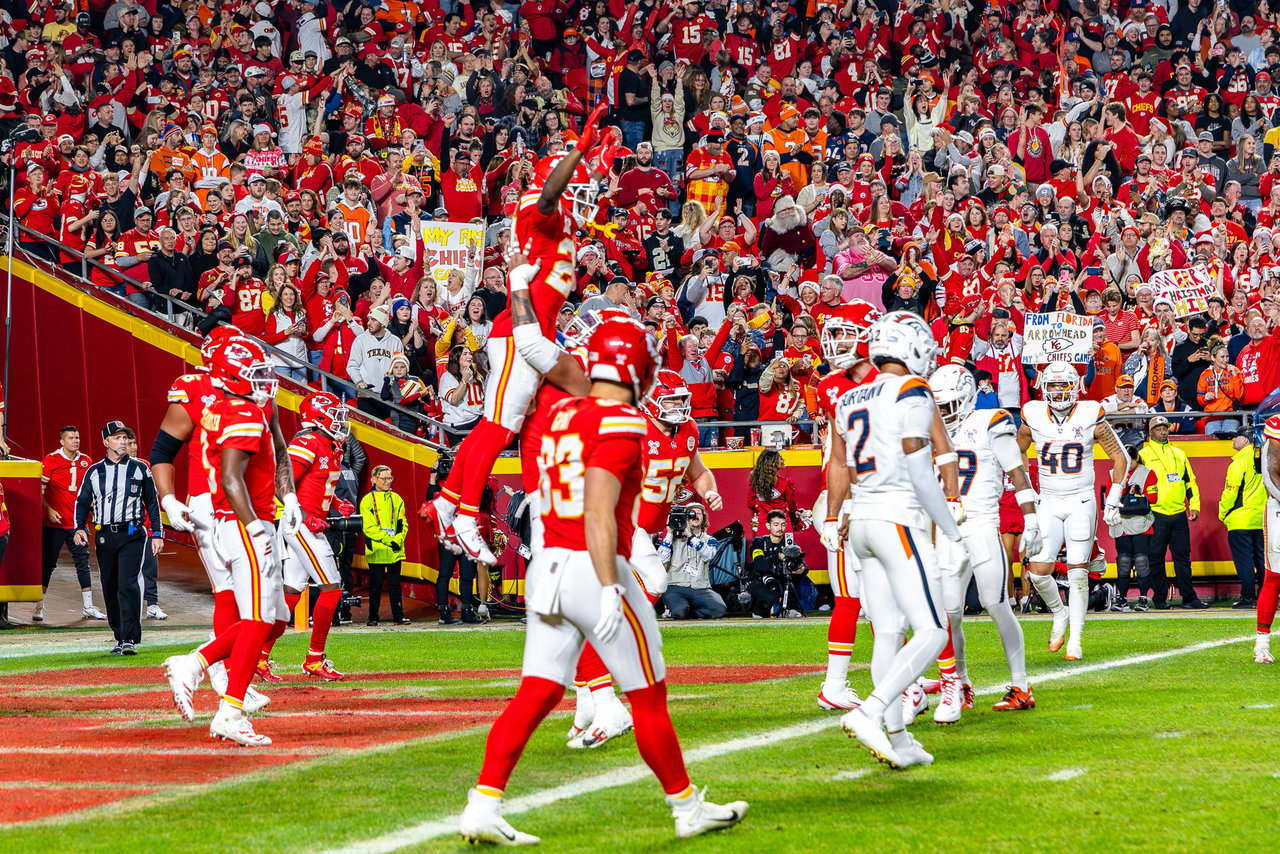
When the Kansas City Chiefs added “GEHA Field” to Arrowhead Stadium in 2021, fans hated the corporate mouthful. For five years, coaches, players, and national media stubbornly defaulted to just “Arrowhead.” Now, as the franchise prepares for its final five seasons at the historic venue, owner Clark Hunt listened to the fans and officially dropped the corporate prefix. But while the Kingdom celebrated a return to their roots, one prominent voice argued that restoring the stadium’s original name barely scratched the surface. While writing an opinion piece for the ‘Kansas City Star,’ veteran reporter Toriano Portner wants a complete overhaul.
Watch What’s Trending Now!
“When news broke that the Kansas City Chiefs were removing the name “GEHA Field” from their home stadium, I had some initial thoughts: Why not go further?” Toriano Porter wrote for the publication. “Stop the so-called ‘Tomahawk Chop,’ Drop the Arrowhead Stadium name entirely. And simply change the team’s name from the Chiefs to a more appropriate one.”
For Porter, dropping the corporate title was merely a surface-level fix that ignored a much deeper cultural issue. Porter wants these changes because he believes the team’s branding and traditions are deeply rooted in offensive Native American imagery, elements that have no inherent connection to the game of football. And he isn’t alone in that assessment. National data strongly reinforces the growing discomfort surrounding these rituals.
“A national survey of Native Americans conducted in 2020 by researchers at the University of Michigan and the University of California, Berkeley, found that half of Native Americans said the ‘tomahawk chop’ and non-Natives wearing headdresses was bothersome or offensive, according to The New York Times,” Porter wrote in the article. “That number rose to 65% among those more engaged in Native traditions, The Times reported.”
At the center of this cultural friction is the “Tomahawk Chop,” a stadium-wide spectacle where tens of thousands of fans rhythmically chop their arms through the air accompanied by a booming chant. Critics argue this ritual trivializes sacred Indigenous culture for weekend entertainment. While the Chiefs previously requested fans modify the gesture to a closed-fist motion, the subtle change has largely failed to catch on at Arrowhead.
But that didn’t stop resistance from building right in Kansas City’s backyard. The Kansas City Indian Center (KCIC) has relentlessly called on the franchise to retire both the name and the chop, even taking out prominent billboards across the city declaring “change the name and stop the chop.”
The franchise hasn’t turned a completely blind eye to the conversation, having previously formed the American Indian Community Working Group to guide incremental changes. These efforts led to a complete stadium ban on warpaint and traditional headdresses, alongside the creation of a ceremonial “Blessing of the Drum” before games. Yet for advocates like Porter and local Indigenous organizations, these middle-ground concessions feel like temporary band-aids on a foundational flaw.
As the Chiefs prepare to step into a brand-new stadium era, the debate over whether minor compromises are enough, or if an inevitable rebrand lies ahead, is officially hotter than ever.
Porter went as far as to compare how fan action pushed the Washington Commanders to drop the ‘Redskins’ from their team name in 2020. The franchise was known by the latter name for nearly 90 years before it was dropped.
While the term “Redskin” is universally classified as a dictionary-defined racial slur accompanied by a human caricature, the word “Chiefs” carries a fundamentally different history. It is a generic title of leadership, not an ethnic slur, and its origins in Kansas City are tied directly to local history. The Team was named in honor of former Kansas City Mayor Harold Roe Bartler, affectionately nicknamed “Chief” by the public.
Imago
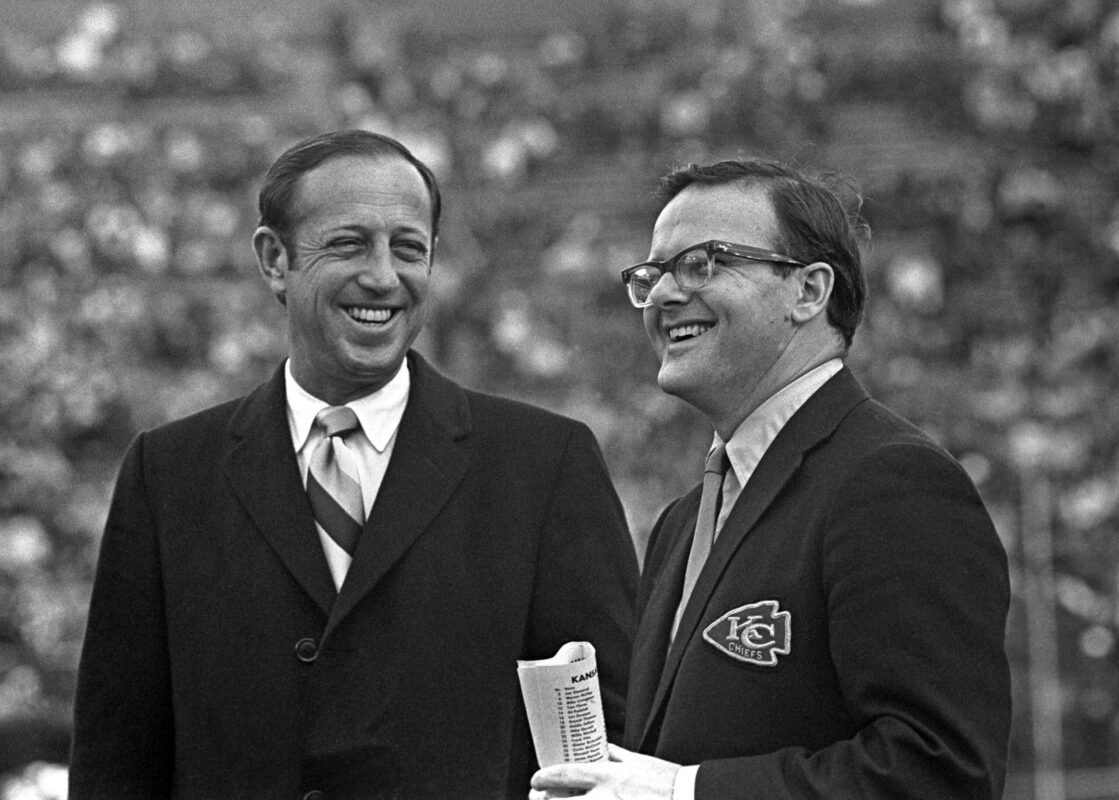
SUPER BOWL IV Jan. 11, 1970 New Orleans, LA, USA FILE PHOTO NFL, American Football Herren, USA commissioner Pete Rozelle left visits with Kansas City Chiefs owner Lamar Hunt before the game with the Minnesota Vikings for Super Bowl IV at Tulane Stadium. The Chiefs won the game, 23-9. New Orleans Louisana UNITED STATES, EDITORIAL USE ONLY PUBLICATIONxINxGERxSUIxAUTxONLY Copyright: xRodxHanna-USAxTODAYxSportsx 4219938
Mayor Bartle was the pivotal figure who persuaded founder Lamar Hunt to relocate his American Football League franchise from Dallas to Kansas City in 1963. Furthermore, the organization’s primary logo is an arrowhead, deliberately avoiding the depicted caricatures featuring a Native American man in a feathered headdress (Redskins) that sparked widespread condemnation elsewhere in professional sports.
Today, the Chiefs seem to be zeroing in on preserving their traditions ahead of their move to their new stadium, which is projected to open in 2031.
“We’re delighted with where we’ve ended up,” Clark Hunt said at a recent presser. “We think it does a great job of recognizing the franchise’s past and Arrowhead while combining it with a stadium that’s modern, innovative, bold, and something that’ll last for decades.
“Leaving Arrowhead is not a small decision, and we’re going to really cherish these five years. You know, it’s a special place and always will have a special place in our hearts, and we’re going to appreciate every moment in the building. But at the same time, we’re equally excited about the new building because we think it’s going to be special, and it’ll be a place that our fans over time will really come to love.”
For now, Porter’s proposal remains a bold take. The Chiefs are one of the biggest brands in the NFL, and changing their name would mean giving it all up.