Imago
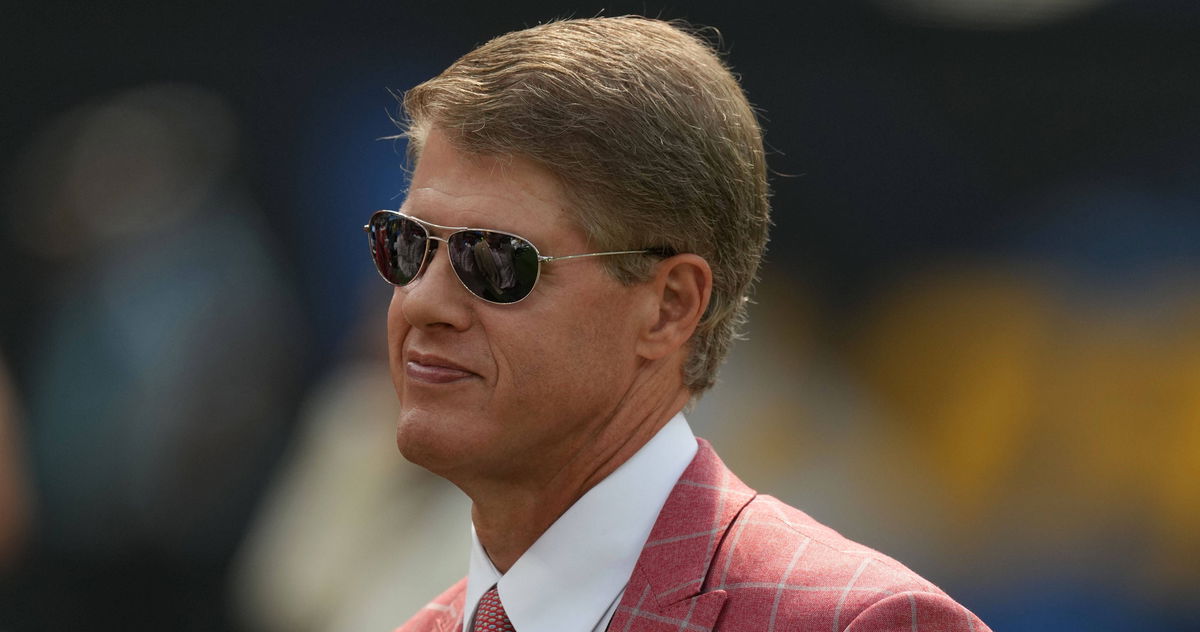
NFL, American Football Herren, USA Kansas City Chiefs at Los Angeles Chargers Sep 29, 2024 Inglewood, California, USA Kansas City Chiefs owner Clark Hunt during the game against the Los Angeles Chargers at SoFi Stadium. Inglewood SoFi Stadium California USA, EDITORIAL USE ONLY PUBLICATIONxINxGERxSUIxAUTxONLY Copyright: xKirbyxLeex 20240929_lbm_al2_073
Imago
NFL, American Football Herren, USA Kansas City Chiefs at Los Angeles Chargers Sep 29, 2024 Inglewood, California, USA Kansas City Chiefs owner Clark Hunt during the game against the Los Angeles Chargers at SoFi Stadium. Inglewood SoFi Stadium California USA, EDITORIAL USE ONLY PUBLICATIONxINxGERxSUIxAUTxONLY Copyright: xKirbyxLeex 20240929_lbm_al2_073
Imago
NFL, American Football Herren, USA Kansas City Chiefs at Los Angeles Chargers Sep 29, 2024 Inglewood, California, USA Kansas City Chiefs owner Clark Hunt during the game against the Los Angeles Chargers at SoFi Stadium. Inglewood SoFi Stadium California USA, EDITORIAL USE ONLY PUBLICATIONxINxGERxSUIxAUTxONLY Copyright: xKirbyxLeex 20240929_lbm_al2_073
Imago
NFL, American Football Herren, USA Kansas City Chiefs at Los Angeles Chargers Sep 29, 2024 Inglewood, California, USA Kansas City Chiefs owner Clark Hunt during the game against the Los Angeles Chargers at SoFi Stadium. Inglewood SoFi Stadium California USA, EDITORIAL USE ONLY PUBLICATIONxINxGERxSUIxAUTxONLY Copyright: xKirbyxLeex 20240929_lbm_al2_073
Essentials Inside The Story
- The Chiefs' decision to leave Arrowhead after five decades has stunned fans and split the region emotionally
- While Clark Hunt sees a domed future filled with Super Bowls and mega-events, the heavy public funding behind the project has sparked intense backlash
- As Kansas celebrates the deal and Kansas City mourns tradition, the fight over legacy, money, and loyalty is only getting louder
Starting in 2031, the Kansas City Chiefs will no longer call Arrowhead Stadium home. After more than 50 years at one of the NFL’s most iconic venues, the Chiefs’ owner, Clark Hunt, announced on December 22 that his franchise will move to a new $3 billion domed stadium in Kansas by 2031. The news stunned fans who grew up tailgating in the Arrowhead parking lots and braving the elements every fall Sunday.
Watch What’s Trending Now!
But Clark Hunt was only able to make this decision after Kansas lawmakers approved a funding package. As a result of this, 70% of the cost of Hunt’s project will be covered by the sales tax and Sales Tax and Revenue (STAR) bonds. Still, for further developments with the project, the Hunt family has committed $1 billion.
“We made a decision as a family that this was the right opportunity and the best for the organization for several reasons,” Hunt said in a statement recently. “It’s about the fans. My dad [Lamar Hunt, who founded the franchise] was always about the fans and thinking about the future.”
Clark Hunt believes the move positions the Chiefs and the region for decades to come. He argued that the new stadium will last 50 to 60 years and unlock opportunities Arrowhead simply could not. With the new stadium, the Chiefs could even host events like the College Football Playoff games, Super Bowl, and NCAA Final Fours.
From a business standpoint, Clark Hunt’s logic behind the move is clear, but it does not completely align with the Chiefs’ community sentiment. Recently, Kansas City Mayor Quinton Lucas admitted to being sad about Hunt’s decision. While Lucas acknowledged that Kansas presented a stronger public financing offer for the Chiefs, the emotional loss of leaving Arrowhead still hit home.


Remarks by Mayor Lucas on Today’s Chiefs Stadium News pic.twitter.com/sWFz40f99o
— Mayor Q (@QuintonLucasKC) December 22, 2025
“Today is a loss for the Arrowhead tradition that so many of us in the Chiefs Kingdom hold dear,” Lucas said in a recent statement. “At the new location, folks will make new memories. But for those of us who remember the painful days… this will be a tough adjustment. I wanted my two young sons and your children and your grandchildren to get to experience the same.”
Lucas’ words captured what many fans feel: Arrowhead was more than concrete and seats. It was a shared cultural space where Kansas City came together across generations and backgrounds. That emotional attachment explains why backlash erupted almost immediately over the scale of public funding tied to Clark Hunt’s decision.
Clark Hunt faces backlash from fans over his $3B stadium decision
“Hunt can just write a check for a new stadium tomorrow and still be rich AF,” one fan wrote.
“F–k the Hunts,” another fan wrote. “I don’t give a shit about them coming to Kansas or leaving Missouri. STOP GIVING BILLIONAIRES PUBLIC MONEY. That family is worth $25 billion. They can afford to build their own shitty dome.”
Those reactions from fans reflect a broader frustration, not just with the Chiefs, but with how public money often supports private wealth. According to the approved plan, Clark Hunt’s project includes a $3 billion stadium in Wyandotte County.
But there is also a $300 million training facility and headquarters for the Chiefs in Olathe. Then, there will be at least $700 million in mixed-use development for the Chiefs. This pushes total costs to roughly $4 billion to fund Hunt’s project. So, for fans facing real-life financial stress, the government’s priorities were difficult to swallow.

Imago
NFL, American Football Herren, USA Super Bowl LIX-Opening Night Feb 3, 2025 New Orleans, LA, USA Kansas City Chiefs executive Clark Hunt is interviewed during Super Bowl LIX Opening Night at Ceasars Superdome. New Orleans Ceasars Superdome LA USA, EDITORIAL USE ONLY PUBLICATIONxINxGERxSUIxAUTxONLY Copyright: xKirbyxLeex 20250203_jel_al2_087
“I’m struggling hard being unemployed and having $10k in medical debt. They could’ve used it to help people like me, but nah. Let’s help a family with tens of billions in their pockets already,” another fan wrote online.
“Let this be a lesson to everyone: if the government wants to raise and spend money on something, they can find the money,” another fan wrote. “I don’t wanna hear anyone talking about, “But where will the money come from?” when talking about funding things that would actually help people in the whole state (like education and healthcare). They can obviously find large sums of money when it’s convenient for them.”
Still, supporters of Clark Hunt’s decision countered with their own argument. Some fans noted that STAR bonds don’t directly raise new taxes and rely on future sales tax revenue generated by the Chiefs’ new stadium itself.
“No public money was raised,” one fan also argued. “Bonds will be sold, if they are defaulted on the bondholders will be the ones in a pickle. The bonds will be paid off from the positive externalities of the stadium being built. There is no education or healthcare corollary to this enterprise.”
So, this fan’s explanation regarding Clark Hunt’s project may be technically accurate. But many fans still think that could otherwise be used to fund public welfare in Kansas. Moreover, it appears that fans might still debate Hunt’s decision even after Arrowhead goes quiet by 2031.
Related Newsletters