
Essentials Inside The Story
- The Kansas City Chiefs are moving forward with a massive $3 billion stadium project.
- The move is sparking debate over its financial structure and long-term impact.
- Once the teams vacate the Truman Sports Complex, Missouri faces a loss of roughly $55M in annual revenue.
Last season, CEO Clark Hunt stunned Chiefs Kingdom by revealing plans for an eventual departure from Arrowhead Stadium and across the state borders. Kansas State lawmakers quickly embraced the idea, however, offering the Kansas City Chiefs a massive $3 billion stadium package heavily supported by public STAR bond financing. But as excitement around the proposal grew, so did concern over the numbers behind it, with critics warning the deal could ultimately become one of the most expensive financial gambles taxpayers in the state have ever been asked to shoulder.
Watch What’s Trending Now!
State officials are projecting nearly $4.3 billion in economic impact from the construction phase alone, while supporters argue the project could bring jobs, new development, and a major boost to Wyandotte County. Yet, the financing structure has become a growing point of debate. Roughly $1.8 billion of the stadium’s cost is expected to be covered through STAR bonds, which would be repaid using sales tax revenue generated within a designated district. The problem, critics argue, is that the entire plan depends on those future tax projections actually materializing, something they say is far from guaranteed.
“Residents should pay close attention to whether projected STAR bond revenues tied to the Chiefs stadium actually meet expectations and whether additional public costs surface outside the project’s formal financing structure,” warned Calvin Williams, University of Kansas’ program director for sport management, as per Kansan.
Public financing for sports venues has become increasingly common. Williams has watched local governments run the same play: project big revenues, issue bonds, and hope the taxes follow. But the problem is they don’t always follow through.
For instance, David Tepper’s Carolina Panthers project is the cautionary tale Williams draws inspiration from here. Tepper targeted an $800 million headquarters near Rock Hill, South Carolina, in 2022. But bond disputes stopped the construction after two years, and York County and the contractors sued.
A $100 million bankruptcy settlement closed the saga at last. As part of the settlement, GT Real Estate Holdings, the firm tied to David Tepper, was ordered to repay York County $21 million after the county had contributed sales tax revenue toward road upgrades connected to the project. Another $60 million was divided among contractors left behind when the development was scrapped.
The agreement, approved by federal bankruptcy court Judge Karen Owens, also required all parties to walk away from their existing lawsuits and bars them from bringing any future claims tied to the matter. For the Chiefs’ stadium now, Williams believes the money could be used elsewhere, for a bigger cause.

Imago
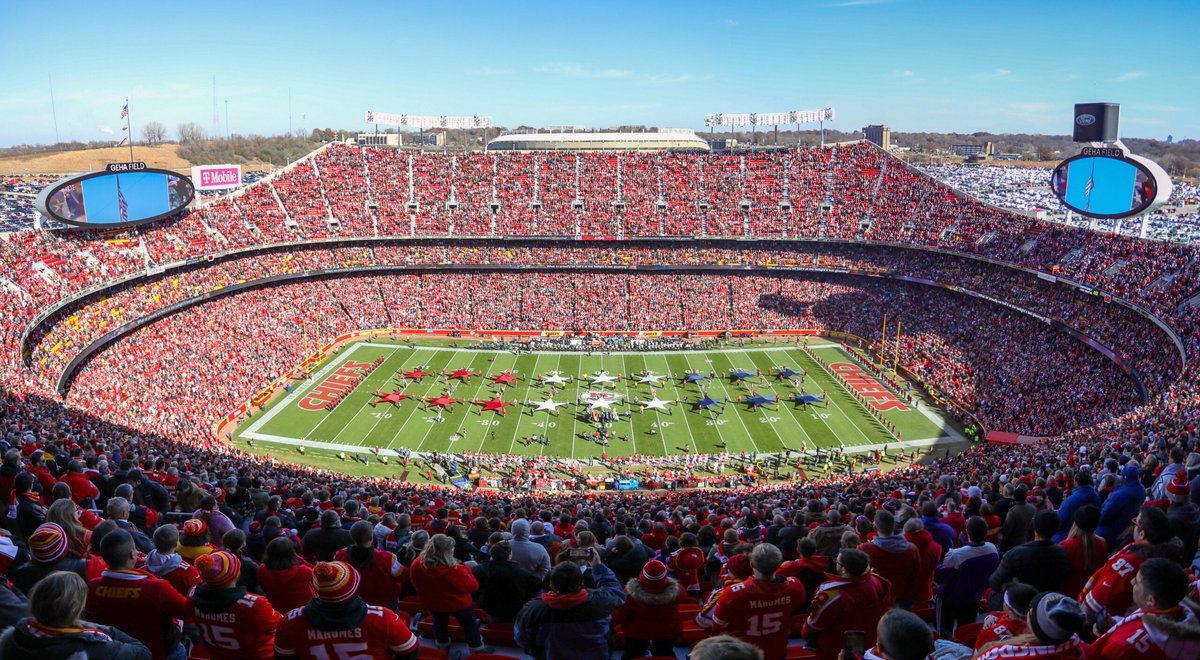
December 25, 2025 Kansas City, MO. U.S. – Fireworks above the scoreboard before the start of a week 17 National Football League football game between Denver Broncos and the Kansas City Chiefs on GEHA Field at Arrowhead Stadium in Kansas City MO..Denver won 20-13.Attendance: 73405. /Cal Media Kansas City United States of America – ZUMAc04_ 20251225_zma_c04_177 Copyright: xMichaelxSpomerx
“There are always fiscal outcomes,” Williams said, “but perhaps a greater concern for local stakeholders is the opportunity cost – whether those public resources would have generated more equitable benefits if invested in areas like infrastructure, housing, or healthcare.”
The Kansas City Royals also add pressure. Chiefs quarterback Patrick Mahomes holds a minority stake in the MLB franchise, which is planning a new downtown Kansas City stadium after its Truman Sports Complex lease ends. The new location would compete directly for the events and visitor dollars Wyandotte would need to repay its bonds.
And then there’s the Chiefs Kingdom. Millions of fans who have screamed themselves hoarse at Arrowhead for generations, cheering for their dynasty. Mark Moreland is someone like that: a fan whose family has held Chiefs season tickets for 56 years. For Moreland’s family, leaving Arrowhead lands hard, but the new venue’s potential softens it quite a bit.
“So many great memories at Arrowhead, but we have an opportunity to create something special with a new stadium and fan experience,” Moreland told The University Daily Kansan. “We have an opportunity to have events – Super Bowl, Final Four, big concerts – with a better fan experience before and after games.”
That Arrowhead era lingers through 2030 until it’s finally time to move on. But in the meantime, major renovations have been underway to host the soccer World Cup. Argentina meets Algeria on June 16 to kick things off for Kansas City. The tailgating lots close, and shuttle buses handle the crowds instead.
Those upgrades mark Arrowhead’s final high-profile act before the Chiefs exit. The Wyandotte project picks up from there, and Chiefs owner Clark Hunt has recently shared some updates around that.
The next chapter for the Chiefs
In late April, Clark Hunt laid out the timeline and progress for the new stadium in a press conference.
“We’re making progress,” Hunt had said. “We have a design competition that’s ongoing between Manica and Populous, and I would hope in the next several months that we’d be able to make a decision on the lead architect.”
Manica and Populous are two firms with serious credentials under their belt already. Manica built Allegiant Stadium in Las Vegas and is currently working on Nashville’s Nissan Stadium. Populous designed the Buffalo Bills’ new Highmark Stadium. And the location for the Chiefs’ new stadium will also give the two firms a lot to work with.
The new site near Kansas Speedway will house the team headquarters alongside retail and entertainment spaces. A domed design for the venue will remove weather factors from Chiefs’ home games at last, and make the venue a real candidate for Super Bowls and Final Fours.
Clark Hunt has publicly backed the Royals’ downtown move as well, calling it good for Kansas City’s sports market. But before any of that happens, Arrowhead gets one last global spotlight: six World Cup group games, a round of 32, and a quarterfinal, broadcast to billions worldwide.
That’s a fitting swan song for a stadium that has housed some of the loudest crowds in NFL history.
Now, Missouri notably absorbs the financial aftershock once the Chiefs cross the state line. Arrowhead and Kauffman Stadium together generate $55 million annually for the Truman Sports Complex through games, events, and parking revenue. With both the Chiefs and the Royals moving their business elsewhere, that income disappears. Naturally, demolition follows at a steep cost.
Jackson County authority counsel Mike White speculates that Amazon logistics or data centers are the most realistic future for the land after the teams vacate.
David Tepper proved what happens when projected bond revenues don’t arrive: empty lots, unpaid contractors, and a county holding the tab. Kansas has $1.8 billion in public money tied directly to future sales taxes from a project that hasn’t even been rendered yet. Critics like Calvin Williams share the real cost plainly: every dollar that misses its target is a dollar that could have fixed a road, built housing, or funded healthcare instead. It is now up to the Chiefs to make sure their new stadium delivers well beyond what’s promised.