
Nine international games spanning four continents sounds amazing in an NFL press release. The league gets to plant its flag in new markets and Commissioner Roger Goodell gets his global spectacle. But for the teams stripped of a home date to play overseas, these long-haul flights come with a steep cost – one that Washington Commanders owner Josh Harris isn’t too thrilled about.
Watch What’s Trending Now!
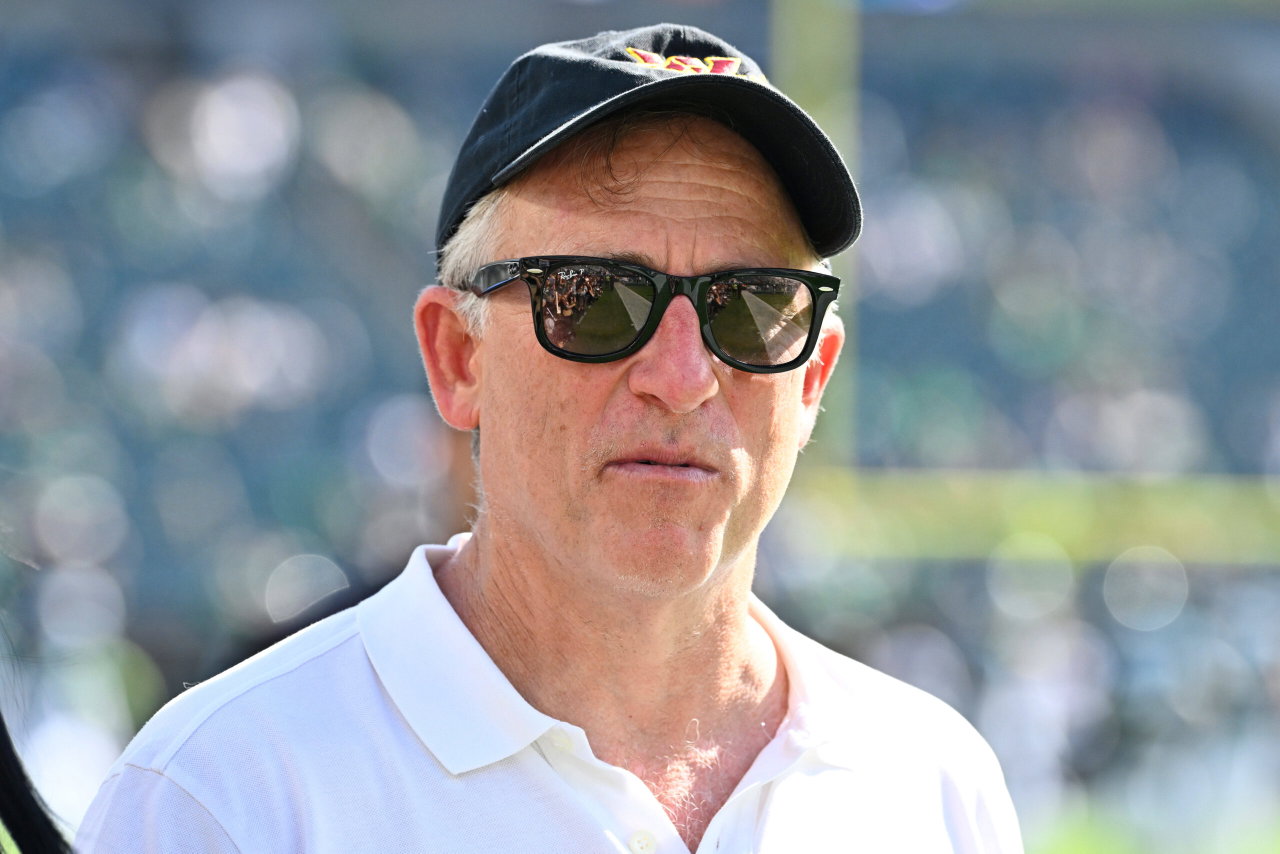
A day before the Washington Commanders kicked off against the Indianapolis Colts in London for Week 4, Harris stopped by a London pub to buy drinks for roughly 2,000 travelling fans. There, when asked how the “economics” of this trip works out for a designated home team playing across an ocean, Harris gave an unusually blunt answer.
“It’s not good. But you know, again, it’s bad in a lot of ways,” Harris said on Saturday, per Sportico. “But I’m not so much focused on economics. Honestly, I’m focused on being part of the NFL community, growing the international game, doing what is asked of us. And then, most of all, creating a great experience for our players and our fans if we’re here. And then winning the game, beating the Colts. We’ve got to beat the Colts.”
Now, beating the Colts never came close to happening. Backup quarterback Marcus Mariota aggravated his preseason MCL sprain, forcing Washington to throw third-string rookie quarterback Athan Kaliakmanis into the fire. While he did try to make plays, Athan struggled to complete throws and ultimately struggled to handle Indianapolis’ pressure, and the Commanders stumbled through a 30-13 loss to fall to 1-3 on the season.
The competitive toll on the field was obvious right away. Flying an already depleted 3,600+ miles is tough under normal circumstances, but it’s even more brutal when you’re trying to keep your offense afloat without starting quarterback Jayden Daniels.
Instead of letting Mariota rehab his knee at team headquarters, Washington put him on an eight-hour flight to London. He didn’t even make it through two quarters before his MCL flared up again, leaving a rookie stranded in front of 60,000 fans. Turning an important game into an overseas medical triage is a steep price to pay for league PR – and then there’s the actual price itself.
If this game had stayed in Landover at Northwest Stadium, the Commanders would have kept most of the money coming from the ticket sales. Because the league moved it to Tottenham Hotspur Stadium, the league will only reimburse Washington for the travel, equipment, and hotel stays.
The league’s 17-game schedule makes that loss sting further. Conferences alternate getting a ninth home game date each season, and because 2026 is an NFC year, the league used that extra game to force NFC teams overseas while technically letting them keep just eight true home games. For Josh Harris, that missing ninth home game is real money out the door.
After paying a record $6.05 billion for the franchise in 2023 and sinking millions more into stadium renovations, giving up a home game forfeits the local cash. The league covers your hotel rooms, but they don’t replace the unshared revenue from parking lots, luxury suits, expensive concessions, and team-store merch. This dynamic leaves the front office trying to spin a loss as a long-term branding – a sentiment team president Mark Clouse shared.
“I would describe it as an investment in the future of the league and the team,” Clouse said, per Sportico. “That’s the way we have to look at it.”
Interestingly enough, even if the Commanders had gotten a slice of the pie here, the check would’ve come up short. Ticket demands lagged so badly in the weeks leading up to kickoff that the NFL panicked, slashing those prices on Ticketmaster down to $105 just to avoid an embarrassing crowd at Tottenham.
That drop triggered instant backlash from international fans who had already shelled out up to $325 for their seats, with local UK fan leaders publicly blasting the pricing rollout as a mess. Back home, those who couldn’t make the trip had to set an alarm for a 9:30 AM TV broadcast instead of tailgating at their own stadium.
Going back to the economics of the team itself, Clouse doubled down on this trip being an investment on the team’s future, and a way to see “more of our fans excited about travelling.” But Josh Harris, in turn, was open in highlighting that this is something that’s out of their hands.
“You really don’t have a choice,” Harris said, per Sportico. “The NFL literally just says to you, ‘You’re a good team, everyone wants to watch you, you’re an exciting team, you’re going to London.’ It’s not your choice, so what you try to do is make it a great experience for your fans, your community and your players.”
Washington is far from the only franchise annoyed by the arrangement. The week before the Commanders flew to London, the Dallas Cowboys flew to Rio de Janeiro to play the Baltimore Ravens at Maracanã Stadium. Before that game, Cowboys owner/general manager Jerry Jones also lamented a lost home game, even though he agreed with the international expansion.
“Well, you pay a price,” Jones said on 105.3 The Fan. “But that’s the price we’re paying to create and sustain the interest internationally. And that creates a lot of interest in television. That gives us another place to show our games during the Sunday morning of the week. And so all of this is good. I’m in complete agreement with how we’re developing and doing our international games. But I don’t like it when it takes one of your home games away. That’s no good.”
With two owners airing the same complaint a week apart, the league office has to take notice. But Roger Goodell has openly discussed expanding the international slate to 16 games a year, which would mean sending every single franchise overseas on an annual basis, and that vision is bound to face some resistance. Owners will happily praise the league’s global ambitions on camera, but their patience will be tested when international marketing burns local gameday payouts and hands their team an on-field disadvantage.
For now, the NFL has no structure in place to make designated home teams whole for what they lose on these trips. Until the league figures out a way to share the international revenue price, owners like Josh Harris and Jerry Jones will be stuck taking the financial hit – and even paying for their own drinks on game days while they do it.