
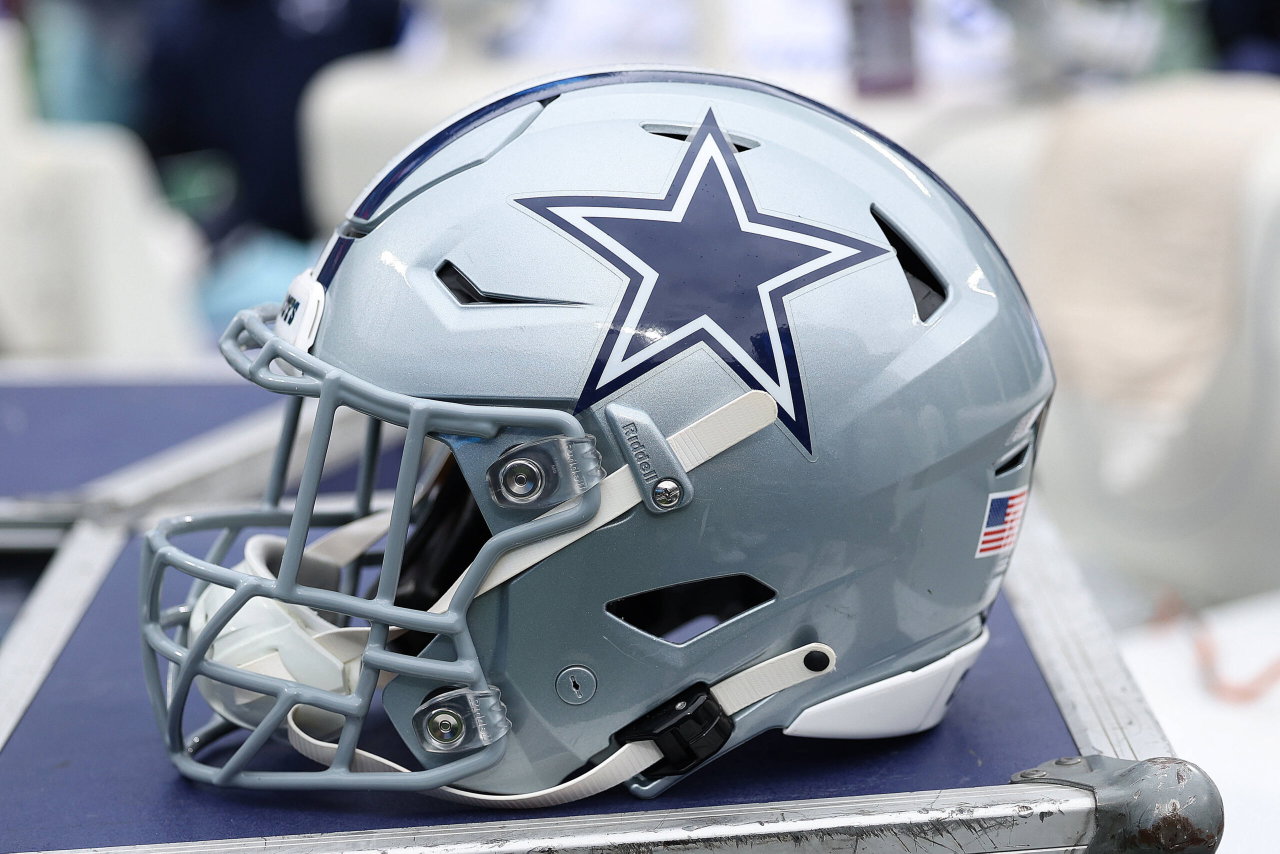
Before John Niland became a pillar of Tom Landry’s Cowboys, he was “Johnny” to the parents who adopted and raised him. Work had kept them from his high school and college games, but when Dallas visited the Giants, he finally brought them to see him play. As the Cowboys’ bus arrived, his mother told Tex Schramm, then Landry, that Johnny Niland was her son. The moment was almost comic, yet deeply moving: their boy was no longer playing in anonymity. He was a Cowboy, stepping off an NFL bus for his parents to see.
Watch What’s Trending Now!
That game also came with a cost that followed Niland long after his 1975 retirement. He later battled dementia, mouth cancer, double knee and shoulder replacements, and a spinal staph infection, while his family believed the repeated hits of an NFL career had heavily affected him with CTE. The journey that took “Johnny” from a proud mother’s search outside a team bus to the heights of Dallas football has now reached a heartbreaking end.
“John Niland, one of the more decorated Dallas Cowboys offensive linemen in franchise history, died in McKinney on Saturday morning,” SportsDay Cowboys posted on X. “He was a six-time Pro Bowler and a three-time first-team All-Pro.”
The Cowboys legend died Saturday at his home in McKinney, Texas, at the age of 82. He’s survived by his wife, Shaughn, and daughters Haven and Jordan. While his family confirmed the news of his passing, the cause of death hasn’t been revealed.
However, his family believes there’s one aspect of his health that was especially troubling for him after his retirement. Niland fought dementia, multiple joint-replacement surgeries, and even mouth cancer. But what was most troubling was his battle with CTE.
While modern helmets offer increased protection from concussions, Niland played at a time when the NFL paid little attention to the effects of CTE. For instance, when Boston University conducted a study with two players from the same era in the larger group, Rick Arrington and Ed Lothamer, both were diagnosed with CTE.
And that may have been the case with Niland as well. His daughter, Haven Niland, talked about it following her father’s passing.
“I can’t remember a time when it didn’t impact our life,” Haven told The Dallas Morning News on Sunday. “It was a continuous discussion of, ‘Dad’s got doctor’s appointments.
“We experienced a lot of hardships as a family. He was often confused later in life or angry for reasons he didn’t understand. We knew it was the CTE. We know it. We don’t need a test to tell us, but we know that he was. He knew himself he was so heavily impacted by that.”
In fact, Niland even admitted that it was a reality he and most players had to make peace with. Speaking to Michelle Hill in a 2018 interview for Pro Players Business Network, Niland was direct about what football had done to his body.
“You sacrifice your entire body,” he said. “It’s not a matter of if you get hurt, you’re going to get hurt… I can’t remember things but I can walk and talk; I can’t run across my bedroom… I have no stability in my legs anymore.”
Despite these battles, Niland continued to be a big part in the lives of his family members. His daughter Haven remembers him as ‘the best dad,’ not just a football player.
“He was so wonderful. I mean, he was really bigger than life. He taught me so many amazing things. I was talking to my sister [Saturday]. He taught me nothing is that serious. The things that really matter are family and your faith and just being kind to other people. I think that’s really exemplified.”
Even after his death, John Niland and his family embody that spirit, choosing to contribute in the fight against CTE. They plan to donate his brain to Boston University’s CTE Center, a research lab making pathways into CTE research.
For a star who once spoke about how football legends are often remembered for their weakest moments, John Niland made his legacy about helping the next generations of athletes. And as we look back at his career, our thoughts go back to the moments he helped bring the Lombardi to Dallas.
John Niland’s moment at Super Bowl VI
After signing with the Dallas Cowboys, Niland had to fight for a starting spot. Weeks spent in rotation culminated in the left guard role. And as the Cowboys reached the Super Bowl in 1972, Niland was a man on a mission.
Just a year ago, the team had reached the Super Bowl, only to falter against the Baltimore Colts. The O-line couldn’t protect their QB. They gave up two sacks as the passing game couldn’t muster a little over 100 yards.
But at Super Bowl VI, Niland was determined to change the team’s fate. Coming into the game, he had played all three playoff games, but this time, he was going against a Miami Dolphins defense that had the likes of future Hall of Fame linebacker Nick Buoniconti. But it seemed like none of it mattered to Niland.
On that unusually cold afternoon in New Orleans, he led an offensive line that kept QB Roger Staubach safe all game as the Cowboys won in a 24-3 demolition of the Miami Dolphins for their first-ever Super Bowl victory.
All of Niland’s hard work had culminated in this moment. Football had meant everything to the young boy who spent the first few years of his life as an orphan in Long Island. He started 111 of 124 games over nine seasons in Dallas and earned first-team All-Pro honors three times. He finished his career with Philadelphia in 1975 and entered Iowa’s Athletics Hall of Fame in 2006.
For Niland, the love of football never disappeared, even as the physical consequences of playing it became harder to ignore.