
Imago
NFL, American Football Herren, USA 2023: Cowboys vs Eagles Nov 05 November 5, 2023: Dallas Cowboys quarterback Dak Prescott 4 works under pressure during the second half against the Philadelphia Eagles in Philadelphia, Pennsylvania. Eric Canha/CSM Credit Image: Â Eric Canha/Cal Media Philadelphia PA USA EDITORIAL USE ONLY Copyright: xx ZUMA-20231105_zma_c04_694.jpg EricxCanhax csmphotothree209073
Imago
NFL, American Football Herren, USA 2023: Cowboys vs Eagles Nov 05 November 5, 2023: Dallas Cowboys quarterback Dak Prescott 4 works under pressure during the second half against the Philadelphia Eagles in Philadelphia, Pennsylvania. Eric Canha/CSM Credit Image: Â Eric Canha/Cal Media Philadelphia PA USA EDITORIAL USE ONLY Copyright: xx ZUMA-20231105_zma_c04_694.jpg EricxCanhax csmphotothree209073
Here’s something the Cowboys Nation has grown tired of hearing: the Dallas Cowboys haven’t played in an NFC Championship game since January 1996. Eight quarterbacks have come and gone in that span of thirty years before Dak Prescott took up the helm in 2016. And since then, he’s been shouldering it all alone.
Watch What’s Trending Now!
Prescott came back healthy in 2025 and threw for 4,552 yards and 30 touchdowns, and the Cowboys still finished 7-9-1 and missed the playoffs for the second straight year. He silenced the critics after returning from that torn hamstring in 2024 and earned a Pro Bowl nod. But it didn’t matter, because the questions about his future in Dallas came back anyway, and this offseason, they’ve been harder to miss. Here are both sides of that argument.
The problems with Prescott
1. Playoff heartbreak:
Seven playoff games, seven interceptions, and a 2-5 record. That’s Dak Prescott’s postseason resume so far. Now, he isn’t a bad quarterback; his regular-season numbers make that clear. But Dallas has gone from Wild Card exits (2023 season) to missing the playoffs entirely, and the pattern is consistent enough now to be a structural problem.
For context, the last time Dallas won a playoff game before the Prescott era was in the 2014 postseason, when the Cowboys faced the Detroit Lions in the divisional round. That old 90s dynasty had already been crumbling, and now it struggles to reach January.
2. The 33 dilemma:
Age is the next big concern, and Dallas has seen this exact story before. Tony Romo broke his collarbone in Week 2 of the 2015 season at 35, then suffered a compression fracture in his back during the 2016 preseason at 36. The Cowboys never saw his statistical decline because his arm never went. But his body gave out first. By November 2016, Prescott had led the team to an eight-game win streak, and Romo knew he would never be the starter in Dallas.
“Seasons are fleeting. Games become more precious. Chances for success diminish,” Romo said. “Your potential successor has arrived. Injured two years in a row now in your mid-30s. The press is whispering. Everyone has doubts. You spent your career working to get here. Now, we have to start all over.”
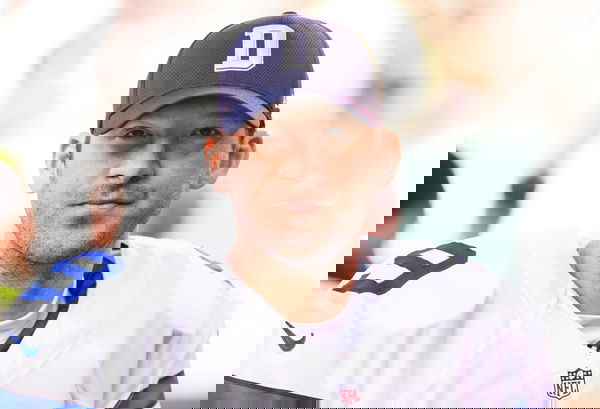
USA Today via Reuters
NFL, American Football Herren, USA Dallas Cowboys at Philadelphia Eagles, Jan 1, 2017 Philadelphia, PA, USA Dallas Cowboys quarterback Tony Romo 9 during a game against the Philadelphia Eagles at Lincoln Financial Field. The Philadelphia Eagles won 27-13. Mandatory Credit: Bill Streicher-USA TODAY Sports, 01.01.2017 14:30:22, 9789583, Tony Romo, Lincoln Financial Field, Philadelphia Eagles, NFL, Dallas Cowboys PUBLICATIONxINxGERxSUIxAUTxONLY Copyright: xBillxStreicherx 9789583
Romo had notably ruptured his disk in 2013 when he was 33. And since then, he got injured every year until he decided to retire in the 2017 offseason. Dallas had already moved on to the Prescott era by then. With Dak now turning 33 in July and three significant injuries already on his ledger, the Cowboys have every reason to know how quickly that window can close.
3. Can he stay healthy?
The injury history adds weight to that concern. Prescott has already missed 26 games across four of the last six seasons.
- 2020: 11 games missed after a compound fracture and dislocation of his right ankle in Week 5.
- 2021: 1 game missed with a right calf strain in Week 6.
- 2022: 5 games missed after a fractured right thumb in Week 1.
- 2024: 9 games missed with a right hamstring tear in Week 9.
None of these injuries made him fragile, but the accumulation does. Dallas already lived through that lesson with Romo. They had no heir apparent when his back gave out in 2016. They handed the team to a rookie Prescott, and got lucky. But right now, there isn’t another Prescott sitting on the roster waiting for his turn.
4. And then there’s the contract:
Dallas restructured Dak Prescott’s contract this offseason to create $30.6 million in cap flexibility. This room allowed Dallas to add Rashan Gary from Green Bay to a defense that needed reinforcements. But that flexibility had to be created because of the cap headache Dak’s extension had created in the first place.
Cap-clearing season:#Browns did a simple restructure on Deshaun Watson’s contract, clearing $35.8 million #Cowboys did a simple restructure on Dak Prescott’s contract, clearing $36.6M#Seahawks’ release of WR Tyler Lockett cleared $17M#Dolphins OT Terron Armstead’s salary… pic.twitter.com/sDIXp9DQPF
— Tom Pelissero (@TomPelissero) March 6, 2025
Prescott had a base salary of $40 million this year. But the restructure dropped that number to $1.8 million and converted the rest to a signing bonus, cutting his cap hit down to $43.5 million this season. Those dollars will shift forward and make Dak’s 2027 cap hit a whopping $76 million. Dallas is unable to build from a position of strength because the largest chunk of its cap goes to keep Dak under center. How long can they afford it without results?
Can a draft discovery sideline Dak?
The 2026 draft offers a window Dallas can’t ignore. Both first-round picks (12th and 20th) are almost certainly going to the defense. But at pick 92, names like Carson Beck, Garrett Nussmeier, and Drew Allar are expected to be on the board.
Any of them, if added, could be developed behind Prescott for a year or two before taking over. Miss this class, and Dallas can wait until 2027 when Arch Manning, Dante Moore, and Julian Sayin are eligible. Either way, that’s a long time to operate without a plan.
Imago
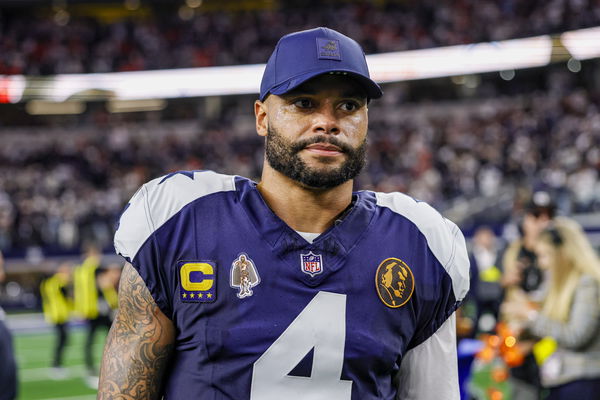
ARLINGTON, TX – NOVEMBER 27: Dallas Cowboys quarterback Dak Prescott 4 walks around after the game between the Dallas Cowboys and the Kansas City Chiefs on November 27, 2025 at AT&T Stadium in Arlington, Texas. Photo by Matthew Pearce/Icon Sportswire NFL, American Football Herren, USA NOV 27 Chiefs at Cowboys EDITORIAL USE ONLY Icon1692511272099
Those prospects don’t start in 2026, and replacing Prescott this season with Sam Howell or Joe Milton II (the only two QBs currently on the depth chart behind Dak) would be a step backward regardless of the argument being made. Prescott is the man under center this year. The question Dallas needs to answer is what comes after him and whether they’re willing to ask it before the answer becomes urgent.
The case for the Prescott era
1. Jerry Jones’ drive:
First things first, Jerry Jones hasn’t operated like a man planning a transition. He restructured Dak’s contract, overhauled the coaching staff (hello Christian Parker), and has been publicly aggressive about upgrading the roster this offseason. Even at 83, Jones has made it clear his target remains the Super Bowl.
“I’ve had the most fun in the last 20, 21 years,” Jones said in January. “Everybody likes to dream. And I promise you high and hard on my dream list, way ahead of making a buck, is to go down as the owner that won the most Super Bowls.”
“My goal in life is to retire as the owner that won the most Super Bowls.”
At 83 years old, Dallas Cowboys owner and GM Jerry Jones still has dreams of winning at least four more Super Bowls. https://t.co/qlogq8Bhj0
— ESPN (@espn) January 8, 2026
With three titles under his ownership, JJ still trails the Steelers and the Patriots by three Lombardi Trophies. He doesn’t have enough time left for a rebuild, and Prescott’s offense, ranked 2nd best in the league in total yards per game last season, gives him the best chance at winning.
2. Prescott for MVP
There was a time during the 2025 season when Essentially Sports’ MVP Ladder had Dak Prescott on the fringes of the MVP race. This offseason, Prescott has already found himself the 2026 MVP pick for ESPN analyst Matt Bowen.
“Prescott had more than 4,500 passing yards and threw 30 touchdowns this past season,” Bowen noted back in February. “With the Cowboys expected to retain wide receiver George Pickens, whom they will likely give the franchise tag, look for Prescott to produce high-level numbers again for a team that could challenge for the NFC East title in 2026 with an improved defense.”
Dallas did franchise tag Pickens. While the two sides work out a contract extension, Dak gets the target that forced defenses into double coverage last season.
3. Blame the defense, not the QB
The Cowboys’ failures last season started in the back end of the roster. Dallas’ defense ranked 30th in the league in total yards allowed last season, giving up 377 yards per game. In passing defense, they were dead last, allowing 251.5 yards through the air per game. The offense, meanwhile, ranked 7th in points scored. Prescott’s unit was holding up its end. The defense allowed opponents to score 30.1 points per game (most in the league). You don’t fix that by changing quarterbacks.
4. Prescott’s promise
Dak Prescott already knew a rebuild was coming to Dallas and that it started with him. Last season, with Dallas sitting at 6-8-1 in December and already out of the playoff race, he made a promise to the franchise:
“We won’t be back here in this spot,” Prescott had said. “I feel like the last few times I’ve said that were playoff losses. Each year has its own troubles. Each year has its own highs, lows, ebbs and flows, and everything within it. The importance is controlling what you can. … I’m going to do my damnedest, controlling what I can. And as you get older, I think having more input, having more say so and being asked more questions from the front office. Maybe there’s a little bit more that I can do, and it’s physically or me getting better at my game. Maybe it’s speaking up and saying that this will help, or I think this can help.”
He has followed through on that so far. Speaking at a Children’s Cancer Fund event in Dallas in March, Prescott revealed his offseason focus has been on fixing his footwork. The Cowboys’ official offseason program begins April 20, with OTAs running through June and mandatory minicamp set for June 16-18. Prescott won’t wait that long to be ready.
Cowboys QB Dak Prescott has a big focus this offseason when it comes to perfecting a part of his game: his footwork.
It’s been something he’s been continuously working on for years, but it’s set to take another offseason in the workshop alongside Brian Schottenheimer. pic.twitter.com/wa5Up72Aik
— Nick Harris (@NickHarrisFWST) March 4, 2026
Interestingly, there’s another way to look at Dak’s contract as well. He carries a cap hit of $76 million in 2027 and $86 million the year after that. With so much money tied up in Dak, Jerry Jones simply can’t afford to push him to the sidelines or cut ties and absorb millions in dead money.
The Cowboys haven’t won a Super Bowl since Troy Aikman. But no quarterback since Aikman has been handed the same infrastructure he had in the 90s: an elite offensive line, a shutdown defense, and a front office that took big risks and drafted to win now.
Prescott has spent the better part of a decade working with a roster that has been one thing at a time: great offensively, broken defensively, or simply mismanaged. Fix the defense, and this team has a real case in 2026. Let it slip, and 2026 looks exactly like last season. That’s the decision Jerry Jones actually has to make, and it has very little to do with Dak Prescott.
Written by

Edited by

Yogesh Thanwani