Imago
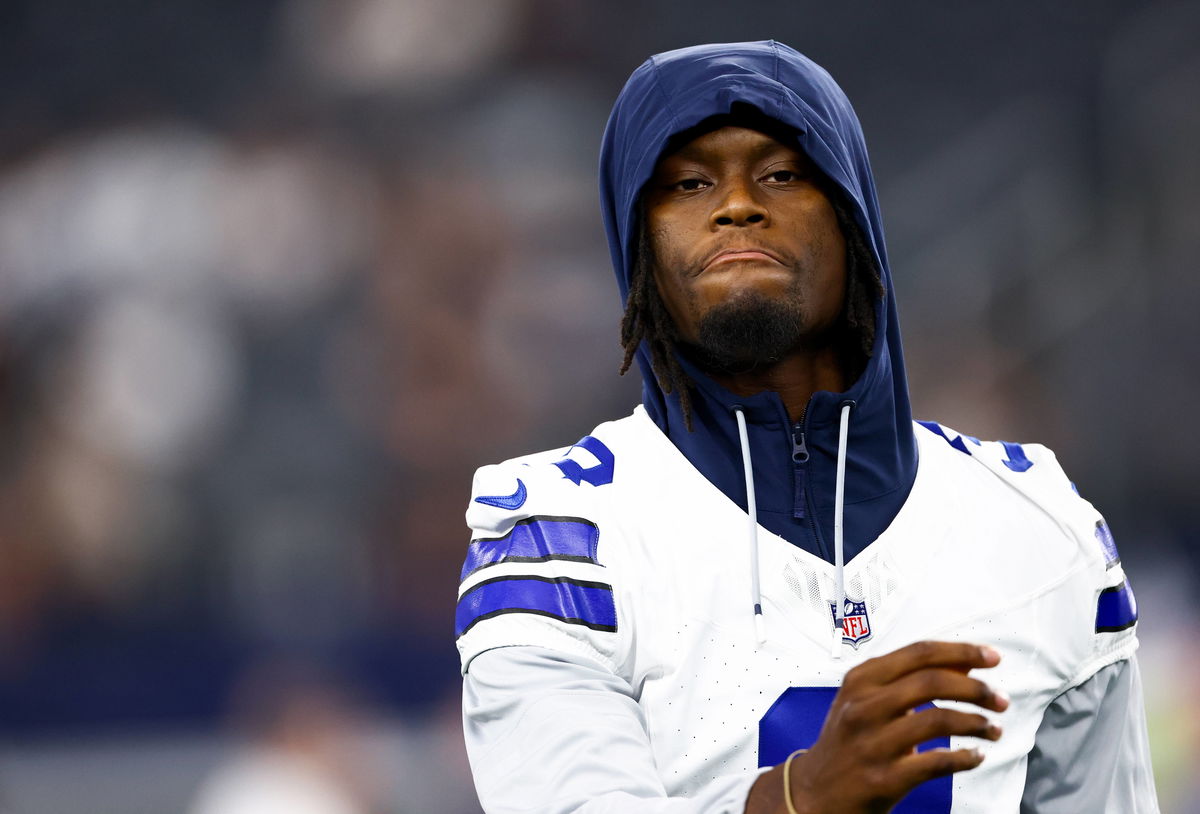
NFL, American Football Herren, USA Atlanta Falcons at Dallas Cowboys Aug 22, 2025 Arlington, Texas, USA Dallas Cowboys wide receiver George Pickens 3 before the game against the Atlanta Falcons at AT&T Stadium. Arlington AT&T Stadium Texas USA, EDITORIAL USE ONLY PUBLICATIONxINxGERxSUIxAUTxONLY Copyright: xKevinxJairajx 20250822_Krj_aj6_00000013
Imago
NFL, American Football Herren, USA Atlanta Falcons at Dallas Cowboys Aug 22, 2025 Arlington, Texas, USA Dallas Cowboys wide receiver George Pickens 3 before the game against the Atlanta Falcons at AT&T Stadium. Arlington AT&T Stadium Texas USA, EDITORIAL USE ONLY PUBLICATIONxINxGERxSUIxAUTxONLY Copyright: xKevinxJairajx 20250822_Krj_aj6_00000013
Imago
NFL, American Football Herren, USA Atlanta Falcons at Dallas Cowboys Aug 22, 2025 Arlington, Texas, USA Dallas Cowboys wide receiver George Pickens 3 before the game against the Atlanta Falcons at AT&T Stadium. Arlington AT&T Stadium Texas USA, EDITORIAL USE ONLY PUBLICATIONxINxGERxSUIxAUTxONLY Copyright: xKevinxJairajx 20250822_Krj_aj6_00000013
Imago
NFL, American Football Herren, USA Atlanta Falcons at Dallas Cowboys Aug 22, 2025 Arlington, Texas, USA Dallas Cowboys wide receiver George Pickens 3 before the game against the Atlanta Falcons at AT&T Stadium. Arlington AT&T Stadium Texas USA, EDITORIAL USE ONLY PUBLICATIONxINxGERxSUIxAUTxONLY Copyright: xKevinxJairajx 20250822_Krj_aj6_00000013
Essentials Inside The Story
- Dallas placed a non-exclusive franchise tag on Pickens for the 2026 season
- The tag guarantees Pickens $27.3 million
- Any team wishing to sign Pickens has to give the Cowboys two first-round draft picks
The Dallas Cowboys made a predictable move when they placed the franchise tag on receiver George Pickens, but it once again highlighted deeper issues within NFL contract structures. Pickens is coming off a breakout season in which he earned his first Pro Bowl nod after surpassing 1,400 receiving yards and scoring 9 touchdowns – all career-highs. Yet instead of locking him into a long-term extension, the Cowboys franchise tagged him, leading to ProFootball Talk’s Mike Florio highlighting flaws in the league’s contracts operation.
Watch What’s Trending Now!
“The franchise tag s-cks,” Mike Florio wrote in a recent article for NBC Sports. “A product of the 1993 Collective Bargaining Agreement, the franchise tag gives each team the ability to squat on one unrestricted free agent per year. It keeps him from getting to the open market. From getting fair value on a multi-year deal. From pushing the bar at his position higher, which will help the other players at the same position.”
“The owners love it,” Florio added. “They’ll never let it go. And while it only affects a limited number of players every year, all of them should hate it. There’s a very specific reason to hate it. For several positions, the franchise tenders don’t come close to reflecting market value.”
From the Cowboys’ perspective, if they can rescind the franchise tag on George Pickens soon and remove the roughly $28 million cap hit for 2026, it will create more flexibility to spend in the upcoming free agency. As for Pickens, the franchise tag guarantees his security in Dallas with a fully guaranteed $27.298 million for 2026.
However, the top wide receiver contracts in the NFL now approach a market value of $40 million per year. That’s a significant gap, and Florio pointed out that exact issue.


Imago
NFL, American Football Herren, USA Dallas Cowboys Training Camp Jul 26, 2025 Oxnard, CA, USA Dallas Cowboys receiver George Pickens 3 at training camp at the River Ridge Fields. Oxnard River Ridge Fields California United States, EDITORIAL USE ONLY PUBLICATIONxINxGERxSUIxAUTxONLY Copyright: xKirbyxLeex 20250726_szo_al2_0532
When the tag number falls below market value, teams almost always use it – as Dallas did with Pickens. But when the tag exceeds market value, teams hesitate, and that explains why the Baltimore Ravens have still not chosen to tag center Tyler Linderbaum.
The projected offensive line tag of $27.9 million in 2026 far exceeds the $18 million top-of-market figure for centers. The imbalance between franchise tag value and the market value of the same positions becomes evident when looking at multiple positions in the NFL.
“There’s a similar discrepancy at multiple other positions,” Florio further added. “At quarterback, the tag costs $43.895 million. The top of the market is $60 million. At running back, the tag has been set at $14.293 million. The top of the market is $20.6 million. At defensive end, the tag is $24.34 million. The top of the market is nearly twice that, at $46.5 million. At cornerback, the tag is $21.6 million. The top of the market is $30.1 million. For other positions, the gap isn’t quite as big.”
The formula to calculate the franchise tag value in the NFL stems from adjustments made in the 2011 Collective Bargaining Agreement (CBA). NFL team owners had pushed to rework calculations after inflated contracts in the uncapped 2010 season distorted figures. The revised system in the 2011 CBA now uses a five-year rolling average based on the percentage of salary cap consumed by tagged players at each position.
Ultimately, Mike Florio thinks that the players’ union should push for the next CBA to narrow the gap between franchise tags and true market value. But until then, elite players like George Pickens may find themselves earning less than what the open market might offer after being tagged.
Can George Pickens still get a deal in Dallas on par with the market value?
The clock is ticking in Dallas as the team has until July 15 to negotiate a multi-year extension with George Pickens. If they fail to reach an agreement by then, Pickens must either play the 2026 season on the one-year, fully guaranteed $27.3 million tender or sit out.
But Mike Florio thinks that Pickens does have some leverage to get a multi-year deal.
“The deadline is July 15,” Mike Florio said recently on 105.3 The Fan podcast while talking about Pickens’ situation in Dallas.
“Anything he does by way of holding out or holding in after that, it doesn’t do anything other than maybe get more money on a one-year tender. It doesn’t get a multi-year contract, so the play’s gotta come early, and I don’t know what the play is.”
“Is the play ‘I want to trade’ or ‘I will never play under the tag’? There’s gotta be a play – shake them and get them to either. Give him a market-level deal or trade him to a team that will.”
Mike Florio of @ProFootballTalk on the #DallasCowboys-George Pickens “tricky” situation:
“The way they calculate the franchise tag lags behind the market. The market’s 40 & the tag’s $28 million. So the Cowboys can say, ‘We’ll tag him this year,’ and then tag him next year… pic.twitter.com/ZD6AcaHLKD
— 105.3 The FAN (@1053thefan) February 25, 2026
George Pickens could delay his arrival in Dallas until just before the regular season and still collect the full salary of $27.298 million. But would that truly pressure the Cowboys into offering a long-term deal? The Cowboys used the non-exclusive tag, so Pickens can also negotiate with other teams.

Imago
SPORTS-FBN-ENGEL-COLUMN-FT Dallas Cowboys owner Jerry Jones takes questions during a press conference to introduce new head coach Brian Schottenheimer on Monday, Jan. 27, 2025, at The Star in Frisco, Texas. Amanda McCoy/Fort Worth Star-Telegram/TNS EDITORIAL USE ONLY Copyright: xx 133374398W AmandaxMcCoyx krtphotoslive949746
However, any franchise willing to sign Pickens must surrender two first-round picks if the Cowboys decline to match the offer. That’s a steep price – one that could discourage any potential suitors for Pickens. Meanwhile, Cowboys owner and general manager Jerry Jones recently sounded hopeful that a multi-year agreement can be reached with Pickens.
“I want our George Pickens’ relationship to be all honey,” Jones said recently during an interview at the NFL Scouting Combine. “I expect him to have an outstanding year.”
Ultimately, optimism alone doesn’t close deals in Dallas. So, if contract talks stall, George Pickens could follow a path similar to former Cowboys edge rusher Micah Parsons from the last offseason and apply pressure during training camp to land a lucrative long-term deal or be traded away.
Related Newsletters