
Imago
Credits: IMAGO
Imago
Credits: IMAGO
Essentials Inside The Story
- The Jets are in the same boat as the Cowboys in the 90s.
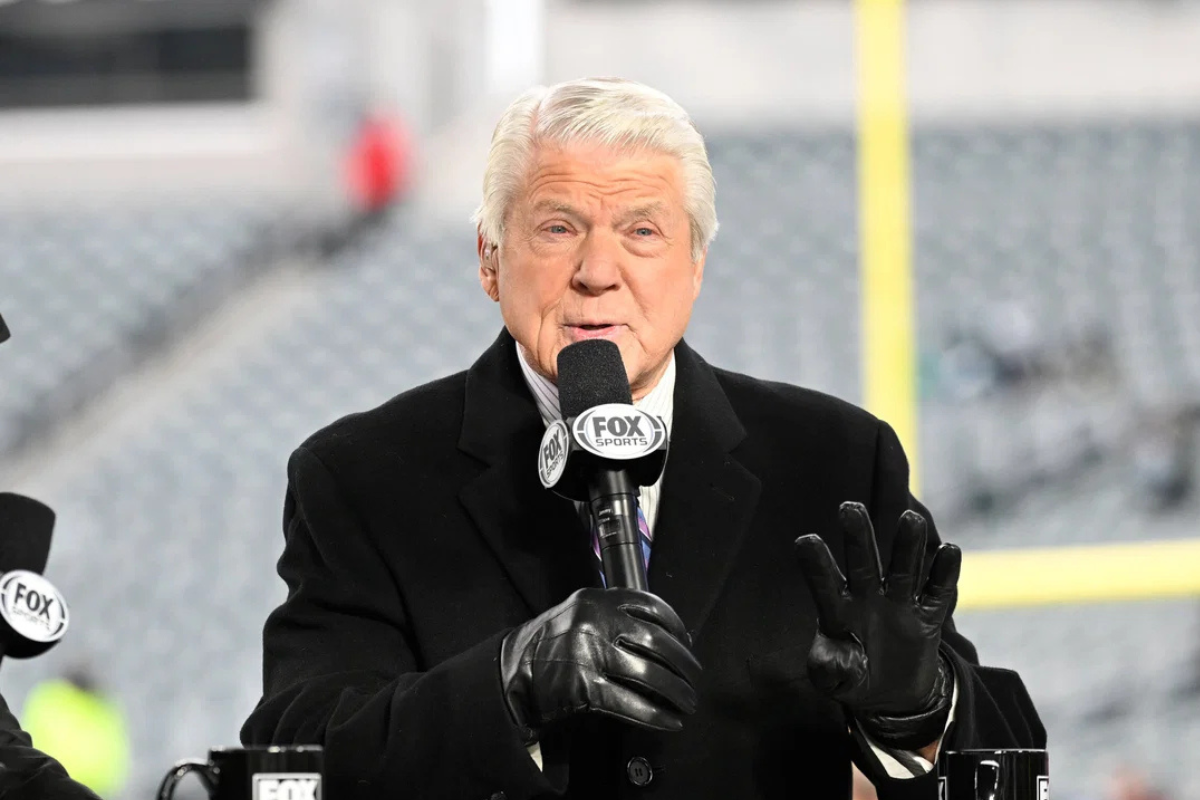
- No wonder Jimmy Johnson is cautioning the New York team against dangerous decisions.
- The Jets can learn from the Herschel Walker trade in 1989.
Some thirty-five years ago, Jimmy Johnson found himself staring at a rare opportunity, one that looked a lot like what the New York Jets are holding today. Armed with a stockpile of draft capital, Johnson was trying to rebuild an entire identity. That treasure chest came courtesy of the blockbuster Herschel Walker trade in 1989, a move that flipped the Dallas Cowboys’ future, laying the groundwork for what would become a dominant run in the 1990s.
Watch What’s Trending Now!
Across the 1990 and 1991 drafts, Dallas made eight selections in just the first and second rounds. It was a staggering haul that reshaped the roster. And according to ESPN Research, only six teams since then have managed to stack that many early-round picks over back-to-back drafts. Now, the Jets are in a position to join that exclusive club, and Johnson knows this.
“If they use the picks wisely, this could give them a foundation for years to come,” Johnson told ESPN last week. “The key is not getting the picks. The key is picking the right players.
“It’s like the old saying: Money coming from gambling easily disappears. Money from hard work continually grows. So you can’t be risky with those picks just because you’ve got extra.”
Here’s the thing: After trading Sauce Gardner and Quinnen Williams to the Indianapolis Colts and the Dallas Cowboys, respectively, the New York Jets were able to retain three first-round picks and a second-rounder to focus on their rebuild. However, with this wealth of draft picks comes a responsibility, and Cowboys legend Jimmy Johnson wants the Jets to keep that in mind. He knows how powerful this opportunity can be.
In exchange for Walker and a few draft picks, the Cowboys acquired three 1st-rounders (1990, 1991, 1992), three 2nd-rounders (1990, 1991, 1992), a 3rd-round pick (1992), and a 6th-round pick (1990). Players such as running back Emmitt Smith, defensive tackle Russell Maryland, cornerback Kevin Smith, and safety Darren Woodson were among those the team drafted as a result of the Herschel Walker trade. They also played key roles in the Cowboys’ three Super Bowl triumphs in the 90s.
Considering that, Johnson seems quite well aware of the ways to handle a goldmine of draft selections. And because of that, he also has a warning. He cautioned that having an abundance of draft picks isn’t without its risks. In his view, it can tempt teams into “danger”, forcing selections just to fill needs rather than sticking to value. His advice for a situation like the Jets is simple but demanding:
“Look at each individual pick as if it’s the last pick you have. That’ll keep you from wasting it.”
Take the Miami Dolphins, for example. They had a total of nine first and second-round picks for the 2020 and 2021 NFL Draft. While they picked out their best choices, the results failed to impress.
To that end, the Dolphins have failed to win any championships and have struggled to translate regular-season success into playoff victories. This eventually backs what Johnson wants to convey to the Jets. The quality of picks is more important than the number of picks. And as it seems, the Jets have a few promising names to pick.
The Jets will target two names for the No. 2 pick
The 2026 NFL Draft will go down in Pittsburgh from April 23 to 25. The New York Jets own picks Nos. 2, 16, 33, and 44 in the opening two rounds. With that comes the pressure to select the best available players. Quarterback Fernando Mendoza is widely regarded as the top prospect and is expected to be drafted first overall. However, no other quarterbacks are anticipated to be selected in the top 15 picks.
Consequently, the Jets, holding the No. 2 pick, may choose to strengthen their roster by selecting an outstanding defensive player. According to Jonathan Jones of CBS Sports, Texas Tech’s David Bailey and Ohio State’s Arvell Reese are likely the primary candidates for this pick.
“Bailey is the surest one, but Arvell is gonna be a star,” one anonymous defensive coordinator told Jones during a conversation from last week. “Arvell needs some time, and the Jets need someone right now.”
In 2025, Reese recorded 69 tackles, 10 TFL, and 6.5 sacks over 14 games for Ohio State. Meanwhile, Bailey registered 14.5 sacks (tied for most in FBS), 19.5 TFL, and 3 forced fumbles. Bailey is a pure pass rusher, while Reese is widely expected to be an edge rusher in the NFL.
Considering Jets’ coach Aaron Glenn’s defensive expertise background, all eyes would be on who they select as their No.2 pick. Also, with the right choices, it will be interesting to see how the Jets rise back up from the 3-14 record in the 2025 season.
After a rough campaign last season, Glenn decided to overhaul roughly half of his staff. While the organization never seriously considered moving on from the head coach after just one year, there is a growing sense that heading into 2026, his job security isn’t exactly rock solid.
Written by

Edited by

Godwin Issac Mathew