

The 2026 NFL draft is just under one week away, which is crazy to say. It’s time to lock down the finals rankings of this draft cycle.
Watch What’s Trending Now!
Here are the top 100 players in this draft according to EssentiallySports’ Daniel Rios.
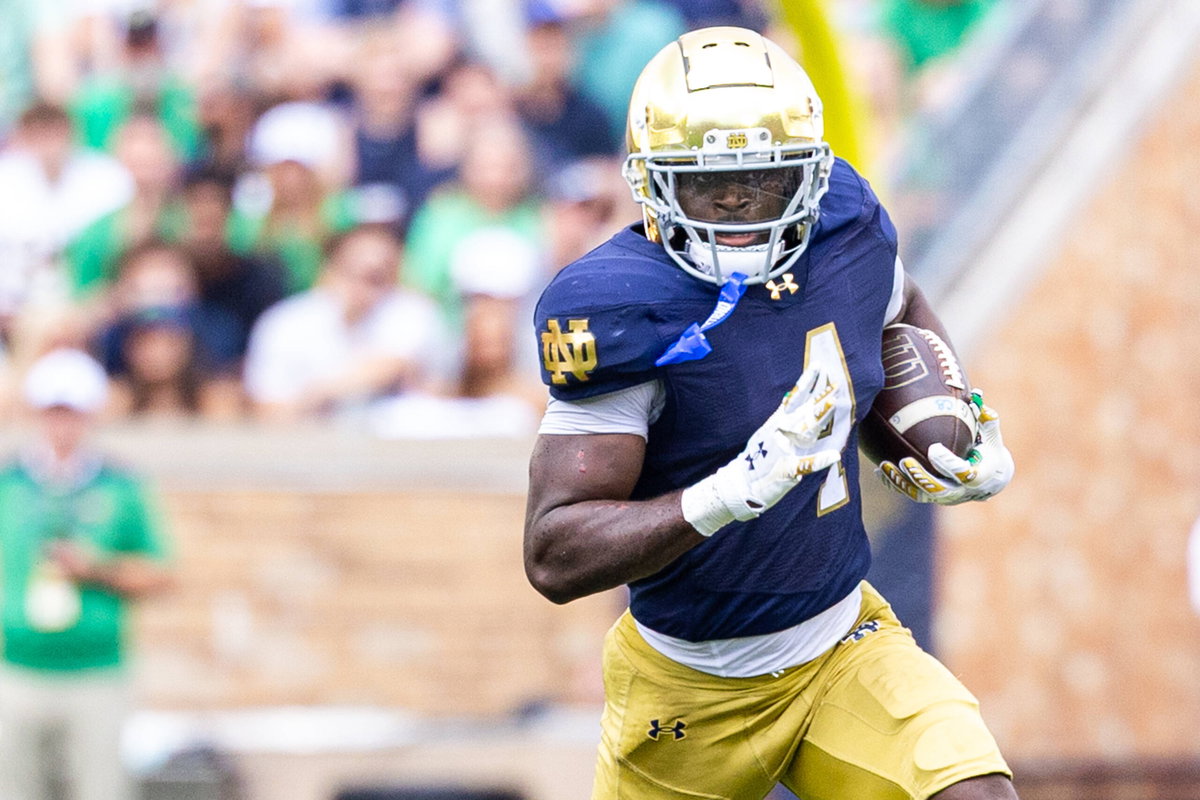
1. Jeremiyah Love, RB, Notre Dame
Love is one of the best running back prospects we’ve seen, and he deserves to be ranked as the best player in this class. He’s 6 feet and 212 pounds, showing off his pure athleticism running a 4.36 40 at the NFL combine. Love’s best trait in his game is his burst. When he sees a hole and wants to commit to it, he can change gears and hit it with intention. Has three-down back potential, flashing the ability he has to be a pass-catcher out of the backfield. The play that solidified him as the best player in this class was against Pitt, where he hit a hole with speed, hit a spin move to force a missed tackle, and kept his speed throughout the entire rep. Special, special player.
Imago
September 20, 2025: Notre Dame running back Jeremiyah Love 4 runs with the ball during NCAA, College League, USA football game action between the Purdue Boilermakers and the Notre Dame Fighting Irish at Notre Dame Stadium in South Bend, Indiana. /CSM South Bend United States of America – ZUMAc04_ 20250920_zma_c04_269 Copyright: xJohnxMersitsx
2. Caleb Downs, SAF, Ohio State
If you were to switch the No. 1 and No. 2 players on this list, I wouldn’t mind. Downs has been dominating at the college level for years now and was an impact player in Nick Saban’s defense as a true freshman. It takes a special type of talent to achieve an accomplishment like that. Downs won’t wow with his size, being 5-foot-11 and 206 pounds. But he makes up for it with his disciplined eyes and the ability to affect the games at all three levels. Downs had 96 run stops as a safety in three seasons in college football – an impact player.
3. Fernando Mendoza, QB, Indiana
There’s been plenty of conversation around Mendoza in the past weeks about whether he deserves to be the first player taken, and he may not be the first player on the board, but he’s much deserving to be taken No. 1 overall. His top three traits are ball placement, toughness, and poise. Those are traits NFL teams would love to have leading their franchise. Mix the traits with his size being 6-foot-5 and 230 pounds, and you have the makings of a quality NFL quarterback.
He did run a heavy shotgun and RPO system in college, but who doesn’t nowadays? Mendoza reads defenses, makes adjustments, and steps up when his team needs him most throughout the season. He has a better arm than people give him credit for. Mendoza has all the makings of a franchise quarterback.
4. Sonny Styles, LB, Ohio State
Styles converted from safety and has only been playing linebacker for two seasons. In those two seasons, he had 139 tackles and 90 run stops. He’s transitioned perfectly to the position with his 6-foot-5 and 244-pound frame. He’s just an athletic specimen on top of his size. He ran a 4.46 40 at the combine and jumped 43.5 inches in the vertical jump. Block destruction, sideline-to-sideline speed, and his IQ, there’s a reason why he’s considered a potential top-5 pick in this draft.
5. Rueben Bain Jr., Edge, Miami
Yes, everyone is concerneda bout the arms. I frankly don’t think it’ll hurt Bain as much in the NFL. Is it a real problem? Yes, but I wrote about a week ago why I don’t think it’ll matter in the long run. He just passes the eye test when watching him play football, just a game wrecker. Watch the Miami playoff run again, Bain just pops up repeatedly. Bain has strength, bend, and affects the run game. All traits you want in a top edge. He’s a smart player; he knows he has smaller arms and how to counter that while rushing the passer.
6. Arvell Reese, LB/Edge, Ohio State
Impact player. That’s exactly what Reese is. He can play either as an edge rusher or off-ball linebacker. He’s expressed interest in moving into a full-time pass rush role at the NFL level, which he’d need time to fully adjust to. Buckeyes defensive coordinator Matt Patricia used him uniquely this past season, putting him at on-ball linebacker in odd fronts, then at off-ball linebacker in even fronts. He thrived in both roles and was more impactful as an off-ball linebacker, but in the 119 pass rush snaps he got throughout the season, he just flashed his ability to use the pure strength he has as a pass rusher. Give him time on the edge, and he can truly develop into a game wrecker, but he has the ability to be an efficient off-ball who can cover running backs and drop into pass coverage.
7. Olaivavega Ioane, OG, Penn State
If there was one player in this class I’d be confident in saying will still be playing in the NFL in 12 years, it’s Ioane. Just a big man at 6-foot-4 and 320 pounds. He uses that size well while he plays. Strudy pass set, can move people in the run game, and is a reliable player. Ioane only gave up four pressures this entire season for Penn State and zero sacks. He’s athletic enough to pull in space and looks to hit people with power.
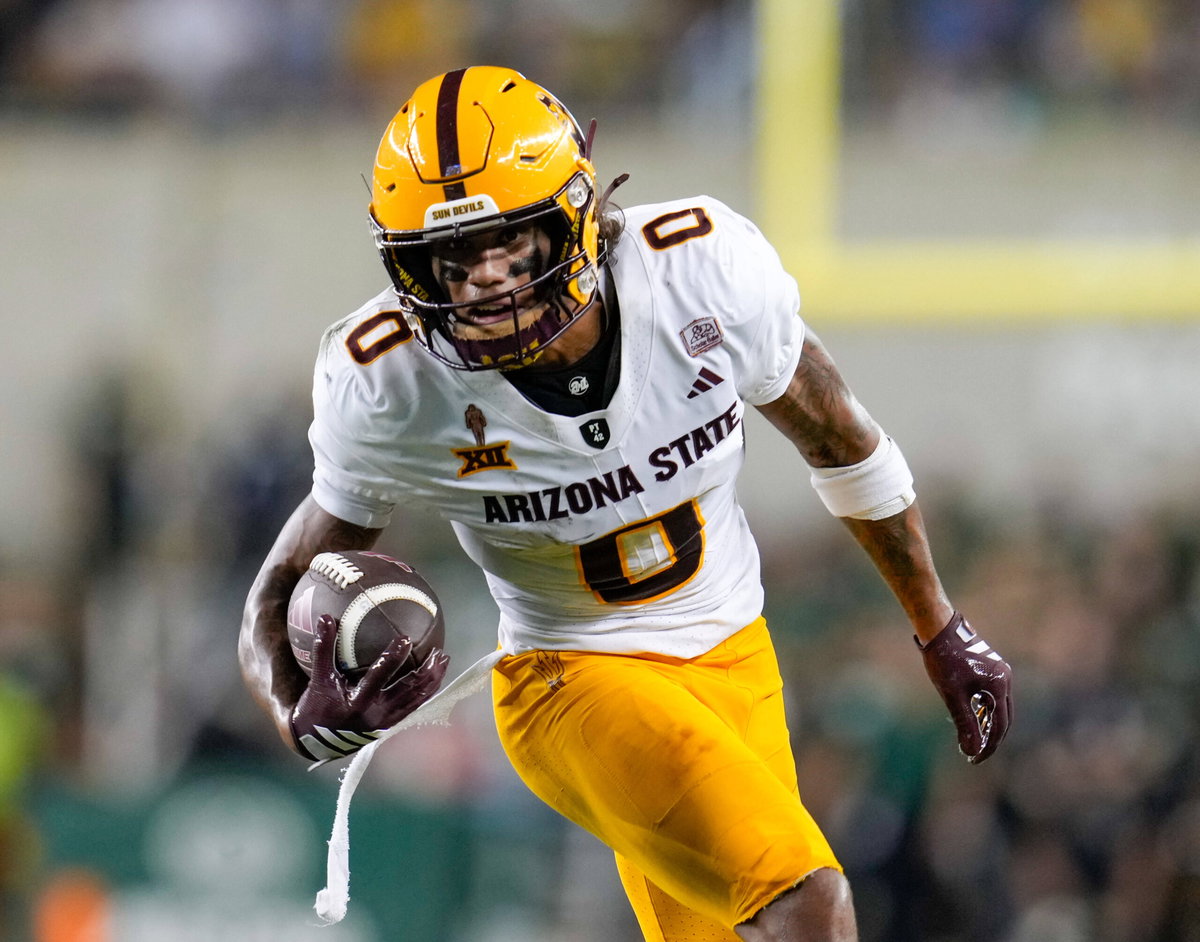
8. Jordyn Tyson, WR, Arizona State
Tyson has battled injuries throughout his entire college football career. A torn ACL in 2022, a broken collarbone in 2024, and a lingering hamstring injury in 2025. It’s enough to have teams lower you on their draft board, but I’m looking straight at the talent. He reminds me of Odell Beckham Jr. when watching his tape. The body control is outstanding; he runs his routes with confidence and steps up in the big moments. Tyson is used to being the No. 1 receiver in an offense. In his nine games this season, he was targeted 97 times and had 711 yards. He dropped only one pass and can play inside or out.
Imago
September 20, 2025, Waco, Texas, USA: Arizona State wide receiver JORDYN TYSON 0 carries the ball during the second half of a college football game between the Baylor Bears and the Arizona State Sun Devils on September 20, 2025 in Waco, Texas. Arizona State won, 27-24. Waco USA – ZUMAc201 20250920_zap_c201_100 Copyright: xScottxColemanx
9. David Bailey, Edge, Texas Tech
Getting to the quarterback is Bailey’s specialty. He led the FBS in sacks this past season and is the most polished pass rusher in this class. He’s a smaller edge player at 251 pounds, but he plays with more power than his weight suggests. Bailey had a pass rush win rate of 21.3 percent and led all edges in this class with 40 run stops. The size allows him to be explosive, and that’s exactly what Bailey is; he screams up the field with a great first step and uses his strong hands ot get off tackles easily. He has the 40 run stops, but isn’t elite at setting the edge; the hands mixed with athleticism leave room for improvement in that regard.
10. Dillon Thieneman, SAF, Oregon
Versatility is the name of the game in the NFL, and Thieneman brings it. He played more of a free-safety position in his freshman season at Purdie, getting six interceptions, but then transferred to Oregon, where he played more in the box. He’s not the biggest guy, but he has good athletic metrics (4.35 40, 41-inch vert, 10′ 5″ broad jump) to make plays from wherever he’s lined up. Very strong ability to play in zone coverage with his fluid hips and understated routes at a high level to impact throwing lanes. The athletics really pop when he flies down the field to make run stops. Thieneman’s not the best at getting off blocks, but man, does he fly around the field trying to make plays.
11. Francis Mauigoa, OT, Miami
Throughout the fall, I had Mauigoa as a guard, but after the College Football Playoffs, he earned the right to stay at tackle. He was a main reason why the Hurricanes’ running game was dominant throughout the playoffs. He’s a people mover in the run game. He opens up holes easily and has good feet to work up to backers and mirror defenders. Mauigoa reminds me a bit of Detroit Lions right tackle Penei Sewell, which is why I believe he can stay at tackle. Maugioa has mentioned he’ll play anything in the NFL, but he should be given the opportunity to play tackle first.
12. Carnell Tate, WR, Ohio State
There’s a narrative that Tate wants the best receiver on his team, and that’s not his fault. His teammate is literally Jeremiah Smith. Tate is a long-legged route runner who thrives on using his long strides to push vertically down the field. Works best while attacking the intermediate to deeper levels of the field, where he can use his 6-foot-2, 192-pound frame to go up and get a ball. He didn’t have a single drop this past season, showing the reliable receiver he is. Tate isn’t as talented after the catch, nor does he have the elite agility to make guys miss in tight spaces, but he’ll be a great option for any team that needs a No. 1 receiver.
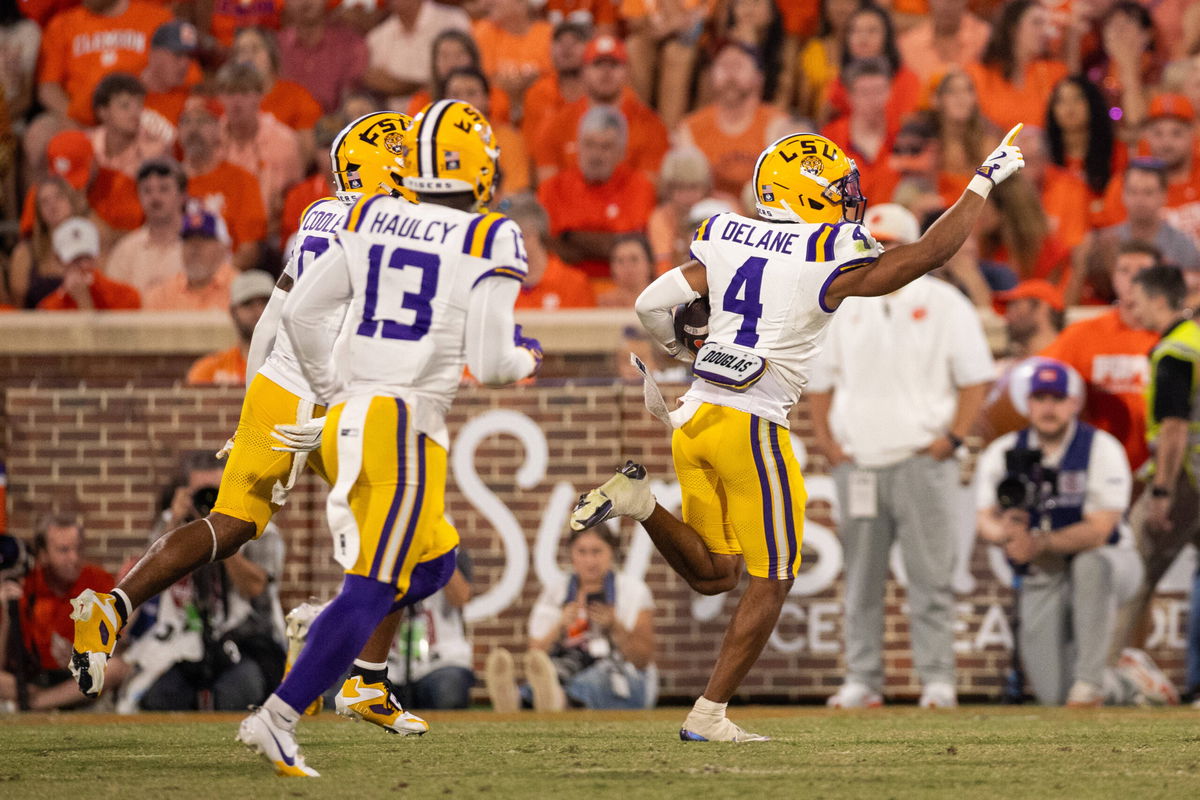
13. Mansoor Delane, CB, LSU
Delane rose to become one of the premier players in this draft after a dominant season with LSU. He was only targeted 35 times and allowed 14 receptions. Opposing teams wouldn’t even try him because of how aggressive he was as a corner. Delane can play man or zone, but thrives more when lined up over receivers. Fluid hips, mixed with his elite route IQ, and he can impact any throwing lane on the field. He’s a smaller corner at 6 feet and 187 pounds, but certainly doesn’t play like it when you turn on the tape.
Imago
August 30, 2025: LSU Tigers cornerback Mansoor Delane 4 celebrates an interception against the Clemson Tigers during the second half of the NCAA, College League, USA Football matchup at Memorial Stadium in Clemson, SC. /CSM Clemson United States – ZUMAc04_ 20250830_zma_c04_541 Copyright: xScottxKinserx
14. Jermod McCoy, CB, Tennessee
McCoy missed all of 2025 after suffering a torn ACL in January of 2025. The main reason I have him below Delane is just that he wasn’t fully healthy enough to participate in drills at the NFL combine. Going back to 2024, he had tape that showed he’d probably been a top-5 lock in this draft if he’d played this year. The most fluid hips of any player in this class, he played the ball aggressively at the catch point, and when he intercepted the ball, he just became a different human. McCoy has good size, being 6-foot-1 and 188 pounds, and has all the makings of being a true shutdown corner in the NFL.
15. Spencer Fano, OT, Utah
Fano is the best athlete in this years offnesive line class. His NFL combine drills looked different from everyone else’s, and the same thing showed up on his tape. Moved so well for his size and was able to get out in space with ease. Fano played right tackle for Utah the past two seasons and moved to left tackle in his first year there. The conversation with him revolves around his arm length, having 32 1/8 inches, which is shorter than New England Patriots left tackle Will Campbell, where he beats Campbell in wingspan. Fano is a hard one to project at the NFL level, but the versatility he has to play inside is something teams would value.
16. Kenyon Sadiq, TE, Oregon
Another mismatch tight end is in this year’s first round. Sadiq embodies the term “mismatch” after running a 4.39 40-yard dash at the NFL Combine, becoming the fastest tight end in Combine history. Sadiq didn’t have the elite production (560 yards) you’d want as a first-round prospect, but watching the tape, his ability to go high-point balls and just overpower smaller defenders is enough for teams to understand what he can be. Not only is he a receiver, but he’s also a capable blocker. He can play in-line and isn’t scared to match up with edges or linebackers and will get into their chest for ease.
17. Max Iheanachor, OT, ASU
Iheanachor is a favorite of mine in this draft class. He’s only been playing football for five years, but watching the tape, you couldn’t tell. Very clean pass set and keeps his base wide. One of the better pass protectors in this class, and he made that clear at the Senior Bowl in January of this year. He’s a good athlete for his size, standing 6-foot-6 and 321 pounds (ran a 4.91 40), and he moves well on tape in the run game and in space. There are some technical things he needs to improve, but it’s clear he’s coachable and can learn quickly in an NFL environment.
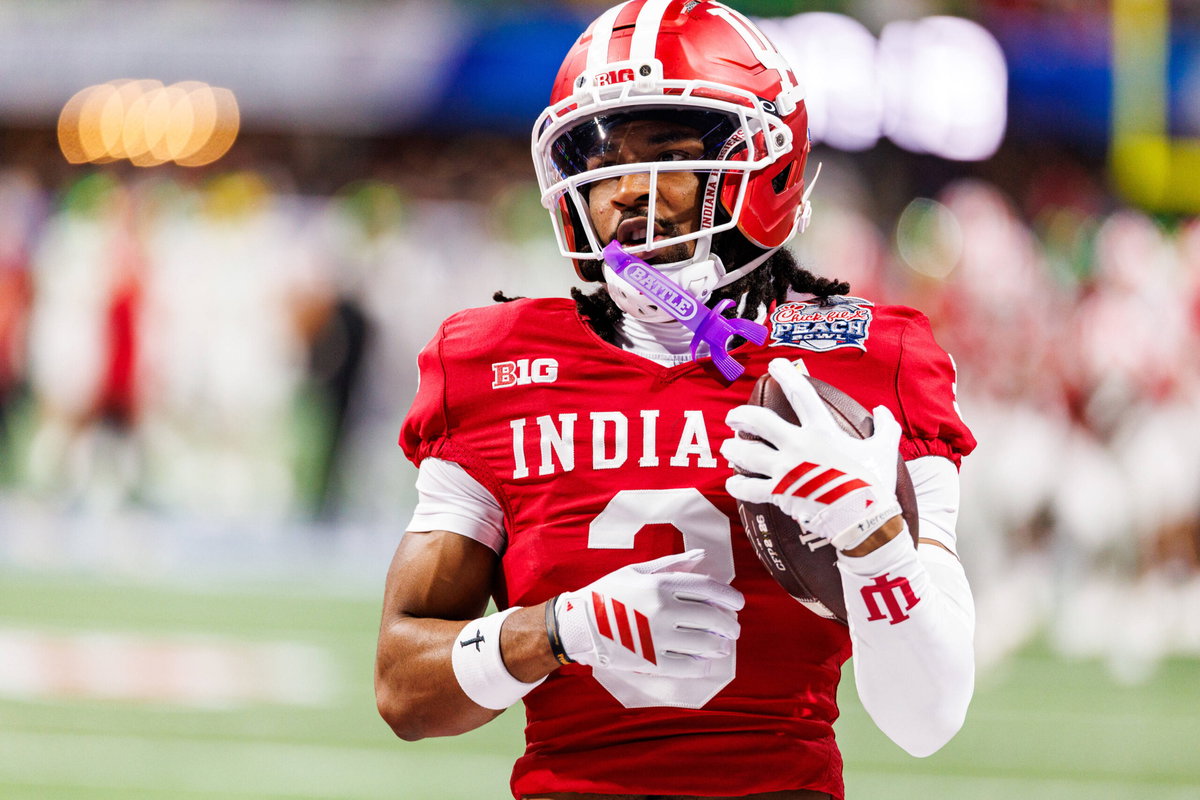
18. Omar Cooper Jr., WR, Indiana
If Cooper doesn’t at least get five yards with the ball in his hands, I’d be shocked. He’s the YAC king in this draft class and just knows how to create with the ball in his hands. Agility is there with his quick feet to make guys miss in space, and mix that with his 4.42 speed, he’s a tough player to get on the turf. He’s also a fantastic route runner, understands leverage, and knows how to manipulate defenders’ weight to get open. Can play inside or out and has an elite release pattern that is hard for defensive backs to prepare for.
Imago
January 09, 2025: Indiana wide receiver Omar Cooper Jr. 3 during pregame of NCAA, College League, USA football game action between the Oregon Ducks and the Indiana Hoosiers at Mercedes-Benz Stadium in Atlanta, Georgia. /CSM Atlanta United States of America – ZUMAc04_ 20260109_zma_c04_177 Copyright: xJohnxMersitsx
19. CJ Allen, LB, Georgia
Having the trust of Georgia head coach Kirby Smart to lead his defense speaks to the type of player and leader you have to be. Allen wore the green dot for the Georgia defense and occasionally called plays. Has elite toughness to play through an injury late in the college football season, to compete with his team in the playoffs. Not the biggest linebacker at 6-foot-1 and 230 pounds, but the way he comes downhill and hits you couldn’t tell. Allen thrives in the run game, using his instincts and high understanding to put him in good positions. He struggles a bit in pass coverage, but has the upside as an athlete to improve there.
20. Makai Lemon, WR, USC
Lemon is a true slot, being 5-foot-11 and 192 pounds. He ran a 4.5 40 in at the USC pro day, and looking at him, he won’t impress athletically or with his size. But when he gets on the field, he’ll make an incredible catch over the middle in traffic, and then you’ll understand why Lemon is rated so highly in this year’s draft. There are questions about how he will transition at the NFL level with the length of the corners, but no doubt Lemon is a twitchy receiver who somehow just seems to get open all the time.
21. Monroe Freeling, OT, Georgia
Like Iheanchor, Freeling is more of a developmental tackle. He has the NFL size at 6-foot-7 and 315 pounds, and he’s an elite athlete, having a 4.91 40 at the NFL combine. Watching him with Georgia, he moves so fluidly and just looks for people to hit in open space. He can climb up to the second level easily and torque his body to get leverage on smaller defenders to open up running lanes. Freeling has a ton to work on, which is why he’s not a top-10 tackle in this class for me. Pass sets can be a lot cleaner, but they weren’t terrible. He only gave up eight pressures this season and allowed two sacks.
22. Zion Young, Edge, Missouri
Young has the highest upside of anyone in this class. He has great size and length to be a quality rusher in the NFL. The strength he has is unparalleled, and he can collapse the pocket easily with the strength he can generate from his hips to his hands. The biggest aspect of his game I loved was that his feet never stopped moving within reps, and he was able to drive them throughout every single pass-rush rep. He has heavy hands and can control tackles with them, making him a threat in the run game. There’s a lot Young can learn in the NFL, as he’s not a finished prospect, but the size and effort he gives are already quality building blocks.
23. Kadyn Proctor, OT, Alabama
Proctor reminds me of “The Mountain” from Game of Thrones, just a huge man on the outside. He can move people easily when he gets his arms on them with his 6-foot-7 and 352 frame. He played at around 390 in the season, but came in leaner at the combine, which was a green flag. Even at 352 pounds, Proctor moved well for his size and wasn’t fast but looked fluid out in space. When he’s at his best on tape, and everything comes together, I have no doubt in my mind that Proctor would be a top-5 pick, but there are a lot of inconsistencies in his tape. Another concern is that, despite his size, he didn’t play violently at times. He could move people, but he didn’t hit with a pop or maul people out of the way. Wanna see the strength and overall technique get better in the NFL.
24. Kayden McDonald, DT, Ohio State
Another player in this class who I can see playing in 12 years. There’s a reason why Styles and Reese were able to come downhill and make plays all season long: it was the presence of McDonald. He has relatively no pass rush upside outside of his strength and collapsing the pocket, which is why he’s not viewed as a lock in the first round, but I’ll bet on a player who had 34 run stops and 43 tackles this past season as a nose tackle.
25. Chris Johnson, CB, San Diego State
It’s hard to predict how players from smaller schools will translate to the NFL level. It’s pretty simple for me: Johnson just passed the eye test, only allowing a passer rating of 16.1 this season with the Aztecs. Johnson is very fluid off the line with his hips and can easily turn his weight to get vertical. He showed great patience to stay on the back hip of routes and squeeze the receiver to the sideline with ease; he also filled the run and wasn’t afraid to tackle. My favorite part of Johnson’s game was his eyes. Elite eyes to peel off routes in zone coverage to force incompletions or get interceptions, he’ll thrive in a zone scheme at the NFL level.
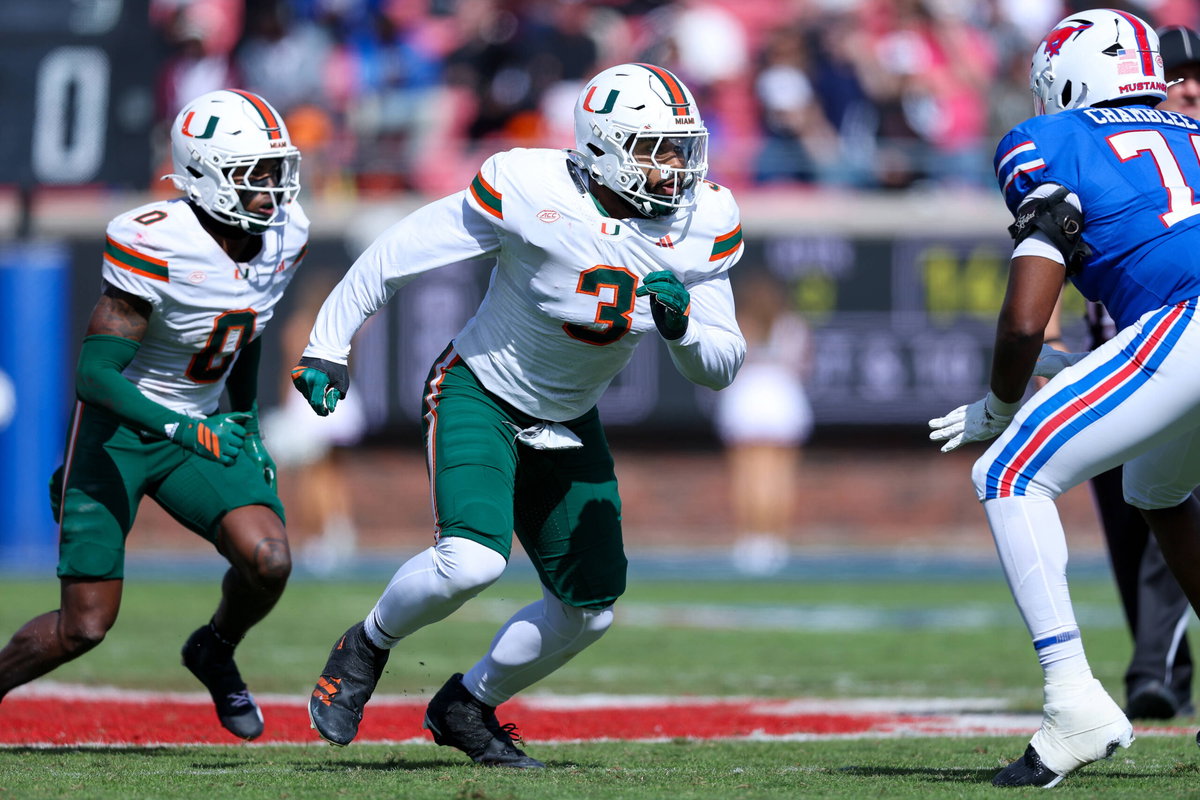
26. Akheem Mesidor, EDGE, Miami
Age is the main concern with Mesidor being 25, but it’s not a big factor for me. The main reason he’s older is that he started his college career playing on the interior of the defensive line and later transitioned slowly into a more outside role. It took time for him to condition and get his body right to rush on the outside, and man, did it all come together this season. He finished with 13 sacks and, along with Bain, was a threat throughout the playoff run. His get-off is elite and has tremendous bend getting around the edge. Some think he was more dominant than Bain this season, and while I don’t see it that way, I can understand it. Mesidor will be a plug-and-play starter in the NFL.
Imago
November 1, 2025: Miami Hurricanes defensive lineman Akheem Mesidor 3 rushes the quarterback during a game between the Miami Hurricanes and the Southern Methodist Mustangs at Gerald J. Ford Stadium in Dallas, Texas. /CSM Dallas United States of America – ZUMAc04_ 20251101_zma_c04_853 Copyright: xFreddiexBeckwithx
27. Caleb Banks, DT, Florida
The football gods hate us. We were robbed of a healthy Banks for the 2025 season. There’s a real chance he’d be going in the top-10. His measurements and size for a defensive tackle are insane (6-foot-6, 327 pounds, 85 3/4 wingspan, 35-inch arm length, and over 10-inch hands). All those measurements were above or at least the 89th percentile for defensive tackles. He’s a monster of a human, and when healthy (at the Senior Bowl), he dominated the competition, showing why he’s a rare talent in this draft. He just can’t stay healthy; he injured his foot again at the NFL combine, and for a 320-pound man, that’s a major red flag. He missed most of 2025 due to his foot, which honestly sucks. When he’s on the field, he’s a difference maker.
28. KC Concepcion, WR, Texas A&M
Going into 2025, I wasn’t very high on Concepcion because of how he was used at NC State. The Aggies actually let him run routes, and thankfully, they did. Concepcion is an elite route runner and creates separation with ease. He’s not the biggest at 6 feet and 196 pounds, but he doesn’t play like it. He’s comfortable with being on the outside and runs twitchy routes. Pushes vertically with ease and isn’t scared to go up and make contested catches. Offers versatility with his YAC ability and speed – can catch the football behind the line of scrimmage and do damage. He’s a versatile weapon who can find a role in any NFL offense.
29. Colton Hood, CB, Tennessee
With the injury to McCoy, Hood was given the No. 1 corner spot, and he did not disappoint. He balled out in 2025, which led to him getting serious NFL attention even as a redshirt sophomore. He answered any long-speed question with a 4.44 40 at the NFL combine. Hood is more comfortable playing in off-coverage, but his trigger ability is the best of anyone in this class. He reads routes fast and isn’t scared to jump routes, causing havoc in the secondary. Hips could be a little more fluid, but at 6 feet and 193 pounds, Hood has the ideal size and skill for a first-round corner.
30. Blake Miller, OT, Clemson
Miller was an ironman in college. He started over 50 games and has over 3,500 snaps. He’s the complete opposite of others in this class, like Freeling or Iheanachor. An NFL team knows what they’re getting with Miller. He’s a consistent pass protector with sound technique within his sets; Miller also has good athleticism to move in the run game, getting to the second level with ease. Miller just lacked violence and the pure strength to move people once engaged. He has no problem getting to his target, but will he actually make space and create running lanes? It didn’t show much on his tape, but he has every chance to get stronger in the NFL.
31. Malachi Lawrence, EDGE, UCF
Lawrence’s initial burst is elite. Can get upfield fast and disrupt quarterbacks with his scary length. He has elite hands that can swat away the arms of tackles easily, and he has more power than I anticipated while watching him. He just needs to get stronger, because he struggled to redirect off contact and couldn’t set a true edge in the run game. Lawrence had a great combine workout, which raised his stock. He just needs to get stronger to be a more reliable edge in the NFL.
32. T.J. Parker, EDGE, Clemson
Parker was a highly anticipated prospect going into 2025, but he didn’t live up to expectations. He finished with six sacks and had a pass rush win rate of 12.6 percent. The upside with Parker is his size, being 6-foot-3 and 260 pounds. He has adequate arm length to really get into the chest of tackles and use his power to collapse pockets. He shows a willingness to put in effort in the run game, and at the Senior Bowl, he reminded NFL personnel that he could still be the dominant self he was in 2024.
33. Emmanuel Pregnon, OG, Oregon
The interior offensive line class has some studs this year, and Pregnon is another. Ioane is a better guard prospect to me, but that shouldn’t take anything away from Pregnon. He can be a plug-and-play starter from Day 1 and raise the floor of any unit in the NFL. He’s strong and can mirror defenders easily, as well as get out in space and move. He can pull effectively, but he just doesn’t pack much of a punch behind it. I am worried about his true power in the NFL, but there is a ton of clean tape with Pregnon.
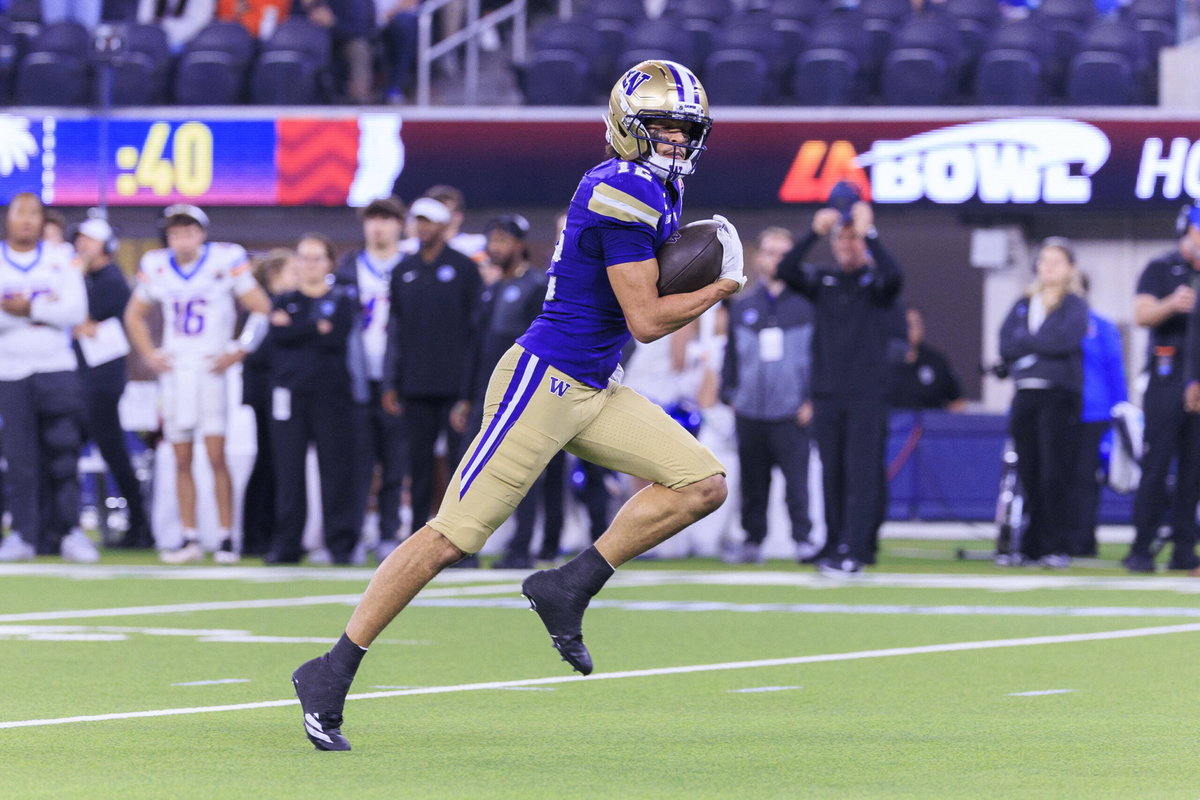
34. Denzel Boston, WR, Washington
Boston seems like he’s going under the radar for some reason in this draft cycle. He’s a tlatente player who isn’t just big, being 6-foot-4. He can play in the slot and create separation at the top of his routes. He knows how to use his body and can track passes with ease, high-pointing them and bringing them in. Washington used him a ton in different looks this past season, which NFL teams can easily do as well. Boston doesn’t have a No. 1 receiver upside for me, but it could be a great complement for any NFL receiver room.
Imago
December 13, 2025, Inglewood, California, USA: 12 Denzel Boston, WR of the Washington Huskies completes the pass and runs to the end zone during the Bucked Up LA Bowl Hosted by Gronk against Boise State Broncos on Saturday December 13, 2025 at SoFI Stadium in Inglewood, California. ARIANA RUIZ/PI Inglewood USA – ZUMAp124 20251213_zaa_p124_012 Copyright: xArianaxRuizx
35. Keldric Faulk, EDGE, Auburn
There’s usually one of the archetypes that Faulk is in every draft. A bigger prospect, who’s young, but didn’t have the production in college. Faulk had two sacks this past season for Auburn, but he’s 6-foot-6, 270 pounds and has over 34-inch arms. Along with it, he’s only 20 and has three SEC seasons under his belt. His floor in the NFL is high with his ability to play in the run game. His strong hands let him set edges easily, and he has the pass rush upside down. May not be explosive up the field, but his swim move is lethal. Faulk would benefitr to enter a 3-4 scheme in the NFL.
36. Peter Woods, DT, Clemson
Woods didn’t have a good 2025, but still flashed the athleticism upside he has. He thrives on using his speed and quick hands to win on the interior, playing more as an athletic 3-technique. The main reason I just don’t see it with Woods is his inconsistent hands in his film. Just didn’t punch out nearly enough to get his hands into the chest of the guards as a basis. A ton of reps to where he’d lead with his shoulder. Testing would’ve helped Woods; he came in under 300 pounds at the NFL combine, but didn’t test. If he wants to sell himself as an athletic interior defensive lineman under 300 pounds, showing off elite testing numbers helps.
37. A.J. Haulcy, SAF, LSU
I feel like this is the first major surprise of this list. I loved watching Haulcy’s tape, and his versatility can make an impact on Day 1. He has a stout build, and he moves so fluidly with it in the backened. Can play a true free safety role with his fluid hips and downhill speed. Fantastic eyes on the quarterback, and he trusts what he sees; his ball skills are some of the best in this defensive back class. Along with the elite pass coverage, he’ll come downhill and hit somebody. He struggles with missed tackles and needs to settle down more while coming downhill.
38. Josiah Trotter, LB, Missouri
Two surprises in a row? Let’s do it. Trotter was one of my favorites in this draft cycle. He’s the son of Jeremiah Trotter and just plays with the same edge. He fills the run with violence and isn’t scared to go hit somebody. He’s quick and powerful at the same time; he doesn’t look like he’s near 240 when he’s moving. He’s coming out as a redshirt sophomore, and it shows in his tape. He could benefit by playing one more year in college, and at times will trigger too far downhill, taking poor angles, but when his head is up, and he’s locked in, he tracks ballcarriers easily. Sevelerly struggled in pass coverage, which is why some will have him lower, but I’ll bet on the powerful upside.
39. Oscar Delp, TE, Georgia
The mystery of Delp’s horrible usage rate at Georgia needs a full investigation. He has everything you’d want out of a tight end: 6-foot-5 and 245 pounds. He moves down the field with ease. When he had the ball in his hands, you could see the speed he possessed in the open field. Looked fluid while running routes and had a good burst out of his cuts. Has a ton of reps in line and isn’t scared to block. Delp has everything in the making to be a true plug-and-play starter in the NFL, and he easily is the second-best tight end in this class for me.
40. Emmanuel McNeil-Warren, SAF, Toledo
Warren has an edge throughout every single rep. He plays with confidence and isn’t scared to come downhill and make hard hits. His burst and size show up whenever he plays the run, and especially against Kentucky. Felt like his pursuit angles were very inconsistent and spotty at times, and felt like he struggled in coverage from time to time. There’s no doubt he has a role in an NFL defense and has all the upside in the world to make a Day 1 impact for many teams, but I was just a little wary of his coverage ability (not on short routes, but deeper concepts).
41. Jacob Rodriguez, LB, Texas Tech
The Texas Tech linebacker was a playmaker this season. Finished fifth in Heisman voting for good reason. He was all over the field making plays. It’s a niche thing to say with linebacker, but he is truly a sideline-to-sideline player. His instincts shine in pass coverage, and I believe he’s the best cover backer in this draft class. There were concerns with his speed, but he ran a 4.57 40 at the combine, which quickly put those to bed.
42. Caleb Lomu, OT, Utah
Fano’s teammate also makes this list, mainly for the same reasons as Fano. Lomu is a tremendous athlete who played left tackle for Utah the past two seasons. He gave up zero sacks and only allowed eight pressures this past season. He was the best run blocker in this class at moving in his tracks and getting to the point of attack, but, like Fano, I’m worried about his play strength at the next level. Needs more flexibility to truly sink his hips and anchor against power, but Lomu is another developmental and promising tackle in this class.
43. Christen Miller, DT, Georgia
Miller is the second-best run defender in this class at the defensive tackle position. I believe out of all the defensive tackles, he has the highest upside as a pass rusher. He’s 6-foot-4 and 321 pounds, and I believe he could thrive rushing the passer from a 3-technique. There were flashes of it throughout his tape with him exploding up the field and using his quick hands to create pressure, but it wasn’t consistent.
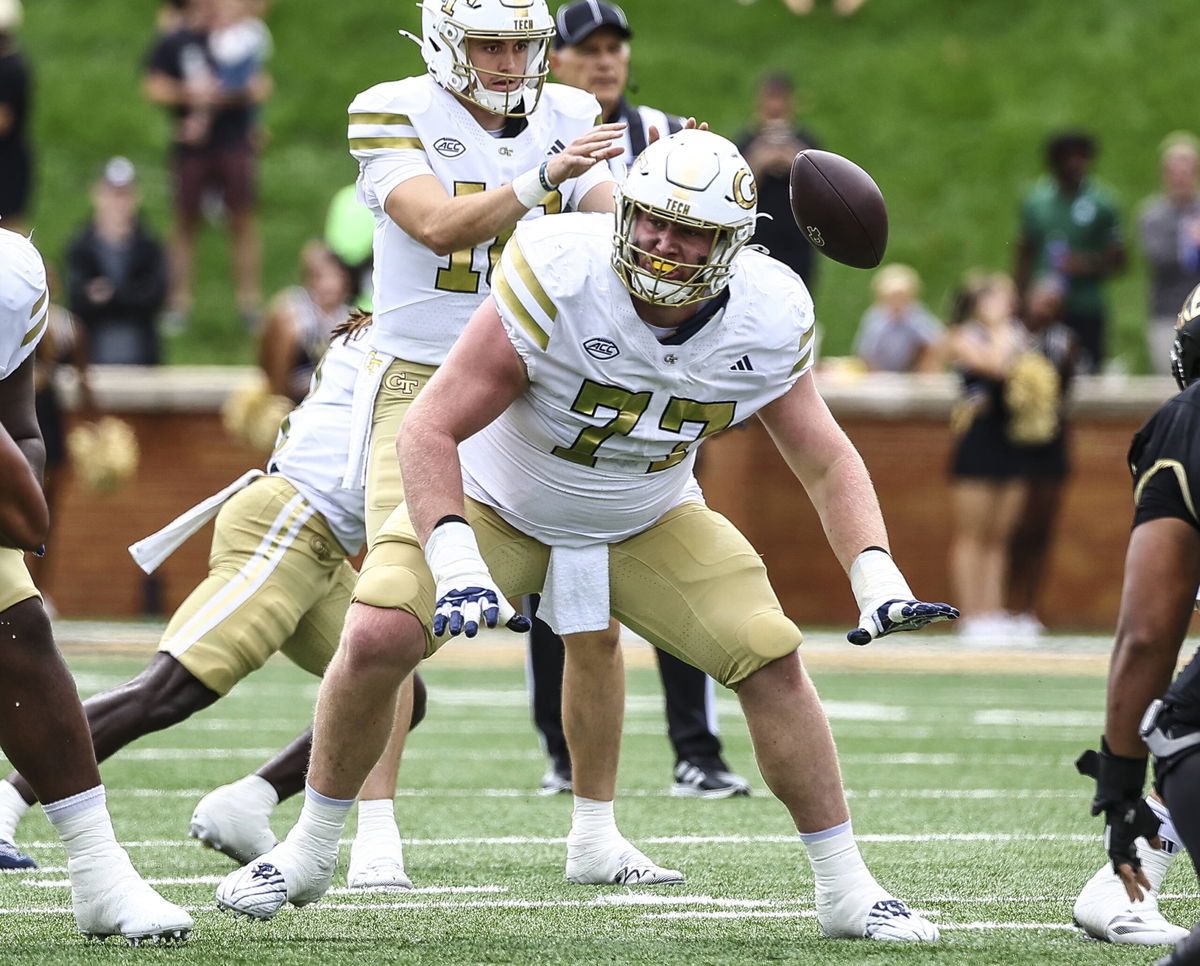
44. Keylan Rutledge, OG, Georgia Tech
You want an offensive lineman who enjoys hitting people? Look no further than Rutledge, who, in pass pro, actively looks for people to smack. He moves well in space, and his head is on a swivel just looking for people to block when he’s asked to go downfield. Athletic enough to be an effective puller and has a strong pass pro set. He can move in space, but struggles to stay on a consistent track in zone schemes. Would thrive more in a gap scheme in the NFL, but there’s no question about Rutledge’s toughness.
Imago
September 27,2025: Georgia Tech offensive lineman Keylan Rutledge 77 blocks. NCAA, College League, USA football game between Georgia Tech and Wake Forest University, at Allegacy Federal Credit Union Stadium, Winston-Salem, North Carolina. /CSM Winston-Salem United States of America – ZUMAc04_ 20250927_zma_c04_828 Copyright: xDavidxBeachx
45. Chris Bell, WR, Louisville
Bell suffered a torn ACL late this season, which is why he’s a little lower on this list. He has a big frame at 6-foot-2 and 222 pounds, but his speed after the catch doesn’t suggest that. He consistently caught drag routes and immediately turned upfield, outrunning defenses. Not only that, but he can only use his body to shield defenders, making back shoulder catches with his frame. He struggled to truly separate at the college level, which is why he’s lower, but Bell has tremendous upside as a No. 2 receiver in the NFL.
46. Jadarian Price, RB, Notre Dame
Price is the last running back in this class that I’d classify as having starting upside in the NFL. He was mainly overshadowed this season due to being the backup to Love, but he took advantage of every carry he got throughout this season. Price can manipulate defensive angles with stretching runs or making moves in tight spaces, which is where he thrives. He’s patient and won’t force anything if it’s not there, and like Love, can maintain top speed at all times.
47. R Mason Thomas, EDGE, Oklahoma
Thomas missed time this past season due to a quad injury, limiting him to 10 games, but when he played, he was a difference-maker for the Oklahoma defense. He’s smaller at 241 pounds, but he uses that size well. Has an explosive first step, which allows him to win upfield with ease. He was more powerful than I anticipated; he knows how to gear up his body and hands to really drive tackles back.
48. Ty Simpson, QB, Alabama
It’s a weak quarterback class, and it’s evident with my second quarterback coming in as the 48th-best player. Throughout the first eight games of the college football season, there were some (I almost caved in) that had Simpson as the best quarterback in this class. He was playing at an elite level; he easily layered the ball over second-level defenders, pushed the ball down the field, and was on time with everything. It all fell apart when he got injured in the middle of the season and wasn’t the same player. There are tons of concerns with his size and limited starting experience.
49. Sam Roush, TE, Stanford
Roush had one of the more underrated combine workouts for this year’s class. They aren’t jaw-dropping numbers, but he ran a 4.7 40 and had a vertical jump of 38.5 inches, all at 6-foot-6 and 267 pounds. Those are great numbers for a man that size, and it showed on tape. He has the in-line experience and blocked edges a ton at Stanford, and when he had the ball, he showcased his movement ability. Not a true separator as a route runner, but a good enough one that, at the top of his breaks, he has some burst.
50. Jake Golday, LB, Cincinnati
Golday is a hard player to project because he played the overhang/slot defender role, which really doesn’t exist in the NFL. Makes for a lot of awkward angles and weird positions when he tries to come downhill to make a play. Still, he’s an athletic linebacker who showcases speed, strength and a knack for finding the ball. He can mirror running back easily and just flies around the field. Golday just tackles a little too high, and pass coverage could use improvement.
51. D’Angelo Ponds, CB, Indiana
Ponds is just a dog. He’s a smaller corner (5-foot-9 and 182 pounds), but he doesn’t play like it. He’s aggressive and isn’t scared to come downhill and make a tackle, gets low to the ground to make offensive players feel him when he hits. Has fluid hips in coverage and can snap them in any direction when he’s in coverage. Triggers on routes well; he’ll battle with big receivers no matter what (the Ohio State game is a great example); will compete at the catch point; and give up no ground at all.
52. Cashius Howell, EDGE, Texas A&M
Howell is the most explosive pass rusher in this draft in terms of first step. He just has a shorter arm length than even Bain (30 1/4). He knows that and uses his smaller size to his advantage. Can bend around the edge with no problems, and does a good job of crossing tackles face by stretching inside. Very crafty and thrives on finesse. The big problem is when tackles try to get their hands on him, he can’t disengage, which worries me for the next level. He’s also not very prominent in the run game.
53. Germie Bernard, WR, Alabama
Throughout his tape, it got boring at times. He’s just that damn consistent. Bernard won’t wow with height, speed or size, but he looks like a true pro with his routes. Clean footwork within his routes and doesn’t do anything special – just gets to his spots where he knows he’ll be open. He has some versatility in his game, being used in multiple ways at Alabama, and an underrated YAC ability. Isn’t the fastest or won’t make the flaishest juke moves, but makes guys miss consistently when he gets the ball.
54. Brandon Cisse, CB, South Carolina
Cisse has tremendous upside as a prospect. Has great athleticism to open up, trail routes, and make plays on the ball. He’ll bite on play actions, flip his hips too early when defenders push upfield, leading them to cross his face and be iffy at the catch point. I still see the vision within Cisse, who puts himself in great positions to make plays on the ball, knows how to get his hand on the back of the hip, and force incompletions. Will also come downhill and make aggressive tacklers.
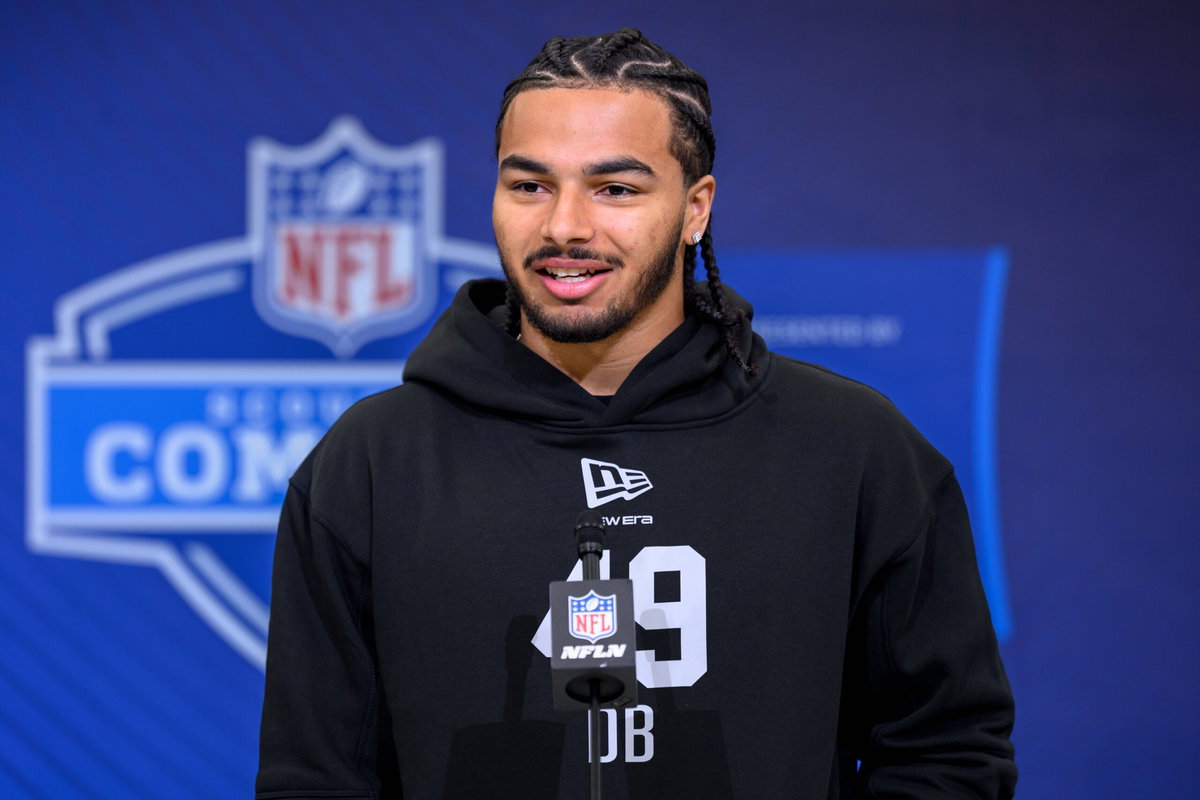
55. Treydan Stukes, SAF, Arizona
In 2025, Stukes played more as a nickel corner, but I view him as an NFL safety. He has a good size at 6-foot-2 and 200 pounds. Stukes has great speed and can flip his hips seamlessly in the back-end. Fires down on routes when he sees them and uses his 4.3 speed to do so. Hands at the catch point are elite and get aggressive to force pass breakups. Stukes will fill the run with purpose, but at times will tackle too low.
Imago
INDIANAPOLIS, IN – FEBRUARY 26: Arizona defensive back Treydan Stukes answers questions from the media during the NFL, American Football Herren, USA Scouting Combine on February 26, 2026 at the Indiana Convention Center in Indianapolis, IN. Photo by Zach Bolinger/Icon Sportswire NFL: FEB 26 Scouting Combine EDITORIAL USE ONLY Icon2602263467
56. Gabe Jacas, EDGE, Illionois
Jacas has real versatility off the edge. Was used as a true two-point stance edge and moved inside at times to be a 4i in a 3-4 defense at Illinois. Jacas has a fast get-off and uses his strong hands to create trouble for tackles. He isn’t the strongest player to drive players back, but when his hips are lined up and he attacks with speed, he can generate a ton of power to collapse the pocket. Doesn’t have much variety to his rushes, tries to win outside a ton, and shows bend at times – won’t try to stunt inside or get creative with his hands much. Was very solid against the run with his strong hands to set the edge.
57. Avieon Terrell, CB, Clemson
Early on in the process, I really liked Terrell, though he was a solid corner who could play inside or outside. But as we’ve moved on throughout the process, I’ve just liked other players more; it doesn’t mean Terrell is bad. Uses his eyes well and can stay on the back hip of receivers with his speed. He’s a good tackler for his size and plays very aggressively. Just felt, overall, that his hips were a little stagnant and sometimes too flat-footed at the top of receiver breaks.
58. Skyler Bell, WR, UConn
Whichever NFL team drafts Bell knows exactly what they’re getting. He can do everything. Has the speed to be an immediate threat to screens, can be a threat over the middle, and pushes the field vertically, being able to win on back shoulder throws. He’s elite at the top of his breaks, has good agility to really explode out of his breaks to create separation. He was targeted over 100 times for UConn, so he’s used to a bigger workload.
59. Chase Bisontis, OG, Texas A&M
Good strength to move people off the line and in the run game. Succeeds in pass pro with his good hands, punching to use his strength. Base is solid throughout his reps, keeping it wider the entire time. Loved how he could open up to match defenders who explode and go up the field. Showcases a great bend in his pass-pro reps, but doesn’t have the strength to naturally bend. Bisontis also struggles to get out in space and move. But like a ton of these guards, he’s a true plug-and-play starter.
60. Max Klare, TE, Ohio State
Klare was used more when he was at Purdue, but you still saw flashes of the elite athleticism he has for a right end at 6-foot-5 and 243 pounds. Can push down vertical seams effectively and uses his strong hands to make easy catches. He’s not the cleanest route runner, but he knows how to use his size over smaller defenders. He’s decent at blocking, not elite, but will give effort, which is all you can ask for. In an expanded role, Klare has tremendous upside with his receiving ability.
61. Lee Hunter, DT, Texas Tech
Hunter was another player in this class who just thrived at the Senior Bowl. He’s a bigger player at 6-foot-3 and 318 pounds, which is very evident on tape. Struggles to keep his pad level low and has no real first-step quickness. He has strong hands and can stop the run with ease. Takes on double teams well and knows how to shoot gaps in the run game. Just didn’t have much upside as a pass rusher and didn’t test well throughout this process.
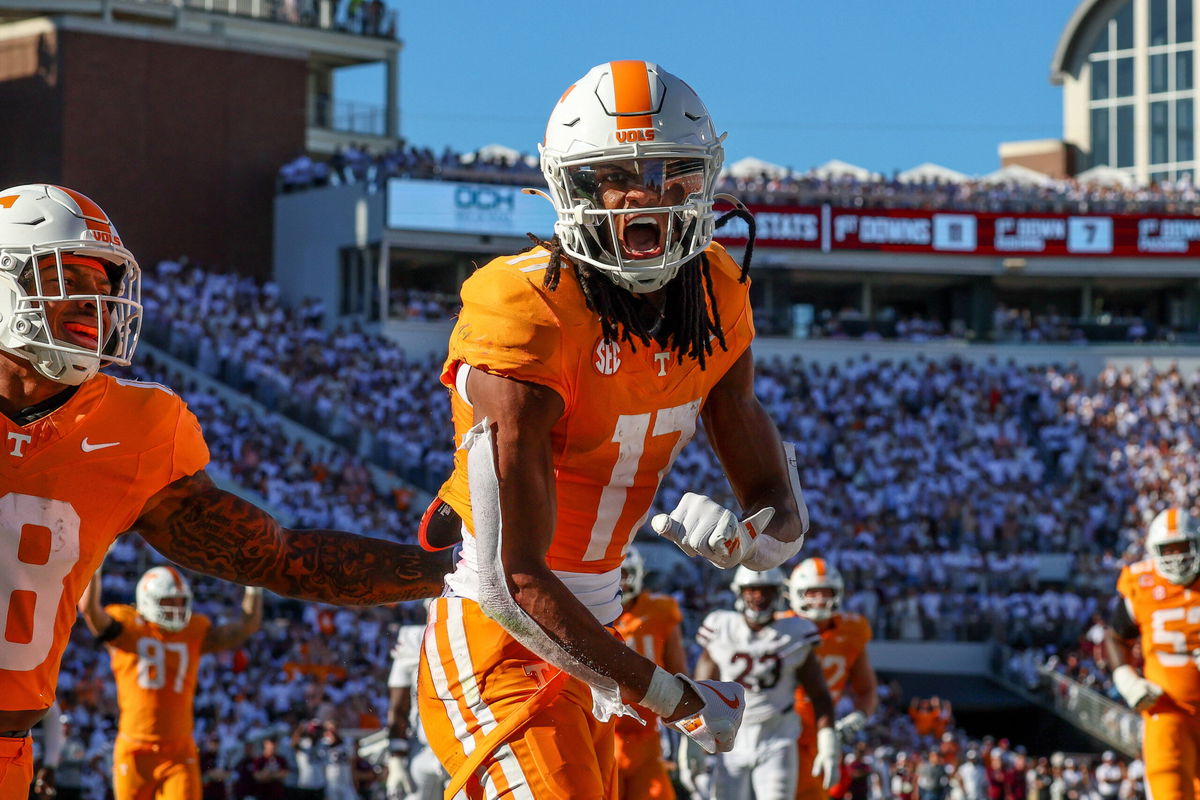
62. Chris Brazzell II, WR, Tennessee
The size with Brazzell is the selling point (6-foot-4, 198 pounds). He ran a 4.37 at that size, and it pops on tape. He just runs by guys, and it looks like he’s playing high schoolers at times. Elite deep ball tracking skills, and he can throw any type of throws down. He doesn’t have an elite high-pointing ability, but he can track. Brazzell isn’t the typical tall, lengthy receiver; he actually has legit hip sink and explosiveness in his routes. He’s very smart as well; he knows how to leverage corners and exploit them to get himself open.
Imago
NCAA, College League, USA Football: Tennessee at Mississippi State Sep 27, 2025 Starkville, Mississippi, USA Tennessee Volunteers wide receiver Chris Brazzell II 17 celebrates after a touchdown against the Mississippi State Bulldogs during the first half at Davis Wade Stadium at Scott Field. Starkville Davis Wade Stadium at Scott Field Mississippi USA, EDITORIAL USE ONLY PUBLICATIONxINxGERxSUIxAUTxONLY Copyright: xWesleyxHalex 20250927_szo_ce3_0300
63. Markel Bell, OT, Miami
6-foot-9 and 346 pounds with over 36-inch arms. Bell is a mauling presence who moves well for his size. The best part of his tape is when he just throws defenders off with his right arm, showcasing his strength. Surprisingly, can move well in space for his size. He thrives more in a gap scheme where he doesn’t have to work on a track as much. It’s no surprise that he plays a little high at times with his height; it’s a given. Amrs shoot out too often, and he has no real bend. The size, strength, and movement skills taught are what make Bell interesting.
64. Keith Abney II, CB, Arizona State
Abney is another smaller corner in this class, which limits him to playing press coverage, but he doesn’t let that stop him. He’s elite in playing off-coverage and closing downhill on routes he sees. His eyes are disciplined and can read the quarterback’s eyes to get into good positions. Sets the edge in the run game and doesn’t shy away from it. Stays low to the ground, allowing him to change directions effortlessly. Gets handsy at times and sometimes jumps routes too early, leading to him getting beaten on double moves.
65. Kyle Louis, LB, Pittsburgh
Safety may be the position for Louis in the NFL. He’s only 220 pounds, and playing linebacker at that size can be a struggle. Still, he plays the linebacker position with a different type of burst. When he’s confident on a read, he covers a lot of ground in a short time. Can cover backs out of the backfield and carry vertical routes down the seam. Isn’t scared to fill the run, just isn’t a force. Smart enough to re-route No. 2 receivers and instantly get his eyes back on the quarterback. Twitchy player who has a good change of direction to make linemen miss their blocks in tight spaces.
66. Joshua Josepsh, EDGE, Tennessee
Potential is what Josephs is. Has good size and speed; he’s just raw. Struggles to put it all together at times, and some reps look bad on tape. Has a good first step and longer arms to strike the chest of tackles. Doesn’t have the elite strength to move guys; he needs his hips and feet with him. Works well to the outside shoulder and attacks up the field. Doesn’t show much variance in his rushes, but when everything is there (get-off, arms, feet), he looks dominant, flashing what he can be with good coaching in the NFL.
67. Connor Lew, C, Auburn
A torn ACL is the discussion with Lew, but he still is my No. 1 center in this draft class. Works to the second level easily in gap schemes and is efficient in pass protection. Lew has good bend, hands, and feet – mix that in with his good arm length, and he can handle power-based defensive tackles with ease. Lacks the ability to sink his hips and anchor at times, but has the natural strength to be a force.
68. Antonio Williams, WR, Clemson
Didn’t have the production many expected going into the year (611 yards), but it shouldn’t be a knock. He’s still a versatile offensive weapon who primarily plays in the slot. Loved his release, which showcased a variety of ways to win off the line. Very explosive in his cuts, which led him to create easy separation. Good hands, not strong hands, when catching the ball. Gives effort as a run blocker. Knows how to settle in zones when facing zone, and doesn’t have elite speed while pushing vertically.
69. Gennings Dunker, OG, Iowa
Dunker is listed as a tackle in this draft, but I view him as a guard. Keeps his feet moving when driving people in the run game. Needs to keep his base wider when driving players in the run game, goes on his toes too often. Doesn’t have good leverage either when engaging, but overall has great power. Just felt like he struggled a ton at tackle, and it doesn’t look natural when he kick sets. Moving into guard will help him use that power on the inside, and he doesn’t have to worry about faster edges on the outside.
70. Derrick Moore, EDGE, Michigan
Relies on speed to power to create pressure as a pass rusher who thrives to collapse the pocket. At his best when he can get outside leverage and really drive on the outside shoulder of a defender. Doesn’t have much variance to his rushes; sometimes, he would cross the face of the tackle and go back inside, but very rarely – he didn’t seem to have a full pass rush plan. Doesn’t have the quickest hands to win with finesse. The run game aspect of his game was lackluster; he struggled to hold the point of attack, but his upside is in the power he had as a pass rusher.
71. Keionte Scott, CB, Miami
Another corner that is smaller, but just doesn’t play like it. He blitzed a ton as a corner, showing his versatility. He tackles hard, makes sure ball carriers feel it, just lowers the shoulder and hits. Good eyes when in zone coverage and jumps routes when he sees it. Trusts his gut and will just jump on things by using instinct. Not the best in man coverage; didn’t have the agility to thrive there.
72. Darrell Jackson Jr., DT, Florida State
When Jackson gets engaged with you, good luck, cause you’re going for a ride. He’s 6-foot-5 with over 34-inch arms. Jackson just has tremendous power and gets his hands under linemen’s shoulder pads easily, driving them back. Upside as a pass rusher relies on his strength, but doesn’t flash a quick first step at all. Maneuvers well with gap schemes to meet running backs in the holes. Isn’t easily moved in double teams. Jackson has the size, just has to work on pad height and agility to be a three-down player at the next level.
73. Romello Height, EDGE, Texas Tech
Height and Howell are two players I see very similarly. Both are smaller edge rushers who thrive on speed to get around the edge. Strong short-area quickness and can cut fast off his stutters and cuts. Height is a smart rusher too and knows how to adapt to tackles throughout the rep based on how they punch or lean too far forward. Height, honestly, would be in the running for the player with the best bend in this class.
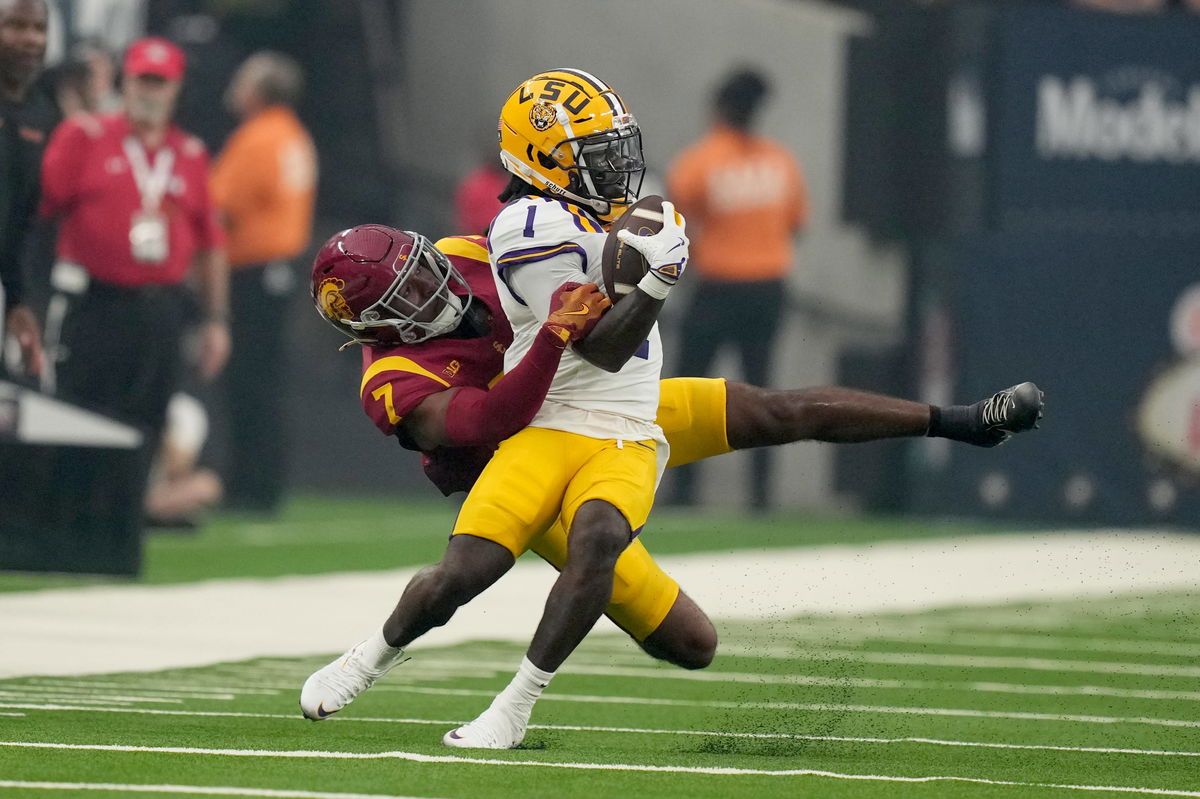
74. Kamari Ramsey, SAF, USC
Ramsey played more of a box safety role this season with USC and just didn’t look comfortable. Played a free safety role in 2024 and looked more comfortable. Still based on the 2025 tape, I saw flashes of the smart, instinctual player we saw in 2024. His backpedal is one of the cleanest in the class, and he can open up to outside-breaking routes with ease. He flips his hips so naturally, and because of the different role in 2025, he has the versatility to play anywhere on defense.
Imago
NCAA, College League, USA Football: Vegas Kickoff Classic-Southern California at Louisiana State Sep 1, 2024 Paradise, Nevada, USA LSU Tigers wide receiver Aaron Anderson 1 is tackled by Southern California Trojans safety Kamari Ramsey 7 in the first half at Allegiant Stadium. Paradise Allegiant Stadium Nevada USA, EDITORIAL USE ONLY PUBLICATIONxINxGERxSUIxAUTxONLY Copyright: xKirbyxLeex 20240901_djc_al2_163
75. Bryce Lance, WR, North Dakota State
3.58 yards per route run is all you need to know about Lance. He consistently pushed vertically for NDSU, and with his 6-foot-3, 204-pound frame, he dominated in that area. Has great speed, running a 4.34 40 at the combine. Lance strides down the field, looks effortless, and can maintain the top-end speed throughout catches. Footwork is quick off releases, and he easily explodes off his breaks. He has great concentration while catching the football; he can be a true No. 2 receiver in the NFL.
76. Domonique Orange, DT, Iowa State
Oragne is another run-stuffing nose tackle in this draft, and his hands may be the strongest out of the bunch. Shoots them up in the chest and gets control off the bat early in reps. Keeps his head up and reads the back, disengaging when needed. Gives effort as a pass rusher, but again is more of a pocket collapser. He has quick hands off the line, good enough to push and pull, or swim as a pass rusher. Would occasionally lead with his shoulder at times in the run game and didn’t stay square when moving with zone schemes.
77. Eli Raridon, TE, Notre Dame
Raridon is like Delp, just didn’t get much volume as a receiver, but when he did, man, did he flash. Loved Raridon’s catch radius and elite ball tracking ability. Raridon may be in contention for the best run blocker in this class for tight ends. He has so much volume in the amount of reps he got as a run blocker. He can move edges out of the way with ease, and that’s why he’ll see the NFL field early on in his career. Needs to develop as a pass catcher, but has traits (ball-tracking) which give him upside in that regard.
78. Elijah Sarratt, WR, Indiana
Sarratt is a smart receiver, and it shows in how he and Mendoza connected throughout the season. He understands leverage and coverage adjusting on the fly. Does a great job sitting in open areas of zones; he has a crafty release, helping him get open off the ball. He’s decent at the break of his routes, but wasn’t elite at creating separation. Sarratt was elite, though, at catching back shoulder. It all comes back to his brain as a receiver; he just knows how to get his body into position to make catches easier.
79. Logan Jones, C, Iowa
Athleism is the trait for Jones. He thrives in a zone scheme and gets out in space easily. He can torque his body to seal off closing defenders, and his feet are always moving, no matter if it’s in the run game or pass game. His pass pro is solid, good bend, but his base is up and down. Struggles with his short arms and struggles to handle stronger defenders. If he can get lower and sink his hips, it’ll help him; he’s a smart player, too.
80. Jaishawn Barham, LB, Michigan
Barham was basically an edge rusher this season for Michigan, but I’ll consider him a linebacker in this class. His effort is otherworldly; he’s just a ball of energy on the field. He pushes vertically up the field in his rushers and targets the outside shoulder consistently. Can win with pure strength through the chest against tackles. Has good hands to get around the edge and slightly bend to win. Great at using his hands in all aspects of his game. The run game is the same thing; he can just blow up pullers and is a mismatch for tight ends. He’s a perfect rotational edge for the NFL.
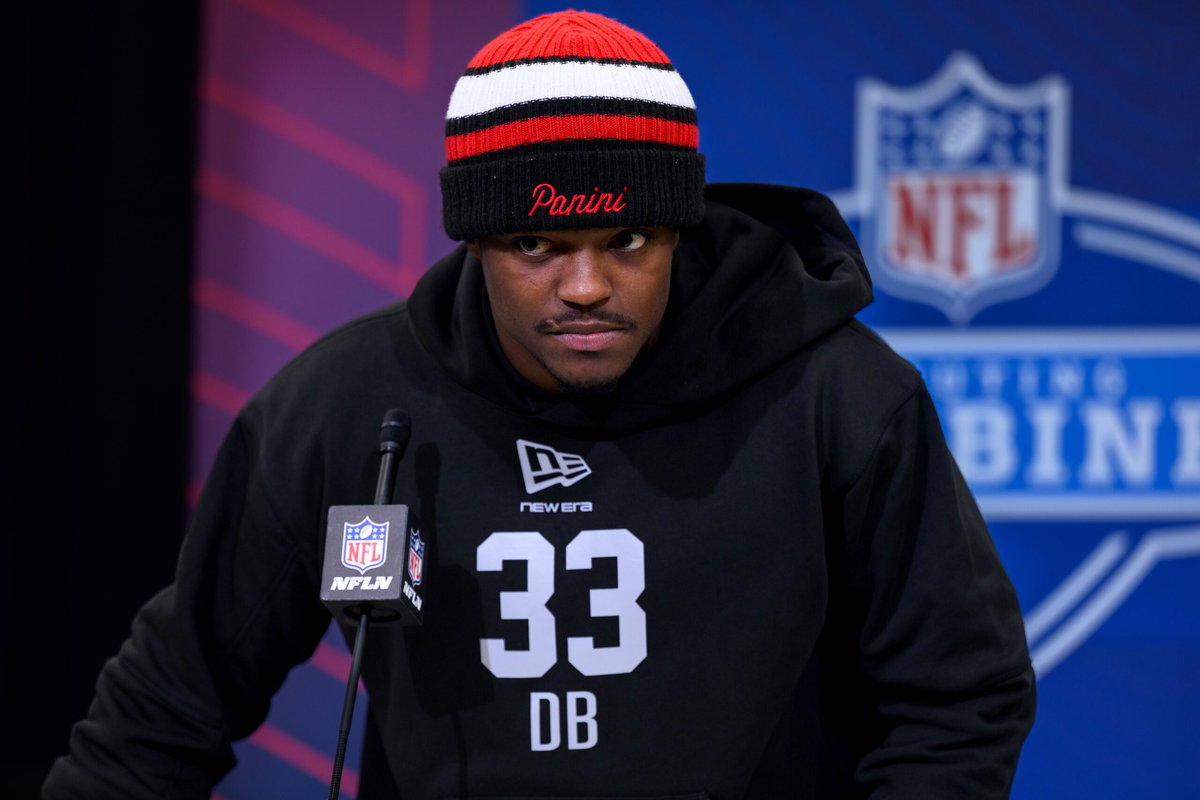
81. Bud Clark, SAF, TCU
Turnover machine. Clark just manages to find himself around the ball consistently. His strong eyes let him easily cover where he’ll jump routes and triggers on seams. The confidence is all there in the back-end with Clark. He’s not as strong as a one-on-one defender, but he had some great reps at the Senior Bowl. He is always trying to make a play, is efficient at forcing incompletions, and can fill the run adequately. He’s not a big hitter, but he will lower his shoulder at times to try to make big hits.
Imago
INDIANAPOLIS, IN – FEBRUARY 26: TCU defensive back Bud Clark answers questions from the media during the NFL, American Football Herren, USA Scouting Combine on February 26, 2026 at the Indiana Convention Center in Indianapolis, IN. Photo by Zach Bolinger/Icon Sportswire NFL: FEB 26 Scouting Combine EDITORIAL USE ONLY Icon2602262230
82. Malik Muhammad, CB, Texas
Muhammad is a bit lighter (182 pounds), but his game’s fluidity is there. He’s one of the smarter conrers in this class in terms of understanding offensive concepts. Did a great job taking away crossers early while in zone coverage. He’s also not afraid to come down and make a hit; he mirrors receivers well laterally. Little stiff opening up off the line, and isn’t that physical in coverage, but the movement skills are ht eupside.
83. Caleb Tiernan, OT, Northwestern
Tiernan is huge; he’s 6-foot-8 and has five years of college football experience under his belt. He started the past three seasons at left tackle for Northwestern and has incredible movement skills for his size. Tiernan thrives on shooting out of his set to attack defenders, and also locates targets in the open field. Loved to bait defensive ends with a fake punch, which further proves the quickness he has. The problem is the arms; he has 32 1/4-inch arms, which limit him on the outside. Still, he has the snaps and experience that allow him to play four positions along the offensive line.
84. Dani Dennis-Sutton, EDGE, Penn State
Sutton tested well for his size throughout this cycle (4.63 40 and 10′ 11″ broad). He’s 6-foot-6 and 256 pounds. Sutton is a smart edge rusher who adapts throughout reps and has the versatility to take advantage of any situation. Tackles open up too far outside? Spin move. Tackle doesn’t take a deep enough pass set? He can explode up the field and get around the corner. Along with it, he has the athleticism to back it up, a great first step, and can operate efficiently in loops and stunts. Pad level was high at times and didn’t shoot out his arms consistently enough to engage.
85. Gracen Halton, DT, Oklahoma
At 6-foot-3 and 293 pounds, Halton is a smaller defensive tackle, but he tested and showcased his athleticism (4.82 40, 36.5-inch vert). He uses that smaller advantage in the run game, does a great job mirroring zone schemes, and can shoot the point of attack before linemen can get there. A good first step allows him to accomplish that. He flashes quick hands to get off run blocks and get into the backfield. Didn’t feel that explosiveness when he rushed the passer; he has the athleticism, just needs more of a concrete plan.
86. Anthony Hill Jr., LB, Texas
Hill has three years of experience at Texas under his belt in the field. Over 1,900 snaps, he totaled 171 tackles and 107 run stops. He dealt with some injuries in 2025, but overall still looked like a complete linebacker. He can fill the run well, play in pass coverage, and make tackles effectively. The best way I can describe him is that he’s not elite at anything, just overall good at everything. The agility was a concern for me, just didn’t change directions fast enough. He ran a 4.51 40, so his straight-line speed is good; he just can’t change directions fast. Gives effort, though, and is a smart backer with the experience he has.
87. Jake Slaughter, C, Florida
Five seasons at Florida and over 2,00 snaps. SLaughter has seen a ton of SEC football and thrived in it. Gave up nine pressures in 2023 and 24, but in 2025, he only gave up five. He can play in a gap or zone scheme and maneuvers through traffic well to find his target. Good athlete overall and is just smart. The smartest center in this class. Uses his pass set and leverage effectively and keeps his head on a swivel, looking for twists or stunts. Struggled against power, but had a good bend to negate it.
88. Eli Stowers, TE, Vanderbilt
A lot of people have Stowers high in this class, and I can understand why. His combine was elite, having a 4.51 40 and a vertical jump of 45.5 inches. The measurables are there as well: 6-foot-4 and 239 pounds. He’s a mismatch for any defensive back at the college level. Getting off in his routes is just elite, and he creates separation with ease. Good catch radius to make tough catches; I just don’t love Stowers’ inline ability (basically a slot). I classify him more as a receiver, but as a tight end, the lack of blocking ability is worrisome.
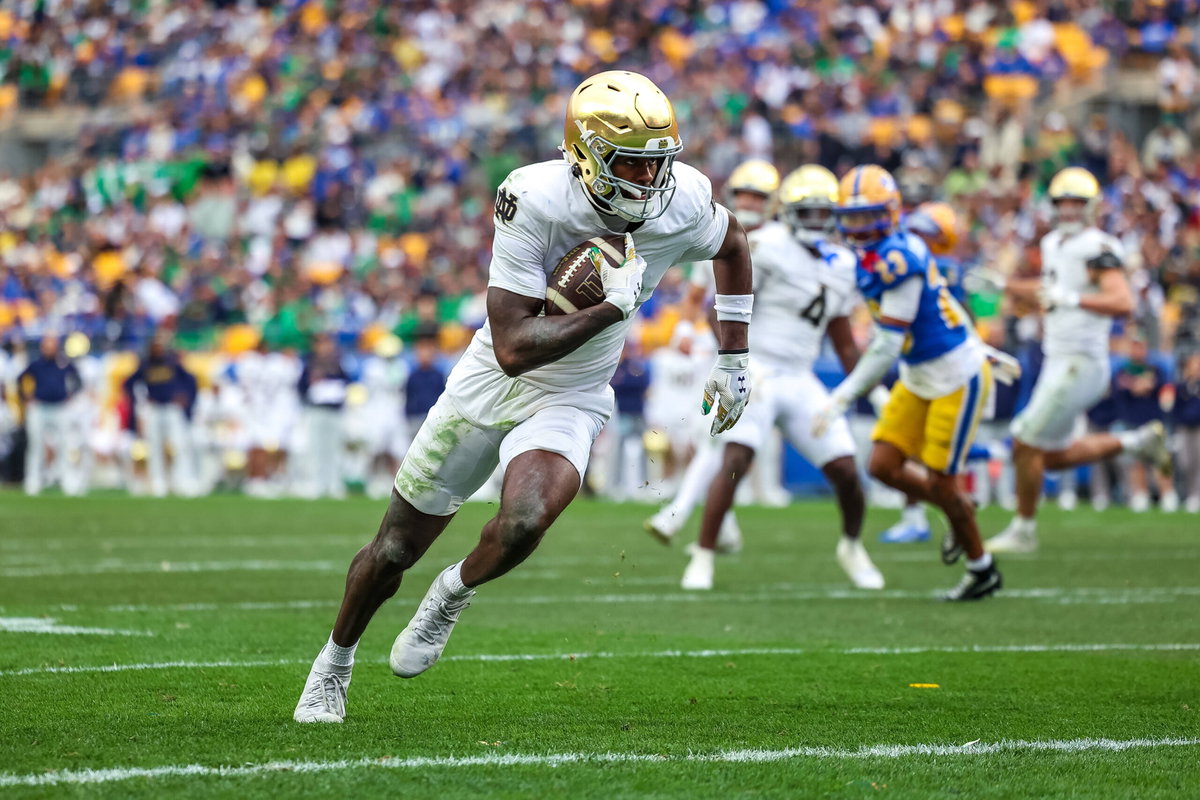
89. Malachi Fields, WR, Notre Dame
Fields isn’t the type of receiver who’ll beat you with speed or agility, but man, does he win with his strength and technique. He’s 6-foot-4 and 218 pounds and averaged 17.5 yards per reception for the Fighting Irish. His ball tracking is elite, and he can stretch out to make any type of catch; his strong hands help him do so. Releases were okay off the line, but again, just didn’t have the agility of speed to garner separation at a consistent level.
Imago
NCAA, College League, USA Football 2025: Notre Dame Vs. Pitt NOV 15 November 15, 2025: Notre Dame Fighting Irish wide receiver Malachi Fields 0 runs into the endzone for a touchdown after a reception during the NCAA football game between the Pitt Panthers and the Notre Dame Fighting Irish at Acrisure Stadium in Pittsburgh, Pennsylvania. Brent Gudenschwager/CSM Credit Image: Brent Gudenschwager/Cal Media Pittsburgh Pennsylvania USA EDITORIAL USE ONLY Copyright: xx ZUMA-20251115_zma_c04_462.jpg BrentxGudenschwagerx csmphotothree443256
90. Jonah Coleman, RB, Washington
Coleman is a bowling ball when he’s carrying the ball. He’s a very compact running back at 5-foot-8 and 220 pounds, but he has the necessary elusiveness and quickness to make cuts in tight spaces. He’s also a great receiver in the backfield, offering three-down back potential. He succeeds more in a gap scheme than in a zone scheme (just doesn’t have the natural speed to stretch out the field). Just a patient back who can make something out of nothing.
91. Will Lee III, CB, Texas A&M
Lee thrives in man coverage. He’s 6-foot-1 and 189 pounds, giving him a good frame to do so. He’s athletic and has the coverage instincts to somehow always find the football. He gets a little handsy because he plays with an aggressive style, but his quick trigger, instincts and frame give him tremendous upside entering the league.
92. Sam Hecht, C, Kansas State
Hecht is a smaller center, but the size allows him to be fluid in space. His hips are fluid and can torque his body to seal off defenders. Pass pro is solid and has a good base to attack defenders with. Climbs to the second level easily and is an efficient puller in space. The problem is that he struggles to fully anchor and handle power. His feet lose traction while he drives, as he doesn’t have elite lower-body strength.
93. Garrett Nussmeier, QB, LSU
Nussmeier is the third quarterback on this list, and it just speaks to how light this quarterback class is. Regardless, Nussmier is about the same size as Simpson (who’s 48 on this list). He was my first-ranked quarterback going into the season, but injuries and LSU’s dysfunction prevented him from having the season he wanted. Going back to 2024, he’s a true gun slinger. He’s not scared to put the ball in tight windows, and he’s very accurate with the football when he knows where to go with it. He’s a coach’s kid, which makes sense when you watch him. Just the size and overall arm strength are two worries I have for Nussmeier.
94. Keyshaun Elliot, LB, Arizona State
Elliot is tremendous when playing the run. He plays with confidence and shoots gaps to make run stops. His mirroring ability may be the best of any linebacker in this class. He has the speed to cover backs and the seams in pass coverage. He just lacks the overall agility to be ranked higher. Didn’t have much twitch to his game and wasn’t able to get off blockers with pure strength. Also felt like he was okay in zone coverage, better in man.
95. Emmett Johnson, RB, Nebraska
Johnson didn’t test that fast, running a 4.56 40 at the combine, but watching his tape, I definitely felt he was quicker than that. He’s a true three-down back, can run the ball, catch passes, and pass protect at a good enough level. His pass-catching stood out to me; he’s comfortable running routes and has elite ball-tracking skills. His agility is crazy; he can make splayers miss in tight spaces, and he has good balance overall when cutting to change direction. His vision was spotty at times and sometimes got too creative in the backfield, but when he hit a hole confidently, he hit it with speed.
96. Genesis Smith, SAF, Arizona
I don’t think it’s crazy to say that Smith may be the best safety in this class in pure zone coverage skills. His ability to play the quarter-half or single-high coverages and just flip his hips while maintaining speed is crazy. He understands route combinations to an elite level, but isn’t comfortable playing man coverage. The talking point is his tackling; it looks very rough on tape. Has to work on lowering his pad level and driving his feet through tackles.
97. Zachariah Branch, WR, Georgia
Branch has a smaller frame, but it helps him succeed on the field. He’s more of a gadget player who’s used to catching screens and quick passes. He has the true burst after the catch to make guys miss, but doesn’t have the agility to juke guys out. He’s a smarter route runner than people give him credit for. Uses his quick feet to manipulate defenders’ leverage throughout his routes, then quickly cuts at the top of his breaks. Didn’t have strong hands while catching the ball.
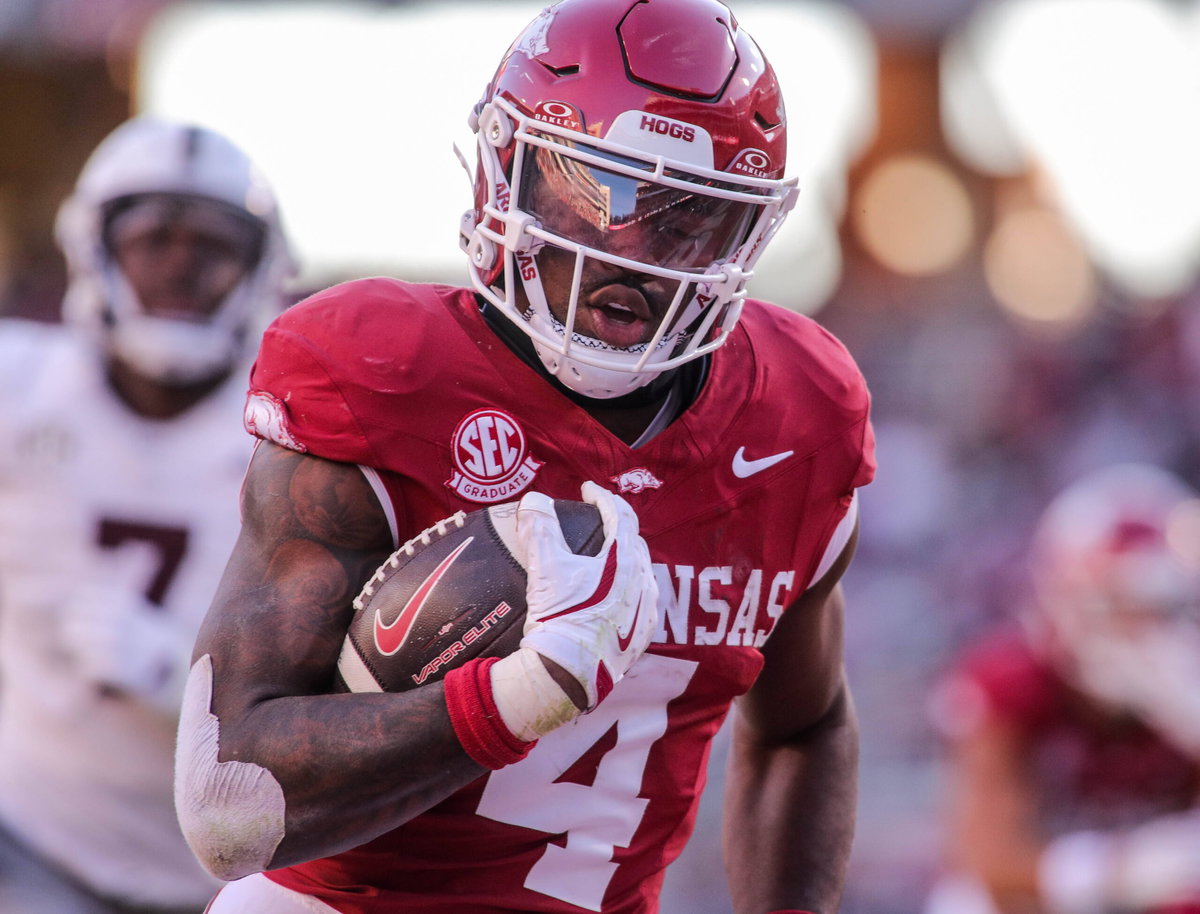
98. Mike Washington Jr., RB, Arkansas
Washington got on my radar after the 4.33 40 he ran at the combine. Is he a compact back at 6-foot-1 and 223 pounds running a 40 time like that at that size? Impressive. Turning on the tape, he’s elite while going north/south. Hurts defenses when he has an open hole because he’ll attack it with his speed. Even with the speed, I felt he was better at running in between the tackles. When he’s asked to stretch the field, he sometimes goes too far laterally and doesn’t cut up the field with enough agility. His jump cut, though, was elite, and he kept his feet and balance under him, which was impressive. can also catch passes out of the backfield.
Imago
November 1, 2025, Fayetteville, Arkansas, USA: Arkansas Razorbacks running back MIKE WASHINGTON JR. 4 rushes for a touchdown during Mississippi States win over Arkansas Razorbacks at Donald W. Reynolds Razorback Stadium. Fayetteville USA – ZUMAs199 20251101_znp_s199_060 Copyright: xBrentxSoulex
99. Dontay Corleone, DT, Cincinnati
Another nose tackle within this draft class that doesn’t have the highest upside rushing the passer. But again, Corleoen will make his money stopping the run. Great hands, base, and keeps his head up to put himself in positions to eat up running lanes. He only had eight total pressures in 2025, which speaks to the lack of pass-rush upside. He has the size to take on double teams, but rarely splits them.
100. Jude Bowry, OT, Boston College
Bowry started two years at Boston College and has the athleticism to operate in a zone system with ease. Very twitchy as a mover, with the bend to handle power. His hands were all over the place and weren’t patient enough in his pass sets. Still at 6-foot-5 and 314 pounds, Bowry has the measurables with the traits worth taking a shot on.