
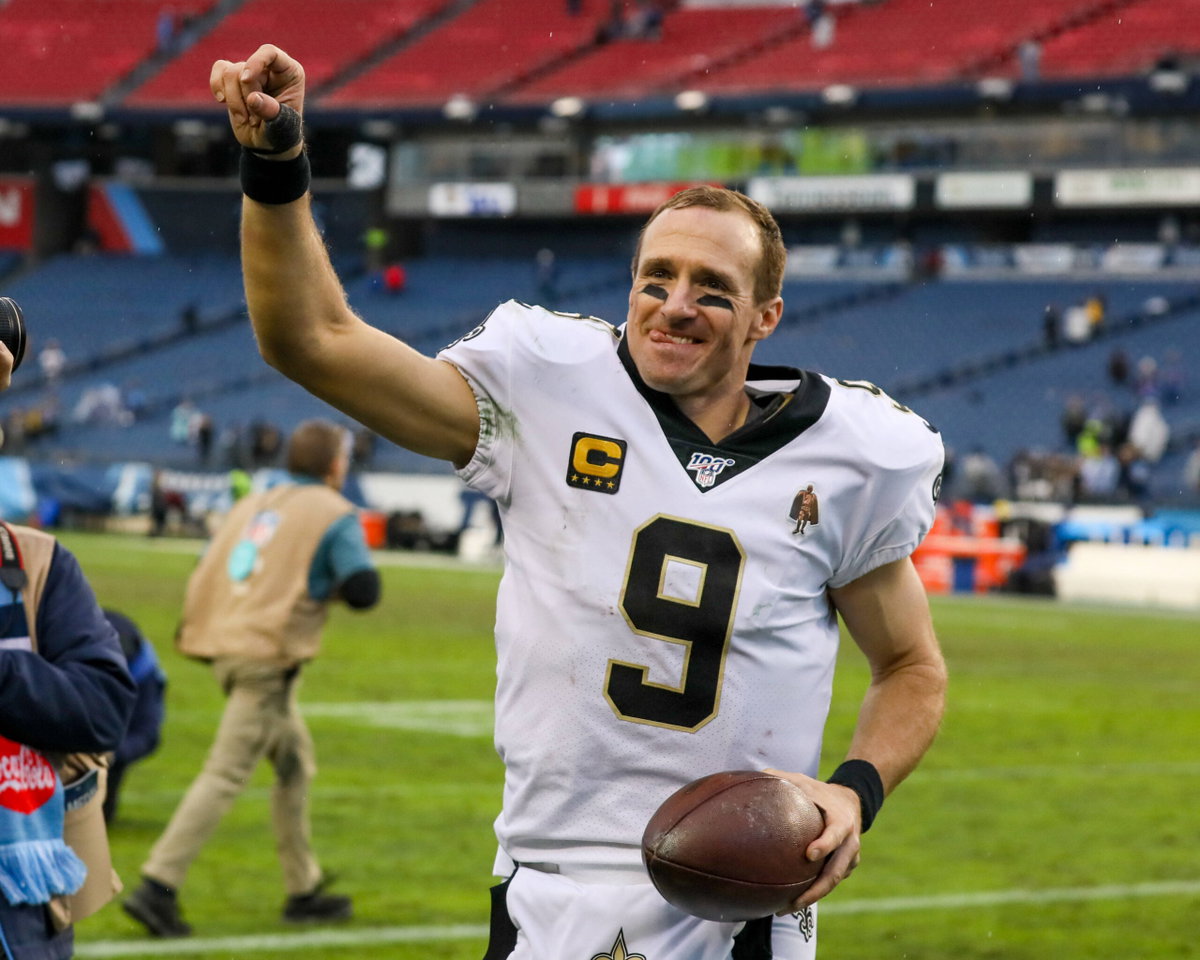
New Orleans Saints quaterback Drew Brees is a part of the 2026 Pro Football Hall of Fame Class, as a first-ballot member. He was honored during the NFL Honors event in February and will be the second quarterback in the team’s history to make it to Canton, Ohio (Ken Stabler is the other, as he spent three seasons with the team).
Watch What’s Trending Now!
Brees had plenty of major games in his career, but which one was his biggest?
Before Brees, the New Orleans Saints had never won a Super Bowl. Their franchise had spent decades being one of the NFL’s worst teams. In the 2009 season, Brees led the team to Super Bowl XLIV against a formidable opponent — Peyton Manning.
The Road to Super Bowl XLIV
Imago
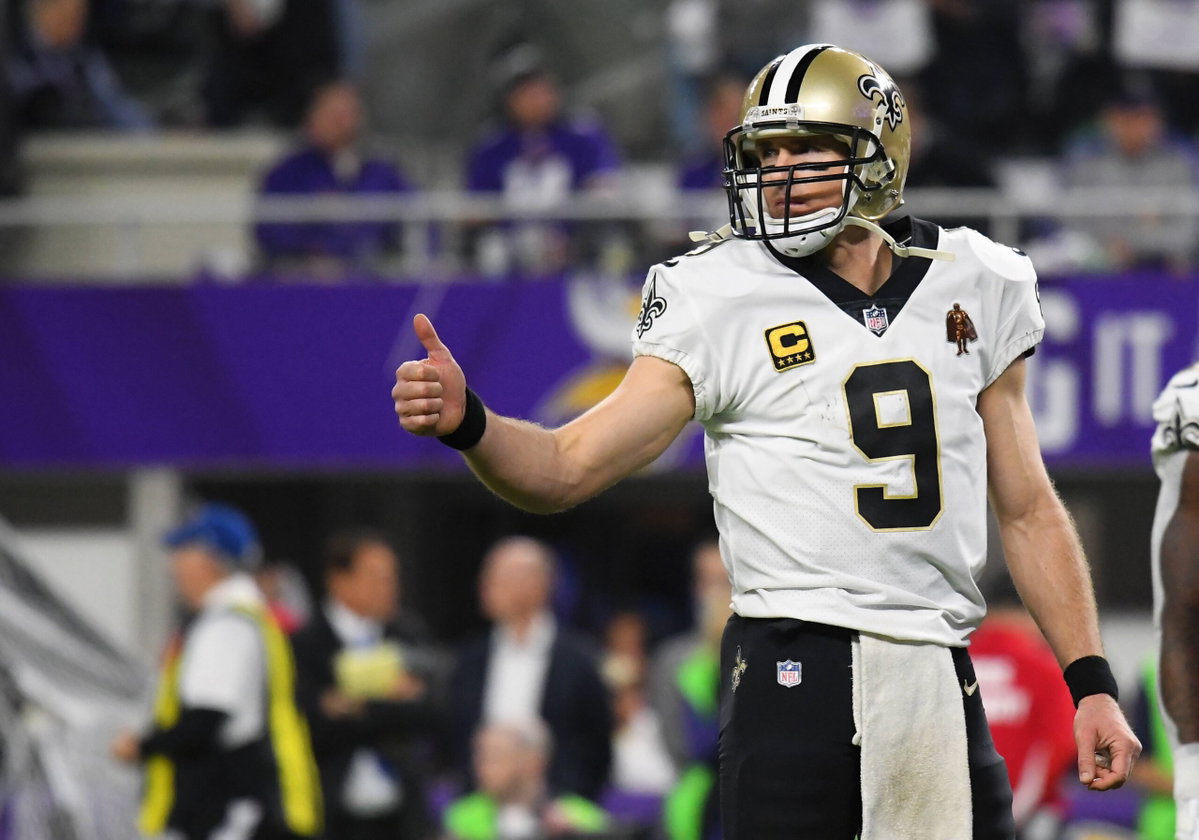
MINNEAPOLIS, MN – JANUARY 14: New Orleans Saints quarterback Drew Brees (9) gives the sideline thumbs up during a NFC Divisional Playoff game between the Minnesota Vikings and New Orleans Saints on January 14, 2018 at U.S. Bank Stadium in Minneapolis, MN. The Vikings defeated the Saints 29-24 to advance to the NFC Championship Game.(Photo by Nick Wosika/Icon Sportswire) NFL American Football Herren USA JAN 14 NFC Divisional Playoff Ð Saints at Vikings PUBLICATIONxINxGERxSUIxAUTxHUNxRUSxSWExNORxDENxONLY Icon18011440
Brees faced an uphill battle entering the league, being 6 feet tall and undersized for a quaterback. During the 2005 season, Brees suffered a serious shoulder injury to his throwing arm, which raised questions among teams about whether he’d ever recover. The San Diego Chargers, the team that drafted him, didn’t think so, and they opted to move forward with Philip Rivers as their starting quaterback.
It led to Brees signing with the Saints in 2006, and he helped bring life to a franchise that desperately needed it. On top of the disappointing history, New Orleans was still recovering from Hurricane Katrina. A successful football team could boost overall morale in the city.
That morale went up during the 2009 season. Brees helped the team to a 13-0 start, which resulted in New Orleans finishing the season 13-3. He threw for 4,388 yards, 34 touchdowns and 11 interceptions, finishing second in MVP voting.
New Orleans beat Arizona and, famously, the Minnesota Vikings led by Brett Favre in the NFC championship to get to the big game. There was serious momentum for them to enter the Super Bowl, but the consensus leading up to the game was that the Indianapolis Colts, led by Manning, would breeze past the Saints.
Brees had a different outcome in mind.
Super Bowl XLIV
Imago
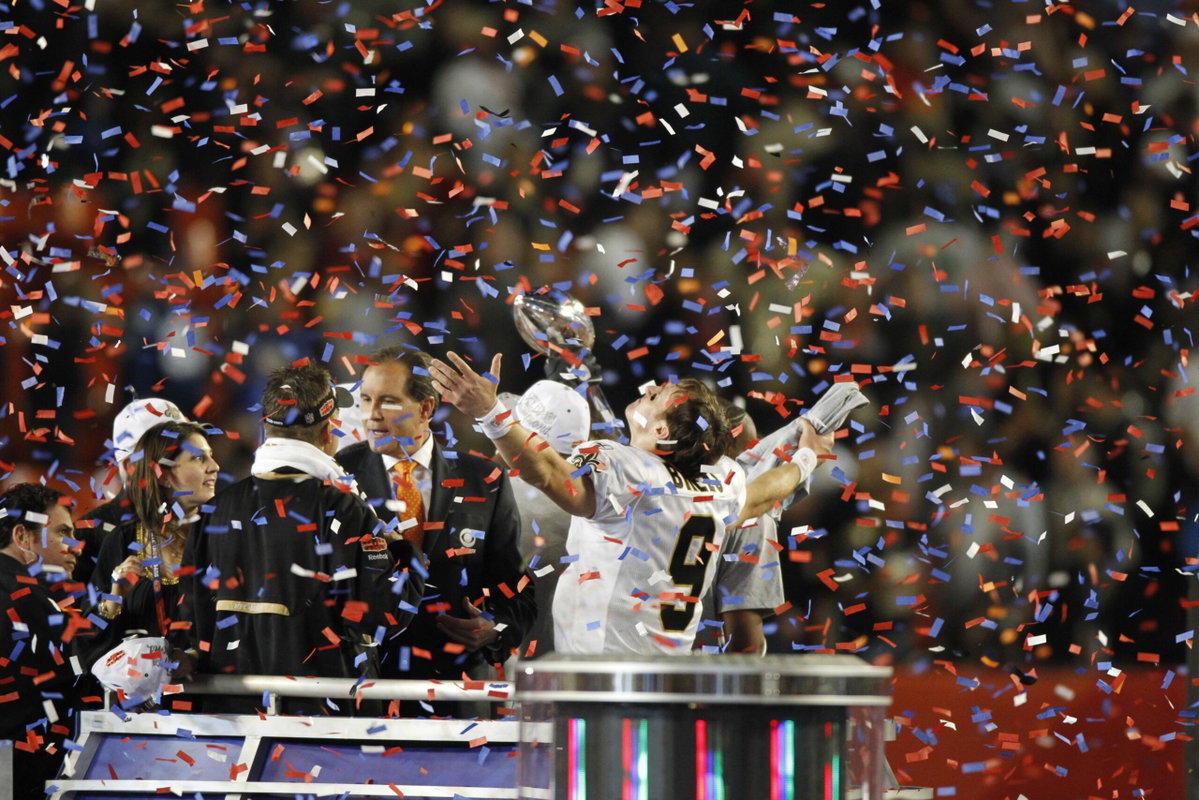
07 February 2010: New Orleans Saints quarterback Drew Brees celebrates on the podium after the New Orleans Saints 31-17 victory over the Indianapolis Colts in Super Bowl XLIV at Sun Life Stadium in Miami, Florida. PUBLICATIONxINxGERxSUIxAUTxHUNxRUSxSWExNORxONLY Icon952100207116`
The Super Bowl is typically the biggest game of anyone’s career, and it’s no different for Brees. He faced an uphill battle to be a quaterback in the league, and adversity with the early injuries he had in his career. A Super Bowl win would solidify his legacy within New Orleans and showcase the type of talent he was to outduel a quarterback like Manning.
Starting off, it wasn’t pretty. The Colts took an early 10-0 lead and overwhelmed the Saints, making it seem the critics would be right. Manning was on his way to a second Super Bowl win in his career.
It all changed in the second quarter, and the Saints’ offense found rhythm. Brees settled in and controlled the overall tempo of the game and kept New Orleans within striking distance. He led the team to two field goal drives, making the score 10-6 going into halftime.
Turning Point
New Orleans head coach Sean Payton had one of the boldest calls in NFL history. After halftime, he called an onside kick, which the Saints recovered. That call shifted the momentum of the game, leading to Brees finding Pierre Thomas for a touchdown and giving the Saints a 13-10 lead.
It was all Saints from there, with Brees throwing another touchdown in the fourth quarter to Jeremy Shockey, giving the Saints a 24-17 lead in the fourth.
Saints corner Tracy Porter had his iconic interception against Manning, sealing the game against the Colts and securing the Super Bowl victory for the Saints, giving them their first Super Bowl in franchise history.
Brees’ Performance
Imago
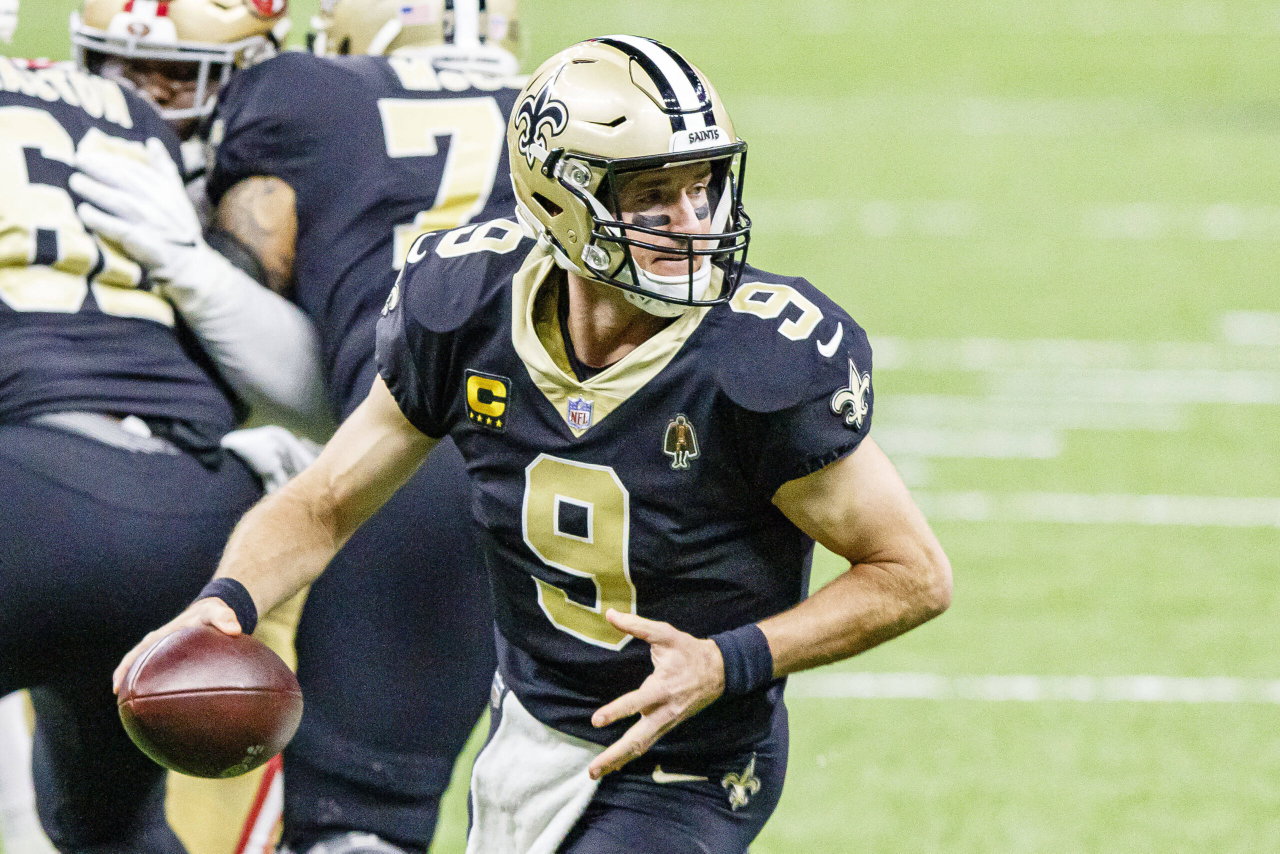
November 15, 2020, New Orleans, LOUISIANA, U.S: New Orleans Saints quarterback Drew Brees looks to pass against the San Francisco 49ers in New Orleans, Louisiana USA on November 15, 2020. New Orleans U.S. – ZUMAa14_ 20201115_zaf_a14_008 Copyright: xDanxAndersonx
Brees finished the game with 288 yards, two touchdowns and a completion percentage of 82.1 percent. It led to him winning Super Bowl MVP, an award he deserved. The Saints didn’t have explosive players throughout the game, a huge running game, nor a dominant defense. He methodically worked the Colts’ defense throughout the game to secure the win.
The performance solidified his legacy as one of the best quaterback in NFL history. Before the game, he was considered a great quarterback, a productive player and a good comeback story. After, he was a Super Bowl champion, MVP and the face of the Saints franchise.
Brees would go on to break the NFL passing record and cement himself as one of the most productive quarterbacks the league has ever seen. He had more dominant games and more memorable comeback victories than he did in the Super Bowl win. Still, the emotion of winning the Super Bowl carried more weight. That night completed his journey from being a discarded quaterback to an NFL champion, while helping deliver an unforgettable moment to a city and a franchise.