
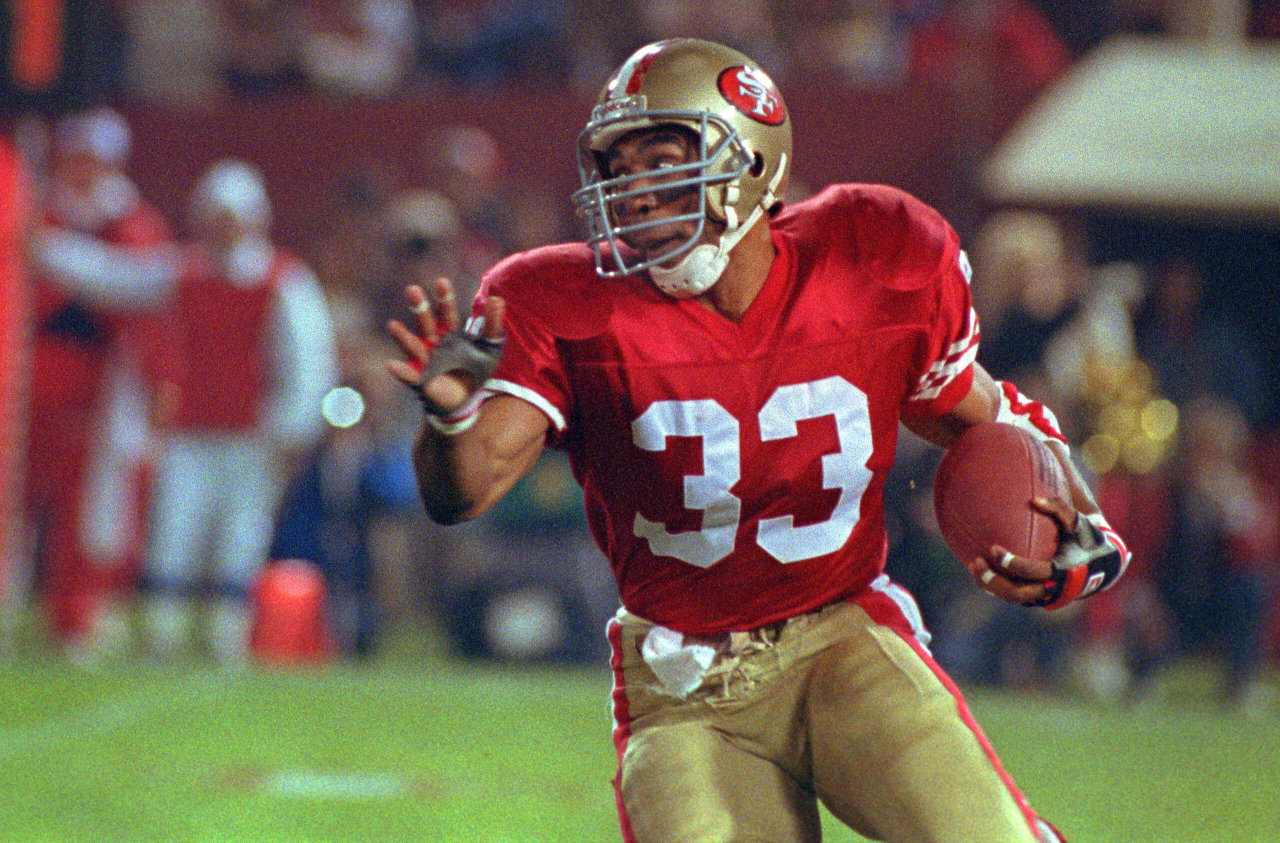
Roger Craig’s Hall of Fame resume extends far beyond three Super Bowl rings. Long before dual-threat running backs became the standard, the former San Francisco 49ers star revolutionized the position by thriving as both a runner and receiver in Bill Walsh’s West Coast offense. From making NFL history with a groundbreaking statistical milestone to becoming one of the biggest stars in the 1980s, these are five achievements that defined Craig’s legendary career and ultimately got him a gold jacket.
Watch What’s Trending Now!
1. Becoming the First Player With 1,000 Rushing and 1,000 Receiving Yards
Imago
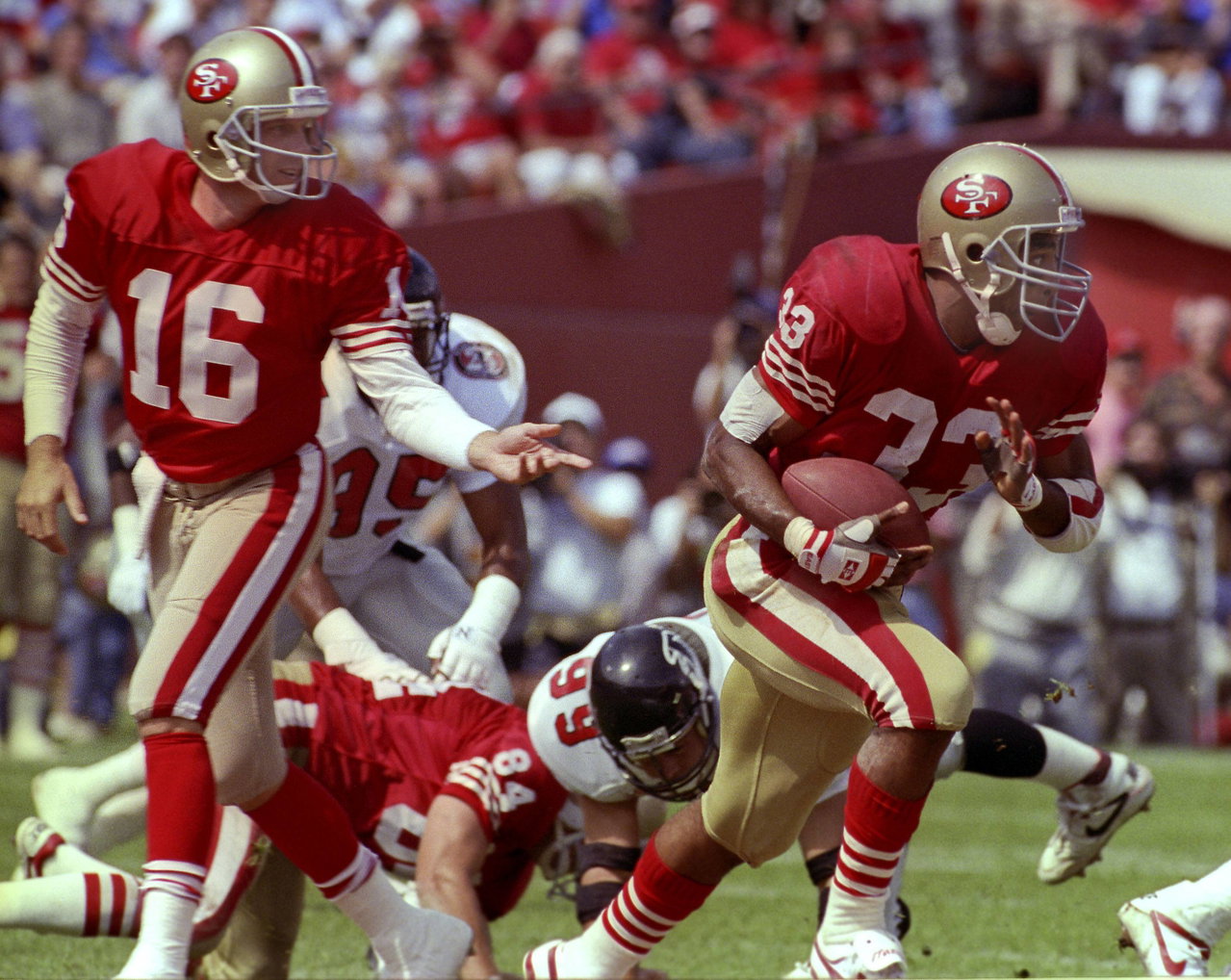
September 23, 1990 – San Francisco, California, U.S – San Francisco 49ers vs Atlanta Falcons at Candlestick Park Sunday, September 23, 1990. 49ers beat Falcons 19-13. 49er quarterback Joe Montana (16) hands off to running back Roger Craig NFL American Football Herren USA 1990: 49ers 19:13 Falcons – ZUMAg52_ 19900923_zap_g52_011 Copyright: xAlxGolubx
This accomplishment alone changed how NFL teams viewed the running back position.
In 1985, Craig rushed for 1,050 yards and added 1,016 receiving yards, becoming the first player in the league to have 1,000 in both categories in the same season. Even more impressive, his 92 receptions led the NFL that year, not just running backs, but every receiver in the league. At the time, running backs were barely featured as receiving weapons, making Craig’s season decades ahead of its time. More than 40 years later, only two other players have done the same, showing just how rare the accomplishment is.
2. Winning Three Super Bowls While Delivering on the Biggest Stage
Craig wasn’t just a member of one of the NFL’s greatest dynasties; he was one of the driving forces. Championships often define legacies, and Craig delivered when the lights were bright.
During his career with the 49ers, Craig helped the franchise win Super Bowl XIX, XXIII and XXIV. His great championship performance came against the Miami Dolphins in Super Bowl XIX, when he became the first player in the Super Bowl era to score three touchdowns in a championship game, finishing with two receiving and one rushing. Across San Francisco’s three Super Bowl victories, Craig consistently thrived as a rusher and pass catcher, showing he could play even better under pressure.
3. Winning the 1988 NFL Offensive Player of the Year Award
Imago
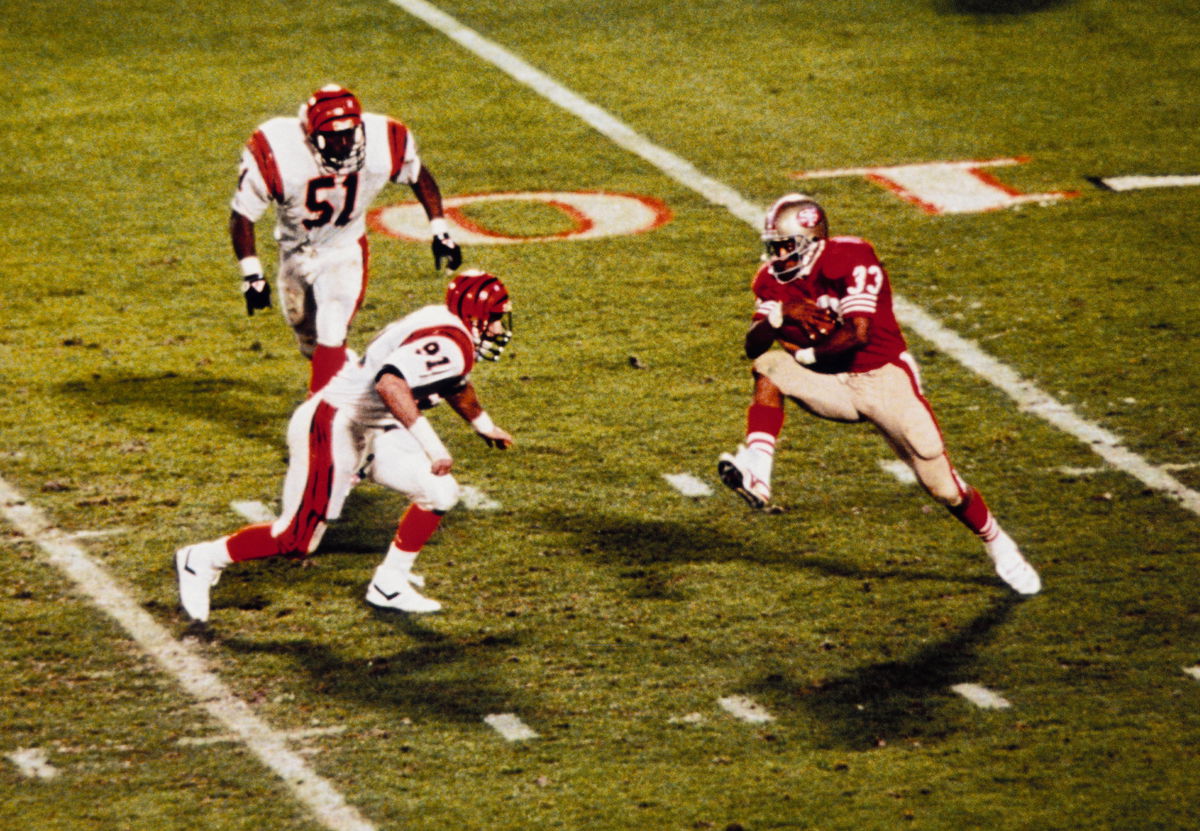
NFL, American Football Herren, USA Super Bowl XXIII Jan 22, 1989 Miami, FL, USA FILE PHOTO San Francisco 49ers running back Roger Craig 33 carries the ball against Cincinnati Bengals linebackers Carl Zander 91 and Leon White 51 during Super Bowl XXIII at Joe Robbie Stadium. The 49ers defeated the Bengals 20-16. Miami Florida UNITED STATES, EDITORIAL USE ONLY PUBLICATIONxINxGERxSUIxAUTxONLY Copyright: xHerbxWeitmanx 8886959
The 1988 season was the peak of Craig’s career. Every Hall of Famer has a signature season, and 1988 is for Craig.
He rushed for a career-high 1,502 yards and added 534 receiving yards, totaling 2,036 yards of scrimmage and leading the NFL. His all-around dominance earned him the Associated Press Offensive Player of the Year award and helped power the 49ers to another Super Bowl championship. While quarterbacks often dominate today’s major awards, Craig’s season reminded us how valuable a complete running back could be to an NFL offense. We’re seeing the same thing right now on the 49ers with Christian McCaffrey.
4. Redefining the Modern Running Back Position
Some players put up great stats. Craig changed how football was played.
Before versatile weapons became common, Craig showed offensive coordinators that a running back could function as a featured receiver without losing production on the ground. His ability to excel in Walsh’s West Coast offense set the foundation for future stars like Marshall Faulk and McCaffrey, who built their own Hall of Fame-caliber resumes using the same skill set. Today’s emphasis on pass-catching backs can be traced back to the blueprint Craig instilled in the 1980s.
5. Becoming One of the Greatest 49ers of All Time
Imago
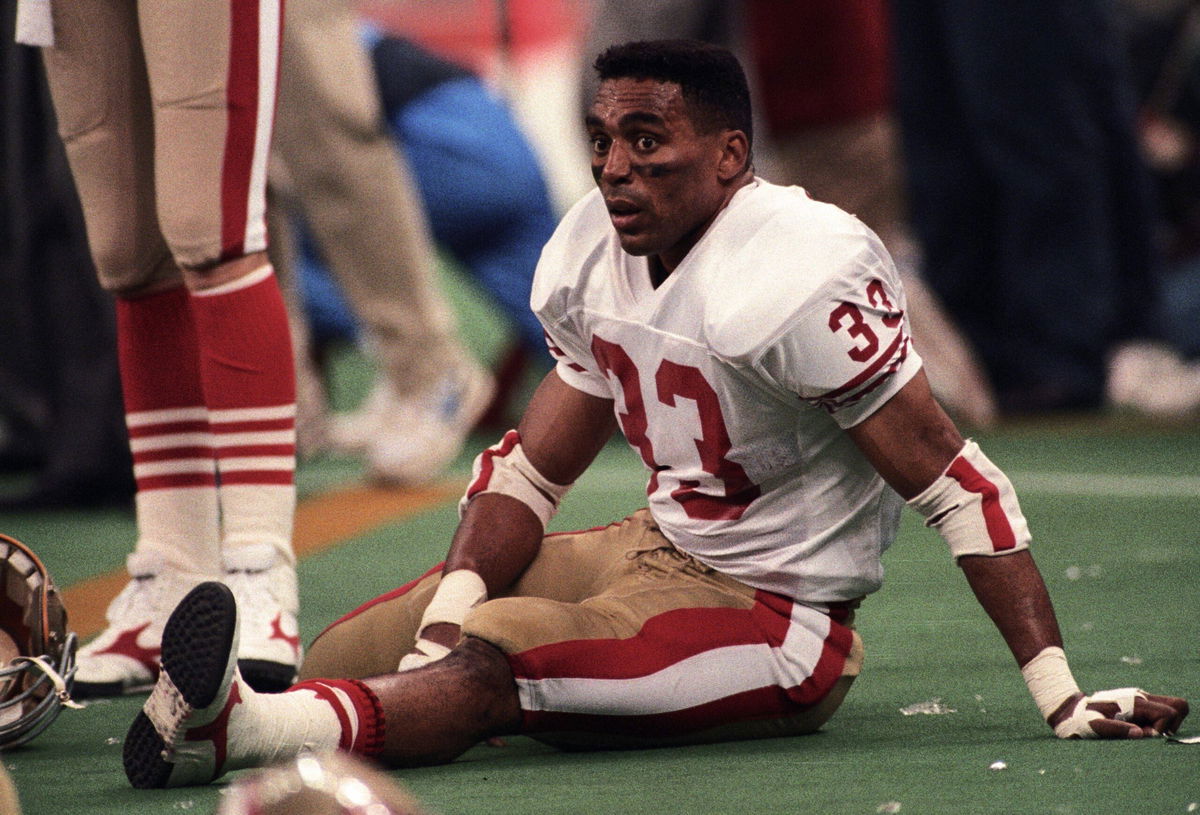
NFL, American Football Herren, USA Super Bowl XXIV Jan 28, 1990 New Orleans, LA, USA FILE PHOTO San Francisco 49ers running back Roger Craig 33 on the field prior to Super Bowl XXIV against the Denver Broncos at the Superdome. The 49ers defeated the Broncos 55-10. New Orleans Louisiana UNITED STATES, EDITORIAL USE ONLY PUBLICATIONxINxGERxSUIxAUTxONLY Copyright: xRobertxHanashirox 8986330
Craig’s legacy goes beyond the record books.
Making the Pro Football Hall of Fame is the pinnacle of any NFL career, but Craig’s impact on the 49ers franchise deserves recognition in its own right.
He retired as one of the most accomplished offensive players in franchise history, ranking near the top of the 49ers’ all-time leaderboards in rushing yards, rushing touchdowns and receptions by a running back and yards from scrimmage. His combination of individual production and team success earned him a place on the NFL’s 1980s All-Decade Team before he finally received football’s highest honor, induction into the Pro Football Hall of Fame in 2026.