
Essentials Inside The Story
- ESPN faces credibility questions after NFL acquires 10 percent equity stake
- Chris Berman addresses the matter as league integration accelerates
- Global streaming service leads bidding for international games amid global expansion push
Picture a referee walking onto the field not just to call the game, but holding a 10% stake in the franchise he’s supposed to be officiating. Well, as bizarre as it sounds, that’s the new reality fans will witness when ESPN and the NFL complete their highly publicized, albeit controversial, merger. While some see it as a new dawn for sports media coverage, others have quietly shied away from acknowledging how the optics aren’t clean. And that includes one of ESPN’s longest-serving voices, Chris Berman.
Watch What’s Trending Now!
Having anchored NFL Primetime for two decades and as a part of ESPN for 47 years, the sportscaster didn’t sugarcoat it. In conversation with CNBC Sports’ Alex Sherman, he acknowledged the strangeness of the NFL now owning a piece of an outlet that covers it.
“The lines have been blurred,” Berman said, “in a lot of ways.”
And he’s not wrong. Notably, this is the first time a North American professional sports league is taking an ownership stake in a broadcaster that airs its games. So, as expected, questions about conflict of interest and fairness in reporting, and editorial independence were not fair behind. Take ESPN’s former executive vice president and chief marketing office, Laura Gentile, for instance, who didn’t mince any words when questioning the deal.
“The move comes with one great risk: the loss of ESPN’s soul,” Gentile wrote in August last year. “Now ESPN is in the increasingly untenable position of serving two mightier masters: the NFL and The Walt Disney Company. It will become ever more difficult to remain objective—never mind critical, irreverent or funny. I, for one, am losing sleep over ESPN’s eroding position and loss of identity. Those of us who grew up with ESPN as our easy companion will miss the days of independence, honesty and hilarity.
“For the next generation of fans, we’re sorry you missed it. ESPN was the best friend a sports fan could have.”
Former sports executive David Samson also had similar concerns.
“Do you think ESPN is going to spend hours of programming each day criticizing the NFL, bringing Jerry Jones to task?” Samson dropped the question on Nothing Personal with David Samson last year. “Do you think that there’s a possibility that ESPN will do anything to upset its partner, the NFL? And you talk about a conflict of interest.”
Berman, however, wouldn’t go as far as to criticize his employer. In fact, his opinion was quite the contrary when asked if NFL’s ownership bid will affect ESPN’s journalistic standards.
“Hard to believe,” he said while dismissing the concern. “I don’t think so.”
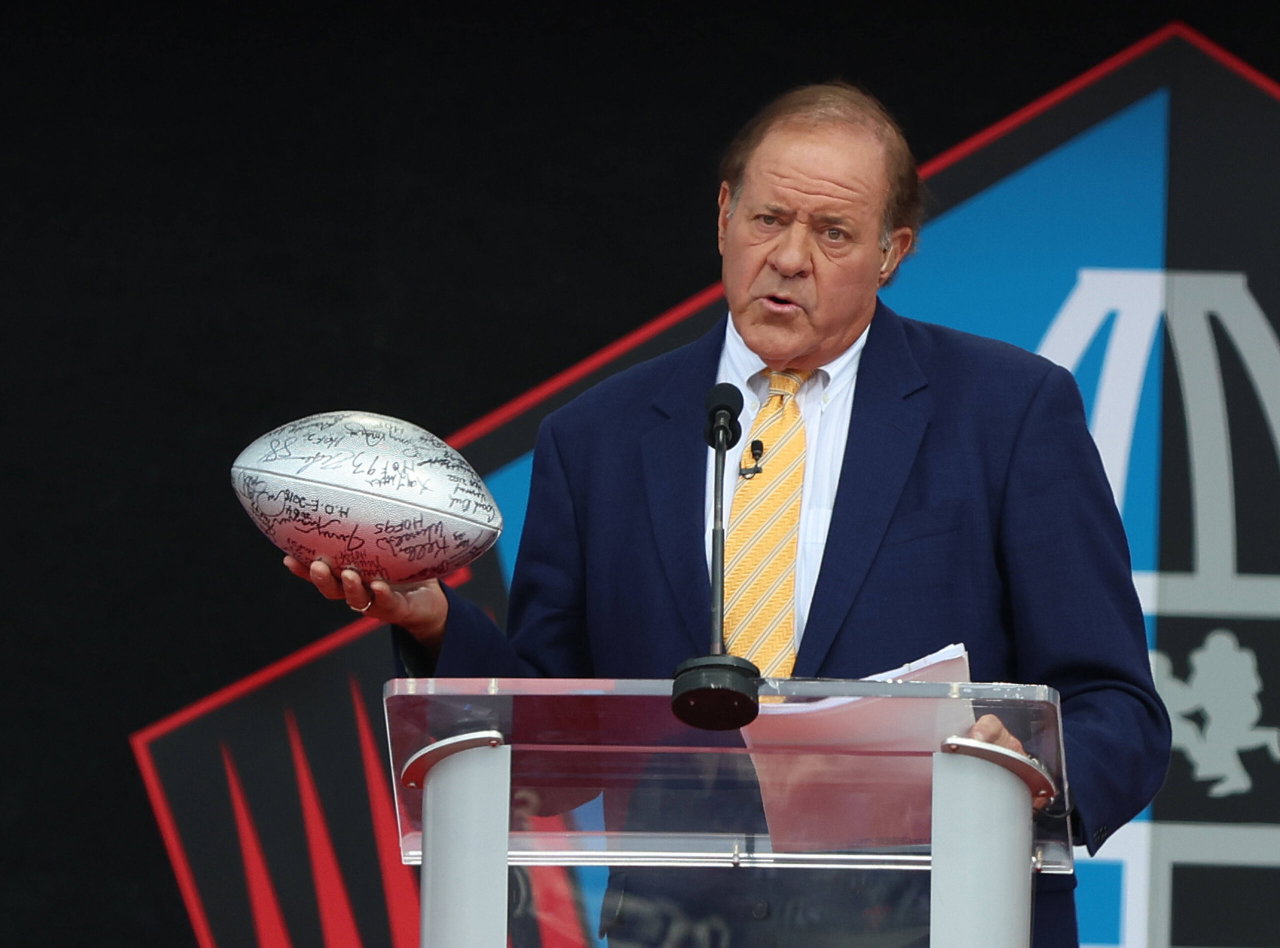
Imago
ESPN host, Chris Berman, holds a silver signed football after being recognized for his 25 years of being the MC for the Pro Football Induction ceremony at the Pro Football Hall of Fame in Canton, Ohio, on Saturday, August 2, 2025. PUBLICATIONxINxGERxSUIxAUTxHUNxONLY CAN20250802117 AARONxJOSEFCZYK
ESPN president James Pitaro and NFL Commissioner Goodell have both addressed the conflict-of-interest concerns publicly. Interestingly, the NFL didn’t enter this deal as a passive investor. While the independence debate still simmers around ESPN, the league has already moved on to its next big move.
YouTube emerges as a leading name
The NFL seems to have deliberately kept four international games off the ESPN table. These will now be available to the highest bidder.
According to Sports Business Journal’s Austin Karp and Ben Fischer, YouTube is the early leader for that four-game package. Sources describe “lots of inbound” calls to the league, but YouTube has hard evidence to support its case.
YouTube has already streamed its first exclusive regular-season NFL game in 2025. The Week 1 matchup between the Kansas City Chiefs and the Los Angeles Chargers drew around 18 million U.S. viewers alongside approximately 1.1 million international viewers.
That number reflects what YouTube genuinely brings to the table: a scale that no traditional broadcaster can match. With close to three billion monthly active users globally, YouTube offers the NFL a distribution channel that reaches viewers who have never even paid for a cable package.
The NFL retained these four international games as a standalone asset precisely because international rights are becoming one of the most valuable commodities in sports media
Additionally, YouTube’s existing relationship with the league gives it a structural advantage in negotiations. November 2025 saw a multi-year distribution deal with Disney that restored ESPN to YouTubeTV.
If this latest deal closes, it will be the NFL’s strongest push yet towards building a global media footprint. The kind where distribution is flexible, borderless, and no longer dependent on a single partner, not even one that now holds 10% equity in ESPN.