
Back in the 1960s, the United States was a completely different place. In the early 60s, Jim Crow laws, which largely segregated black and white Americans in public places, were still in effect, but even after they were abolished in 1964, black Americans were still met with resistance across the country.
Watch What’s Trending Now!
In 1946, the NFL reintegrated, allowing black players back into the league for the first time since 1933. Despite nearly two decades of reintegration, only 25 percent of players in the NFL in 1965 were black, and they were still not allowed to bunk with their white teammates on road trips. No matter how hard the league tried to push the narrative that segregation was over, it really wasn’t.
That is, until 1967, when two unlikely friends helped break down barriers in the NFL.
Two Unlikely Friends
Imago
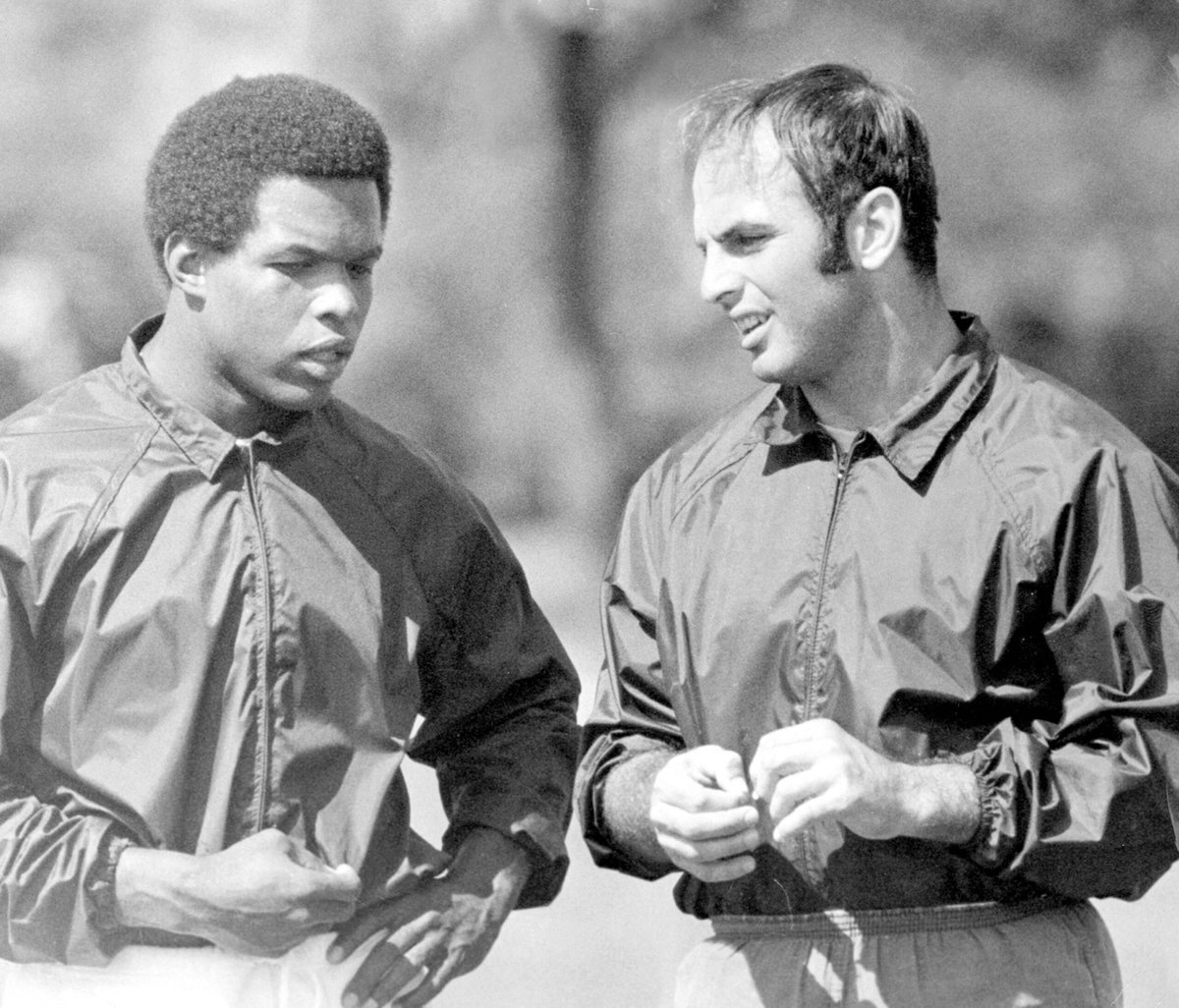
Gale Sayers, the Chicago Bears Hall of Fame running back, dies at 77 Gale Sayers left and Brian Piccolo formed a special friendship as Bears running backs in the late 1960s. Chicago Tribune/TNS IL USA EDITORIAL USE ONLY Copyright: xx 1776947 ChicagoxTribunex krtphotoslive893859
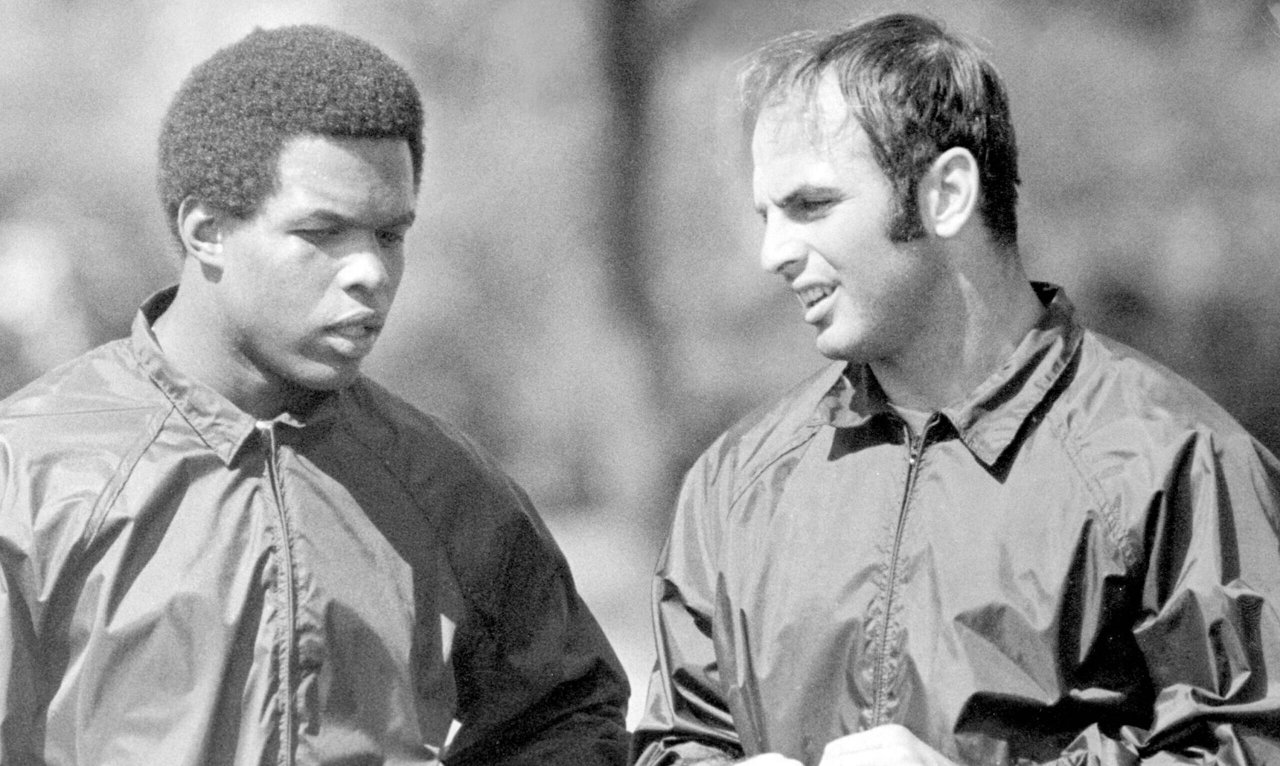
Despite the racial turmoil in the United States at the time, the Chicago Bears assigned Gale Sayers and Brian Piccolo as road roommates in 1967, creating the NFL’s first interracial roommate pairing.
Sayers, one of the most electrifying runners the game had ever seen, arrived as a draftee in 1965. Piccolo, a jokester who nobody expected to stick, arrived as an undrafted free agent that same year. By the time the two became roommates in 1967, Sayers was a star, while Piccolo was fighting for playing time as a backup, but the two formed an incredibly tight bond during their first season as roommates.
Despite the headlines, Sayers and Piccolo’s relationship wasn’t formed overnight. Sayers himself admitted that for the first two years of their careers, before they were roommates, things were a bit rocky between the two of them. “My first two years, he wasn’t fun to be around,” Sayers admitted. “He would tick you off because he always had a joke.”
But once the Bears assigned the two third-year running backs as roommates in 1967, one of the greatest friendships in NFL history blossomed. Despite the fact that Sayers was black and Piccolo was white, the two became inseparable, and in 1968, when Sayers suffered a severe knee injury, Piccolo stepped into Sayers’ starting role, but he was still right next to his best friend’s side and pushing him to come back better than ever.
A year later, largely due to Piccolo’s motivation, Sayers returned to the field and led the NFL in rushing with 1,032 yards. It was an incredible comeback from a devastating injury, but little did either of them know, their roles were about to reverse.
The Diagnosis
USA Today via Reuters
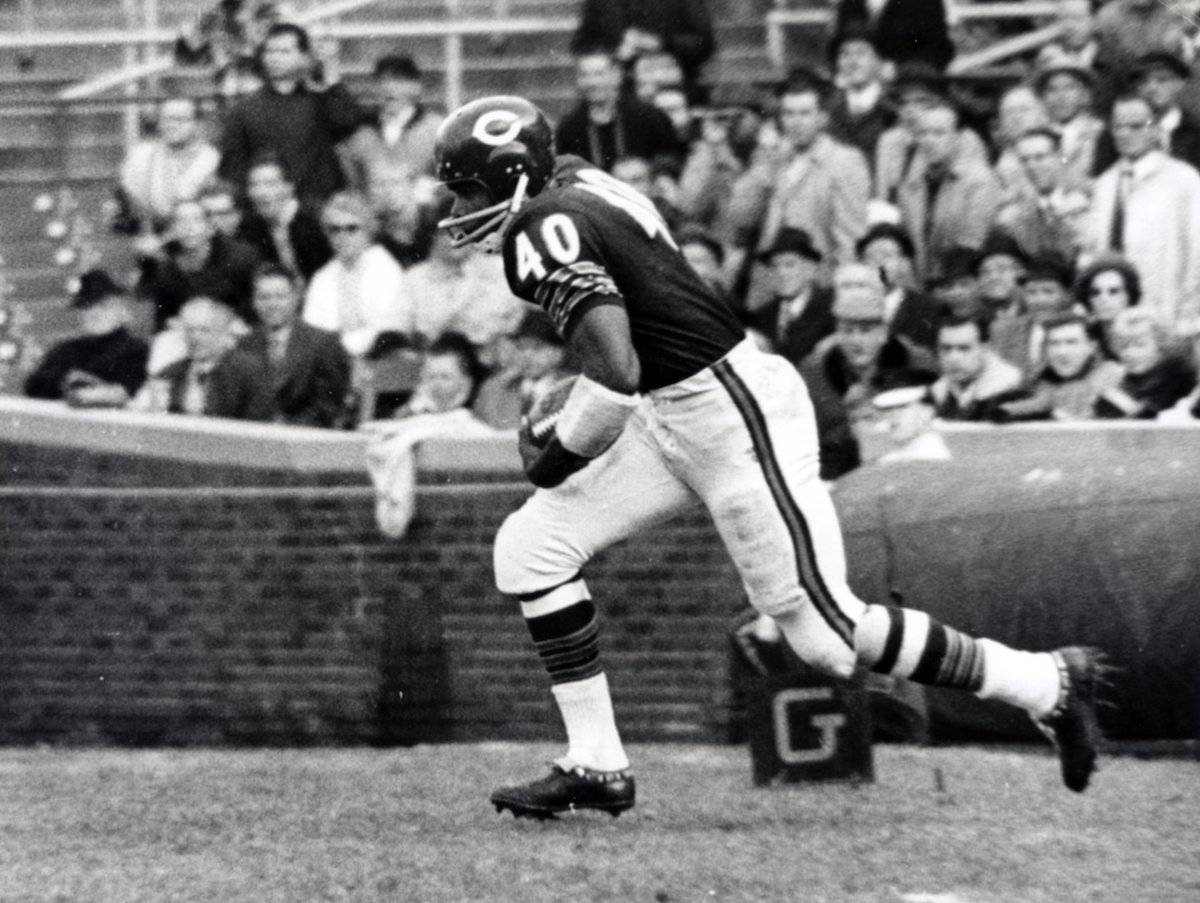
Unknown date 1965; Chicago, IL, USA: FILE PHOTO; Chicago Bears running back Gale Sayers (40) in action at Wrigley Field. Mandatory Credit: Malcolm Emmons-USA TODAY Sports
In November of that same 1969 season, Piccolo removed himself from a game due to difficulty breathing. Not long after that game, Piccolo was diagnosed with embryonal cell carcinoma, an aggressive form of cancer. His health rapidly deteriorated, and it was now his friend’s turn to be there by his side throughout his recovery.
In May of 1970, about six months after Piccolo’s diagnosis, Sayers had to briefly leave his friend’s side, as he was named the George S. Halas Courage Award winner for leading the NFL in rushing after his devastating knee injury the year before. But instead of using his acceptance speech to talk about his incredible comeback, Sayers took the time to talk about his best friend, who was busy fighting for his life.
“I love Brian Piccolo, and I’d like all of you to love him, too,” Sayers told the crowd during his acceptance speech. “Tonight, when you hit your knees, please ask God to love him, too.”
Tragically, just three weeks after Sayers’ speech on June 16th, 1970, Piccolo passed away at the age of 26.
Just one year after Piccolo’s death, ABC turned Sayers and Piccolo’s story into a made-for-television film. Brian’s Song first aired on November 30th, 1971, and won multiple awards, including an Emmy for Best Dramatic Program and the Peabody Award for outstanding entertainment and production.
To this day, Brian’s Song is widely referred to as one of the best, most influential and most moving sports movies of all time. Even I, as a 24-year-old kid born 32 years after Piccolo’s death, find it to be one of the best sports films I’ve ever seen.
Sayers and Piccolo weren’t trying to give the world a feel-good story when it needed it the most. They were just two guys that loved each other that happened to have different skin color. They weren’t trying to change the world, but the two broke boundaries, and their story not only changed the NFL, but the country, for the better.