
Essentials Inside The Story
- The Packers are the only team in the league not owned by a billionaire individual or family.
- Any significant alteration to an existing structure could pose a threat to the franchise.
- Explore how NFL broadcasting has fundamentally changed now.
A dark cloud looms over the top position the NFL has long enjoyed in the live sports landscape in the United States. Unlike other major sports leagues, the NFL has traditionally packed much of its schedule into Sunday afternoons, with CBS and FOX exclusively carrying those games since 1998 to great success. However, its recent shift toward streaming platforms such as Netflix has raised several concerns, and the latest voices to join the criticism come from the Green Bay Packers.
Watch What’s Trending Now!
“Packers fans everywhere should be deeply concerned that Rep. Fitzgerald admitted to giving ‘zero’ consideration to keeping the Packers in Green Bay as he explores upending the 65-year-old Sports Broadcasting Act. Fans should be offended that Fitzgerald then went further, saying our concerns were ‘laughable.’ Why threaten the team his community overwhelmingly cherishes and its ability to compete on a level playing field?” the Packers said in a statement.
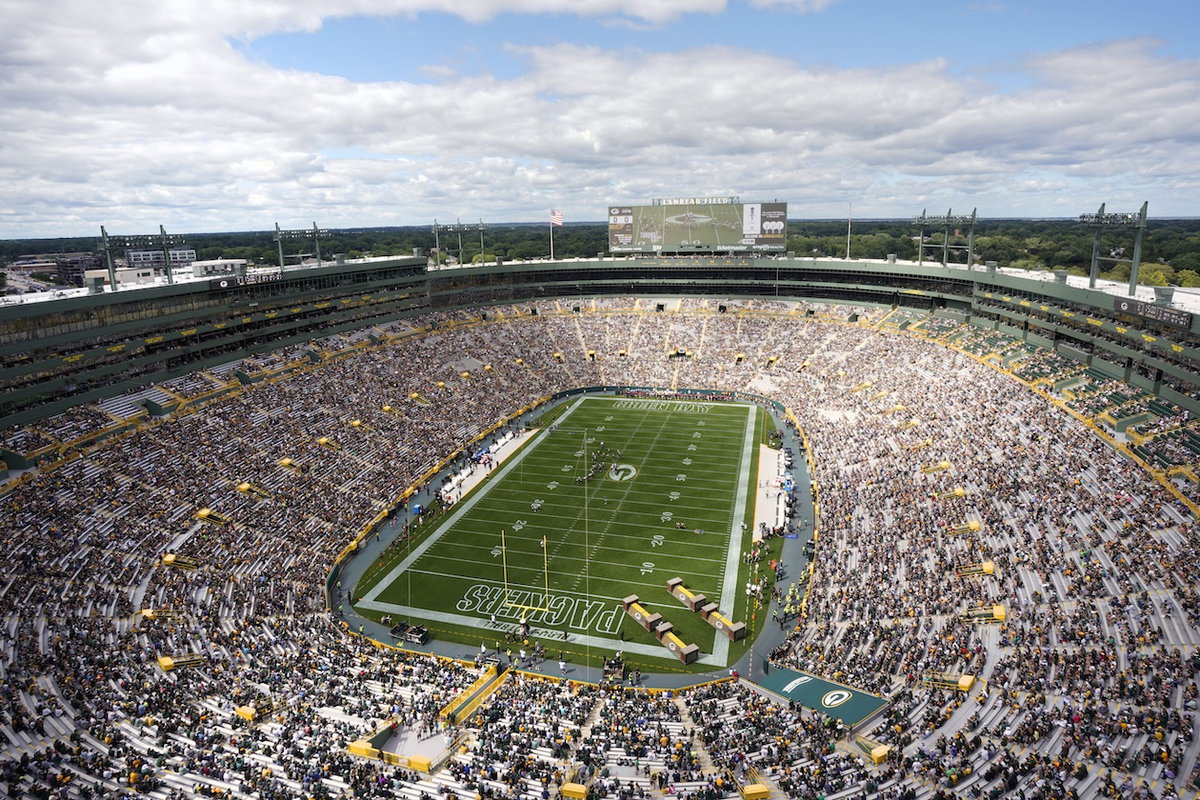
“The tremendously successful model of pooling media rights and sharing revenue equally amongst teams has allowed the Packers to survive and thrive in the smallest media market in professional sports. This model is as foundational to the Packers’ existence as the very bricks in Lambeau Field. It is careless and unwise to rearrange the bricks of a foundation that has stood strong for over half a century.”
And at the very heart of the dispute is the Sports Broadcasting Act of 1961. It is a federal law that allows sports leagues such as the NFL to negotiate television contracts collectively, rather than having individual teams negotiate their own deals. This enables smaller-market teams like the Packers, Bills, and Jaguars to operate on a more level financial playing field with the league’s larger-market franchises. While this may not align with the free-market approach that America embraces in many areas, it helps create economic and, more importantly, competitive parity within the league.
Then there are the Packers, who are unique in that they are the only team in the league not owned by a billionaire individual or family. As a result, when it comes to expenses such as coaching salaries, stadium maintenance and upgrades, and facility improvements, the Packers do not have the luxury of simply pumping additional money whenever necessary.

From the Packers: “Packers fans everywhere should be deeply concerned that Rep. Fitzgerald admitted to giving 'zero' consideration to keeping the Packers in Green Bay as he explores upending the 65-year-old Sports Broadcasting Act.” Story here: espn.com/nfl/story/_/id…
This is why they rely heavily on the league’s existing revenue-sharing model, and any significant alterations to that structure could pose a threat to the franchise. On top of that, such a broadcasting model is a key reason why a city like Green Bay has an NFL team in the first place.
Rob Demovsky of ESPN reported that, according to the Packers’ financial statement, each team received approximately $432.6 million from this shared pool of national television and streaming contracts.
Moreover, some outside observers also shared the Packers’ concerns. Here’s what Matthew Mitten, executive director of the National Sports Law Institute at Marquette University Law School, told Anya Van Wagtendonk of Wisconsin Public Radio:
“This has definitely benefited the Packers because they’re in the league’s smallest market. Their share is much higher than if the Packers were individually selling their broadcast rights, trademark licensing rights, et cetera. Although there is a salary cap that means no one team can simply pay all its players more than any other team, having relatively equal revenue streams allows teams to recruit strong players, coaches, and staff. It’s expensive to field the winning team.”
The lawmakers, on their part, argue that the league and broadcast media have fundamentally changed since this law was put into effect in 1961.
The way audiences watch the NFL has fundamentally changed in six decades
U.S. Rep. Scott Fitzgerald of Wisconsin, who chairs the House Judiciary Committee’s antitrust subcommittee, has come into focus as one of the loudest voices in the criticism of the current model.
“Years later … it is fair for this body to ask whether the professional sports leagues have kept up their end of the bargain. In my opinion, they have not, and sports fans are paying the price because of it,” Fitzgerald said during a House Judiciary subcommittee hearing. “While the leagues are undoubtedly more popular than they were in 1961, because they do not follow America’s antitrust laws for television agreements, they can charge consumers inflated prices that would otherwise be illegal.”
Much of the debate centers on how NFL fans consume the sport in 2026. With the league’s growing embrace of streaming, some NFL games throughout the season are now paywalled behind subscription services such as Netflix, Amazon Prime Video, and Peacock. For example, the Thursday Night Football games can be watched if you have a subscription to Prime Video. Back in 1961, there were only three channels that you could watch football on: ABC, CBS, and NBC.
The league, on its part, has pushed back against criticism of the existing model.
“With over 87% of our games on free, broadcast television, including 100% of games in the markets of the competing teams, the NFL has for decades put our fans front and center in how we distribute our content,” the NFL said in a statement.
While we do not yet know what the future holds, any changes to the existing law would have to pass through Congress, a process that could take a considerable amount of time. The Packers and the league, however, have already made their positions clear. In a roundabout way, they are essentially asking: Why change something that has worked well for more than six decades?