
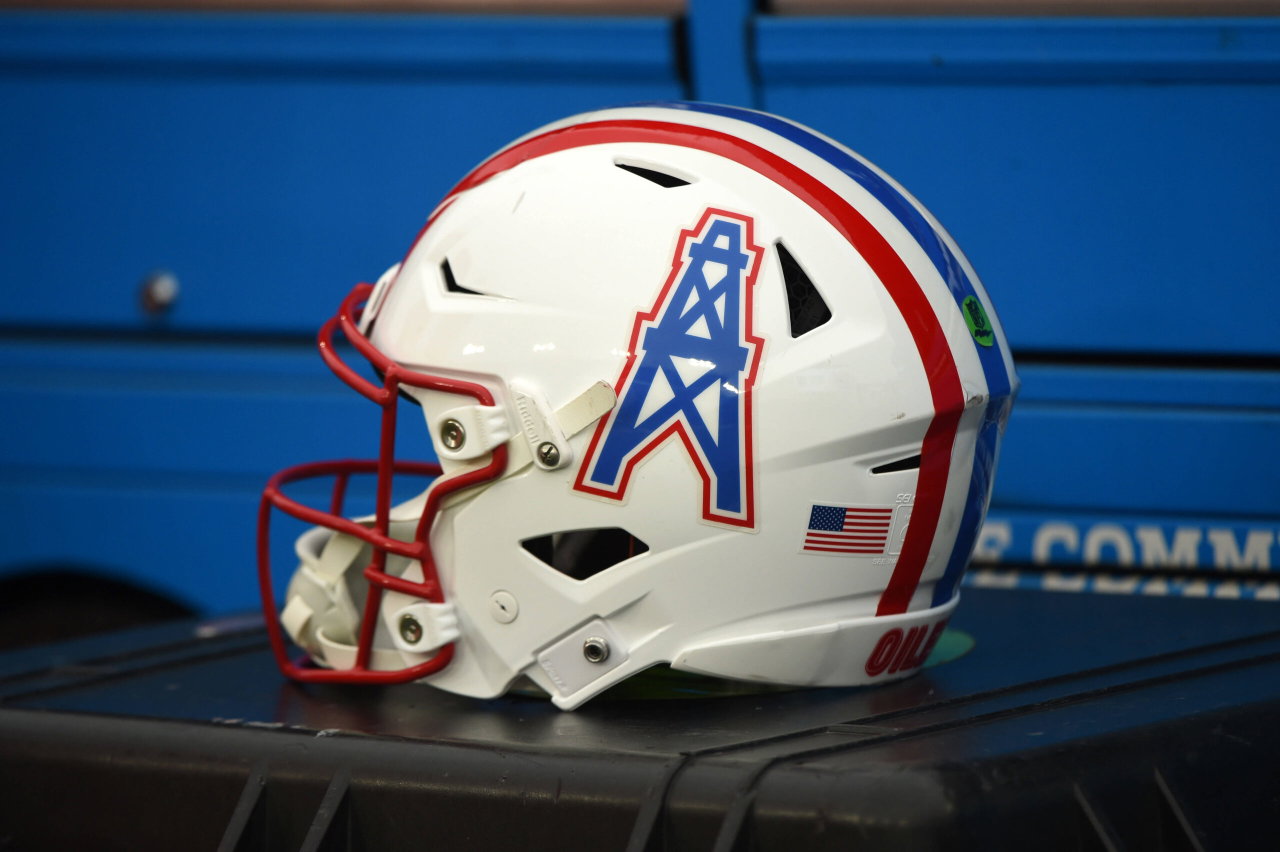
Ezekiel “Zeke” Moore made his mark at Lincoln University with a play that has remained part of his football legacy. In 1964, Moore picked off a pass against Arkansas AM&N and took it 101 yards to the end zone, recording an interception return that ranks among the longest in college football history. That legend, who also played for the Houston Oilers, passed away on September 22.
Watch What’s Trending Now!
According to Houston Chronicle staff writer Matt Young, Moore was 82 when he passed away on Tuesday. The cause of his death has not been publicly disclosed. Moore’s death marks the loss of a notable figure in Houston’s football community.
Moore was born in Alabama in 1943 and attended Booker T. Washington High School before joining Tuskegee Laboratory High School. He was a member of the high school’s track team and was a natural athlete, playing all the major sports, namely football, basketball, and baseball. In fact, he excelled at basketball, winning All-State and All-District honors twice and serving as the captain of the school’s basketball team.
However, he finally decided to pursue a career in football. Moore began his football career at Lincoln College in Missouri, where he played for the Lincoln Blue Tigers. He tried his hand at a number of positions during this time, including halfback, defensive back, kickoff returner, and punt returner. The Houston Oilers (who later rebranded as the Tennessee Titans in 1999) drafted him in the fifth round of the 1967 Draft.
With the Oilers, Moore played primarily at special teams during his first two years, before moving to cornerback. It was at this position that he emerged as one of the most punishing defenders of the time, due to his aggressive interceptions on the field.
Before Roger Goodell became Commissioner of the NFL in 2006, there were fewer rules to prevent overly aggressive plays on the gridiron. In fact, Moore’s brand of aggression, in the form of punishing hits against quarterbacks or receivers unfortunate enough to be in possession of a ball, was celebrated by fans.
However, his aggression even had former commissioner Pete Rozelle writing a letter to Moore in 1973 to chastise him for some of his rougher hits. The cornerback was even issued a $300 fine for one particularly brutal hit against Hall of Famer Paul Warfield, who played as the Miami Dolphins’ wide receiver.
However, that did not deter Moore at all, who considered it a part of the game he was being paid to play. He refused to go easy on a player, especially if he recognized the scheme behind a receiver’s movements. Regardless of how the play turned out, he was always determined to go all the way for every drive.
“Sure, I’ve heard I’m a cheap shot, but if you catch the ball I’m going to stick you,” Moore said, according to a story published by the Houston Post in 1974. “They are paid to beat you and you’re paid to stop them. If a guy catches an out pattern, I’m not going to look at the white line to see if he’s in or out. I’m going to play my game and hit him. I’m trying to be a good solid cornerback, that’s all. I know I’m rough and I’m tough … it’s part of the game.”
Across his 11 years with the Oilers in the AFL and NFL, Moore played 145 games, starting 102 of them. He recorded 24 passes intercepted on defense and 444 interception return yards. He was also selected for AFL All-Star and Pro Bowl games between 1970 and 1972.
How Was Zeke Moore Off The Field?
For all his aggression on the field, Moore was mild-mannered and polite off it. In the same 1974 Houston Post story, sportswriter David Casstevens described Moore’s cornerback aggression as “a Jekyll-Hyde role”.
Moore’s connection with Houston also extended beyond his days as an active NFL player. After retirement, Moore served as an ambassador for the Houston Texans (founded in 2002) for five years.
According to public records, he also participated in civic affairs as president of the Townwood Civic Club, in an effort to give back to the community where he spent most of his life. He was also a Texas Registered Peace Officer.
Ezekiel Moore was nominated by fans to join the Houston Oilers 30th Anniversary Dream Team in 1989. He was also inducted into the Lincoln College Hall of Fame in 2011.