

Over this past week, we at EssentiallySports have been paying homage to one of the NFL’s greatest quarterbacks: Drew Brees.
Watch What’s Trending Now!
Brees is one of five former NFL players that are going to be inducted into the Pro Football Hall of Fame on August 8th, so over the next five weeks, we’re going to take the time to honor all five inductees’ legacies.
We’ve done all the basic stuff. We’ve done our all-time QB rankings to see where Brees falls, we’ve talked about how he led one of the worst franchises in the NFL to a Super Bowl in just four years and we’ve talked about some of his other greatest achievements. But today, we’re going to talk about his greatest team achievement (spoiler alert: it’s not winning the Super Bowl).
Here’s the story on how the Saints almost abandoned New Orleans after Katrina, but after the city and the NFL fought to keep them home, how Brees helped bring one of America’s liveliest and passionate cities back to life.
The Saints Almost Moved to San Antonio

Imago
Dec 24, 2016; New Orleans, LA, USA; New Orleans Saints owner Tom Benson , right, with his wife Gayle before their game against the Tampa Bay Buccaneers at the Mercedes-Benz Superdome. Mandatory Credit: Chuck Cook-Imagn Images
After Hurricane Katrina, which was one of the most devastating natural disasters in U.S. history, the city of New Orleans was destroyed. Over 80 percent of the city flooded, causing millions to lose power and costing the city over $100 billion in damages.
During Katrina, the city used the Superdome, home to the New Orleans Saints, as a refuge for people who stayed in the city. Over 25,000 citizens who couldn’t evacuate in time found shelter in the Superdome, but it was no haven. The storm tore holes in the roof and caused the Dome to lose power, trapping those 25,000+ people inside in a humid, hot bubble with little very water and rotting food.
After the storm was over and the people were moved out, the Superdome was destroyed. There was no way the Saints were going to be able to play games there any time soon, so instead of playing in New Orleans, the Saints split their time between Baton Rouge, San Antonio and New York City during the 2005 season, with hopes of returning to the Dome by the start of 2006.
The Saints’ owner at the time, Tom Benson, already had plenty of business interest in San Antonio, and after their brief stay, he began to entertain the idea of relocating the Saints to San Antonio. There was mutual interest, too, with San Antonio Mayor Phil Hardberger pushing hard to get the Saints to his city.
As you can imagine, the people of New Orleans felt this was a massive betrayal. They supported their team, that was historically one of the worst franchises in NFL history, unconditionally for decades, and the owner was going to repay them by moving the team to a different city after New Orleans was leveled by Hurricane Katrina.
Thankfully, the NFL and commissioner Paul Tagliabue stepped in to stop the relocation from happening. They preferred for the team to stay in New Orleans, or if they were going to relocate, to move to Los Angeles over San Antonio. There was a lot of discussion between Benson and the NFL, but in the end, Benson agreed to keep the team in New Orleans, and after a ton of hard work from the construction crew, the Superdome was ready to host its first game in over a year.
The Resurrection of the Superdome
Imago
Credits: Instagram/ Caesar’s Superdome
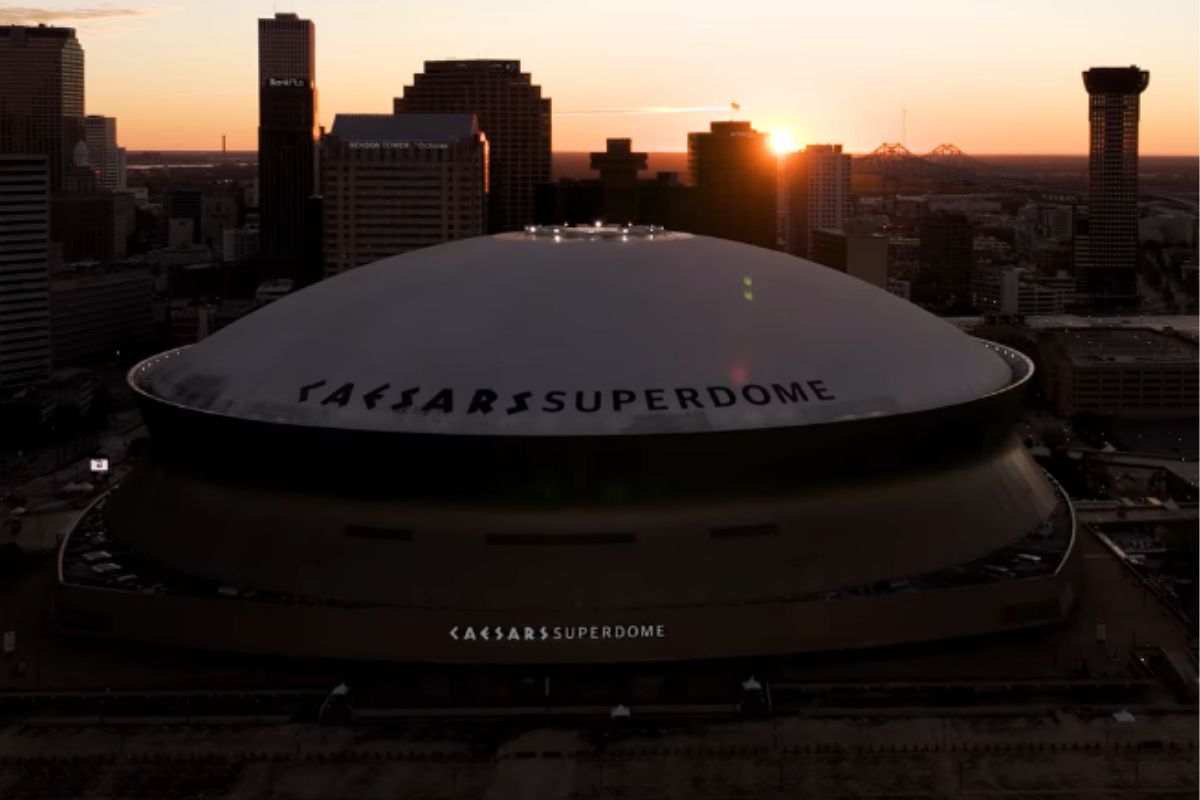
After Katrina, the Superdome was virtually unrecognizable. 80 percent of the roof was destroyed during the storm and most of the plumbing and electrical systems were broken, meaning the Superdome would need a complete makeover before the Saints could ever return home.
Doug Thornton, the executive vice president of stadiums and arenas at ASM Global, was actually in the Superdome for nearly five days during hurricane Katrina, and knew just how much the Saints mean to the city of New Orleans. He was determined to keep the Saints in town, so he quickly put in a plan to rebuild the Superdome and keep the Saints in New Orleans.
The NFL coughed up $20 million to jumpstart the project and try to get the Saints back into the Superdome by the start of the 2006 season. Thornton promised he’d work his hardest to get the stadium ready in time, but there was the problem of finding workers. Many still didn’t have a home to return to in New Orleans, but Thornton got to work assembling the right team for the job.
After a ton of preparation, nine months before the start of the 2006 season, Thornton committed to a $200 million renovation to get the Superdome up and running for the upcoming season. He and his team worked overtime throughout those nine months with one goal in mind: to have the Saints play a home game in the month of September.
There were plenty of speed bumps along the way, but the NFL did their best to provide Thornton with all the resources he needed to get the Superdome ready for the start of the season. They may not have been ready for Week 1, but they met their ultimate goal.
On September 25th, 2006, the New Orleans Saints returned home to the Superdome.
The Rebirth
Imago
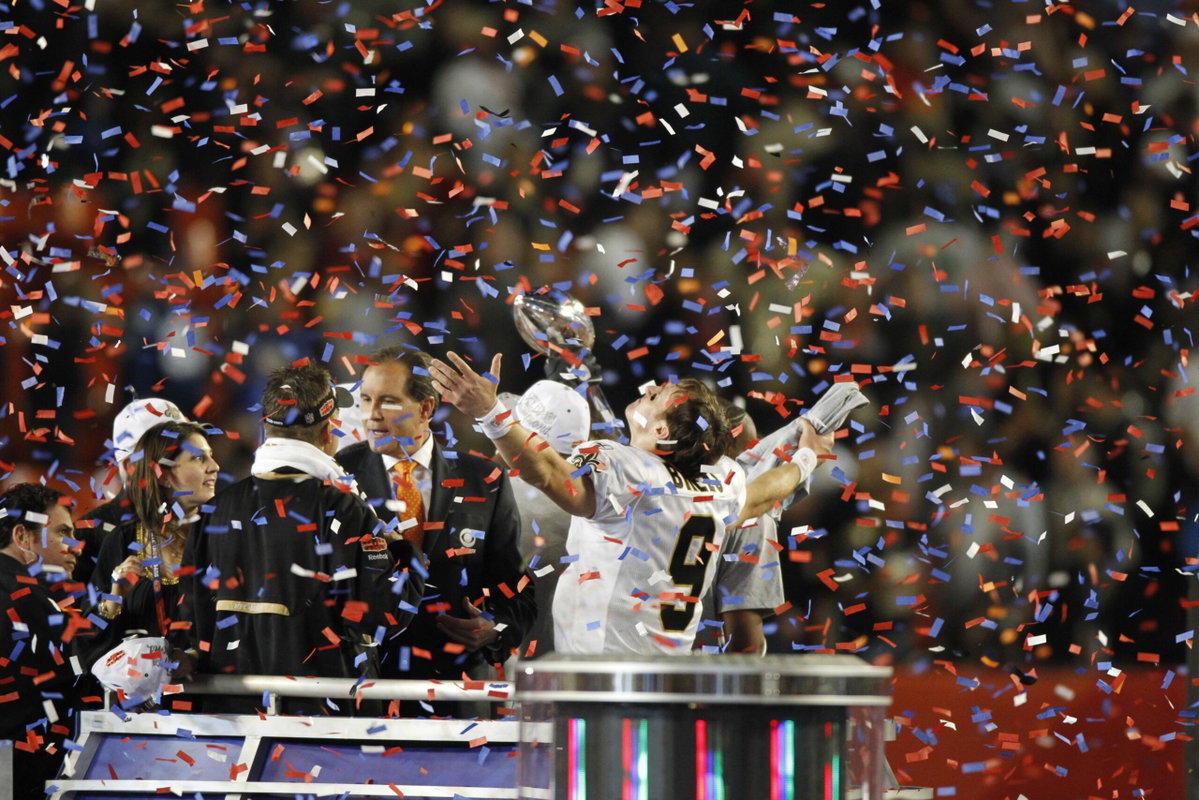
07 February 2010: New Orleans Saints quarterback Drew Brees celebrates on the podium after the New Orleans Saints 31-17 victory over the Indianapolis Colts in Super Bowl XLIV at Sun Life Stadium in Miami, Florida. PUBLICATIONxINxGERxSUIxAUTxHUNxRUSxSWExNORxONLY Icon952100207116`
While Saints fans were fighting to keep their team in New Orleans and the Superdome was being rebuilt, there was still work to be done on the field. New Orleans had just fired their head coach after the 2005 season and brought in one of the best young offensive minds in the league in Sean Payton, who nobody knew would change the franchise forever.
During that offseason, Payton needed to find his quarterback. After a season that saw Aaron Brooks throw for 2,882 yards and 13 touchdowns with 17 interceptions, Payton knew he needed to go a different route in year one, so he went out and made a bold signing by bringing in Drew Brees, who suffered a devastating shoulder injury and was told by Dolphins doctors that he had a 25 percent chance of playing football again.
But that decision immediately paid off. Brees got off to a hot start, leading the Saints to a 2-0 record before New Orleans returned to the Superdome for the first time in over a year. That September 25th game against their bitter rivals, the Atlanta Falcons, signaled the start of a new era. Payton and Brees had already begun rejuvenating the fanbase, but the “Domecoming” was the signal to the world that now just the Saints, but the entire city of New Orleans, was officially back.
The Falcons received the opening kick and immediately went three-and-out. They thought they’d be punting the ball away to Drew Brees, who would make his Superdome debut, but instead, Steve Gleason broke through the line and blocked the punt, which was returned for a touchdown to give the Saints a quick 7-0 lead in their first home game since Katrina.
The Superdome crowd, which had been waiting over a year for something to cheer for, finally got the chance to let all their emotions out. Later, Drew Brees said the noise could’ve taken the top off the stadium. That’s how loud it got in the Superdome.

HAPPY 43rd BIRTHDAY to @saints legend Steve Gleason! ⚜ This @MBSuperdome moment: Amazing. His life since then: Inspiring. (via @NFLThrowback) @TeamGleason
The Saints would go on to finished the season 10-6, earn the 2-seed in the NFC and make it to the franchise’s first NFC Championship game. They would fall short of the Super Bowl, but fans would only have to wait a few more seasons before Drew Brees helped deliver the Saints’ first Lombardi Trophy in franchise history.
Winning the Super Bowl is the ultimate achievement in the NFL, but that 2006 team helped revitalize the entire city of New Orleans after one of the most devastating storms we’ve ever seen.
Being a hero on the field is one thing, but when you can rally an entire city behind you off the field, it just means more. I don’t know if there is, or if there ever will be, a single athlete in the United States that means more to their city than Drew Brees means to New Orleans.