
Essentials Inside The Story
- The 2026 NFL Draft surpassed a record-breaking 800,000 attendees
- Locals reportedly stayed away from the city to avoid chaos, leading to slower business
- The financial burden on the city treasury turned out to be significant
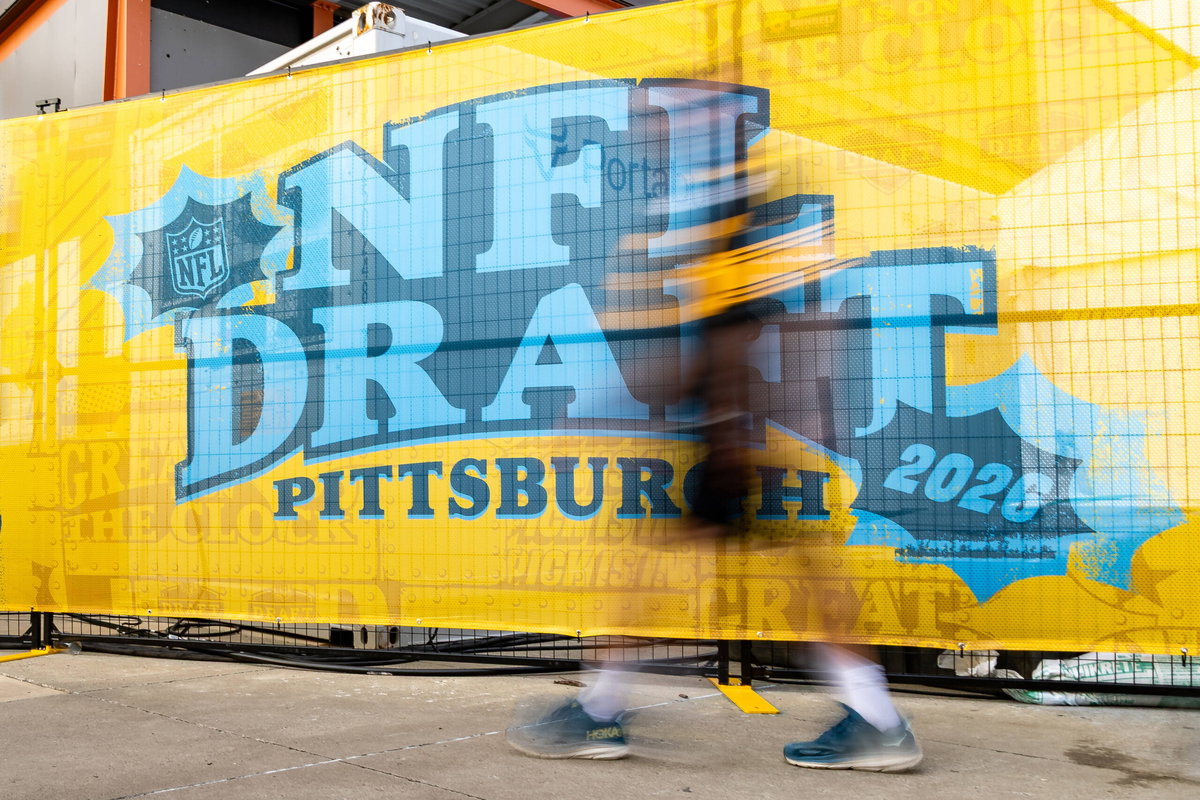
The 2026 NFL Draft arrived with much fanfare in Pittsburgh, not a surprise given the city’s deep roots in football. The Steel City does boast of 6 Super Bowl championships after all. And on the surface, the event looked like a massive success. The NFL announced a record-breaking attendance, breaching the 800,000 mark for the first time in the event’s history. But the reality for the city’s local business community was far more complicated, with many businesses ultimately dealing with lower-than-expected economic returns and, in some cases, outright losses.
Watch What’s Trending Now!
Speaking to WPXI-TV, Eric Fennelo, a restaurant manager at Roland’s Seafood Grill in Pittsburgh’s Strip District, described a different ground reality. “It was slow,” Fennelo said. “It seems like the anticipation of the crowds coming in from outside kept the locals away.” Fennelo added that the restaurant brought in extra staff in preparation for the weekend’s festivities, but the expected surge in customers never materialized.
Marie Lee, owner of apparel store PGH Sports, also located in the Strip District, said that she expanded her inventory, expecting increased foot traffic. “We planned a lot of things to get ready and I thought, I don’t have enough merchandise for the draft.” Instead, she was left with unsold excess stock and “lost a lot of money on it (the draft)”.
An issue that quickly became apparent during the draft was how unevenly foot traffic and economic activity were distributed across the city. While most of the event’s footprint was concentrated on the North Shore near Acrisure Stadium and at Point State Park, other neighborhoods, including the aforementioned Strip District, saw far less foot traffic and economic engagement.
That disparity was evident even within the same business. Primanti Bros, the iconic Yinzer sandwich institution that’s famous for the fries’ stuffed sandwiches, saw long lines at its Downtown branch. However, its Strip District location reportedly had little to no wait times during the draft weekend.
Other host cities have reported similar issues regarding truncated economic activity during the Draft weekend. Local officials in Kansas City (2023) and Green Bay (2025) stated that foot traffic and spending were heavily concentrated around the draft’s primary area. This left the surrounding neighborhoods with a much lesser share of the economic pie.
City officials in Pittsburgh have also outlined the financial cost of hosting the draft, estimating that the city spent at least $3 million from its coffers. That figure includes roughly $2 million in overtime costs for public personnel. Even after accepting a $2 million reimbursement from the state of Pennsylvania, officials have indicated the city could still be facing a shortfall of around $1 million.
Speaking to PennLive, Mayor Corey O’Connor maintained that he considered the Draft as a success overall, while also acknowledging that the city cannot control where visitors ultimately choose to spend their time and patronage.
Local tourism agency VisitPittsburgh, a nonprofit destination marketing organization, had projected that hosting the draft would generate an economic impact between $120 million and $213 million for the city. Jerad Bachar, president and CEO of VisitPittsburgh, said the agency held more than 80 information sessions with neighborhood groups and local businesses to set realistic expectations ahead of the draft.
Ahead of the draft, Bachar had already acknowledged the uneven nature of such events. Speaking to TribLive in an April 7 interview, he noted that businesses outside the draft’s immediate footprint should be cautious about over-preparing for a surge in customers, pointing out that visitors tend to concentrate around the main event zones.
“Fans are focused on the site…they want to be where the excitement is,” he said. This turned out to be a reality that ultimately played out across much of Pittsburgh during draft week.
Bachar went on to say that hosting the event itself helped elevate the profile of the eastern Pennsylvanian city on the national stage. This highlights that visibility and civic pride have become one of the main reasons city officials compete to host the marquee event in the first place.
NFL’s roadshow brings flashy numbers but questionable economic results
That shift in priorities coincides with the NFL’s broader transformation of the draft itself, which began in 2016 under NFL commissioner Roger Goodell. After hosting the Draft in New York City for decades since its inception, the league shifted it to Chicago for the first time.
Since then, Goodell has transformed the event into a roadshow, taking it to different cities each year. The league has turned the simple act of announcing draft picks into a must-watch, prime-time television spectacle. But as Pittsburgh’s experience shows, expectations and economic realities at the ground level can be a lot different than what is promised.
A Pittsburgh native and influencer, Nick Drom, also posted several videos on his social media profiles highlighting that the Draft attendance and the financial impact on the city were blown out of proportion by the NFL and local officials, and criticized a massive $19M figure in public money spent to prepare for the draft.
“It did not yield the economic benefit to the city that was planned,” Drom said in one video, adding that the windfall was directed toward “the richest people and organizations in Pittsburgh.”
Speaking to TribLive, Jake Haulk, president of the Allegheny Institute of Public Policy, warned against getting carried away by the attention-grabbing numbers often promoted around the Draft. He also suggested the overall impact is more modest than it appears, as the league’s figures often fail to account for the business establishments that would have been generated on a regular weekend.
“It’s not going to be a lifeline to the city’s overall health. You’d need to have this happen 40 or 50 times a year — of course, people would get tired of having those crowds.”
While the overall cultural and economic impact of hosting the NFL Draft remains open to debate, cities will continue to view it as an endeavor worth pursuing. The Green Bay Press-Gazette recently reported that Green Bay is already exploring the possibility of hosting another draft after hosting the event in 2025.
This is where nuance must come into the equation, while the draft may elevate a city’s profile and could potentially deliver meaningful economic impact. That financial windfall that is promised is not spread out in an equitable fashion to many small businesses that populate these cities.